Meal prep for beginners: your first week
Start with four lunches, not every meal. A first-week plan with a shopping list, a 90-minute session and what to eat each day, inside USDA's limits.
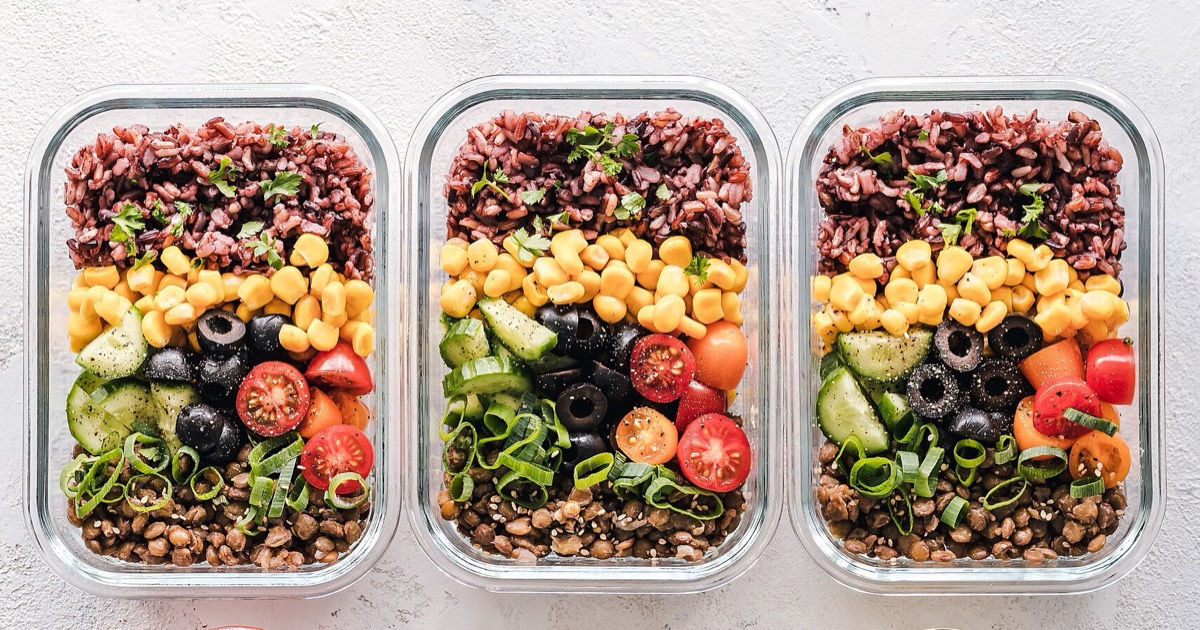
To start meal prepping, cook a few simple foods once and cover a few meals, not the whole week. A good first week is four lunches. On Sunday, spend about 90 minutes on a pot of chili, a pot of brown rice, a pan of roasted vegetables and a few hard-cooked eggs. Eat from the refrigerator Monday through Wednesday, freeze most of the chili on Sunday, and thaw one portion for Thursday. The freezer is what keeps the plan safe, because USDA gives cooked leftovers only 3 to 4 days in the refrigerator.
Start with four lunches, not every meal
Harvard's Nutrition Source suggests starting with enough dinners for 2 to 3 days of the week. This plan is about that size: three meals from the refrigerator and one from the freezer. It's written for one person's lunches and works the same for dinners. For two people, double the amounts. Friday stays open, so a lunch out won't leave food sitting past its limit.
USDA's Food Safety and Inspection Service (FSIS) says leftovers keep 3 to 4 days in the refrigerator, so count from the day you cook. Cook on Sunday and Wednesday is day 3, with Thursday as a spare. Cook on Saturday and Wednesday is day 4, with no spare.
Three things to cook, plus eggs
Harvard suggests starting with the foods that take longest to cook, such as brown rice and roasted vegetables. Chili joins them because it freezes, and eggs because they last the week.
| Food | Refrigerator (40°F or below) | Freezer (0°F or below) |
|---|---|---|
| Chili | 3 to 4 days | 2 to 3 months for best quality |
| Cooked brown rice | 3 to 4 days | Not needed |
| Roasted vegetables | 3 to 4 days | Not needed |
| Hard-cooked eggs | 1 week, in the shell | Do not freeze |
The charts don't name chili or roasted vegetables. This table gives chili FoodSafety.gov's row for soups and stews with meat added, since FSIS lists chili with soup and stew in its bag lunch advice, and gives roasted vegetables FSIS's general rule for leftovers. Freezer times are about quality: FoodSafety.gov says food kept continuously at 0°F or below can be kept indefinitely.
The steps follow Oregon State University Extension's Food Hero recipes: Quick Chili makes 6 cups, or four portions of 1½ cups, and Stovetop Brown Rice makes 3 cups.
The shopping list
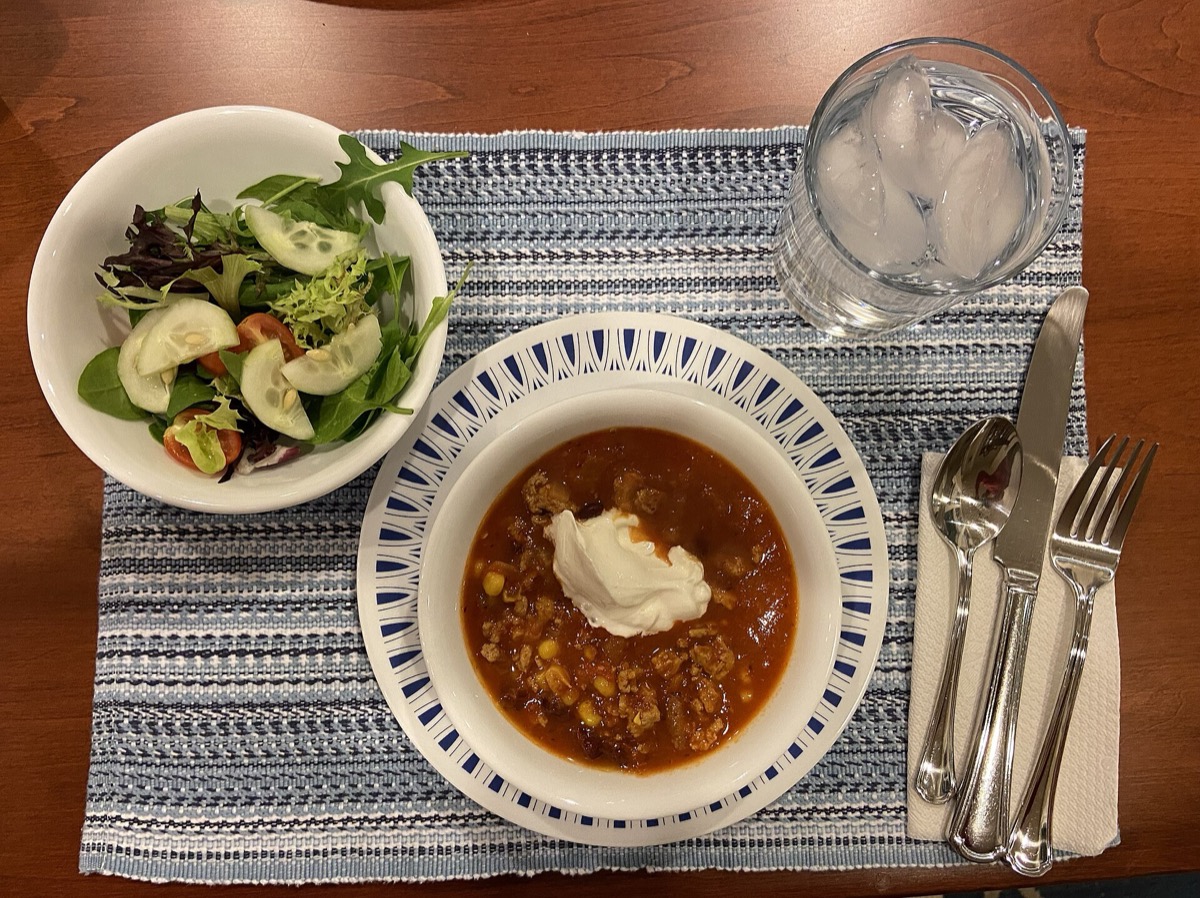
Shop on Saturday or Sunday, because FoodSafety.gov gives raw ground meat and ground poultry only 1 to 2 days in the refrigerator. The list covers the four lunches, two spare eggs and two extra portions of chili.
- Produce: 1 medium onion, and about 4 cups of vegetables for roasting, such as broccoli, carrots and a bell pepper
- Meat: ½ pound lean ground turkey or beef
- Eggs: 6 large eggs
- Cans: 1 can (15 ounces) kidney beans, 2 cans (14.5 ounces each) diced tomatoes
- Pantry: 1 cup brown rice, chili powder, vegetable oil, soy sauce, salsa, crackers or bread
- Gear: 6 shallow containers with lids (3 of them freezer-safe), a food thermometer, tape and a marker
The session, in order
Allow about 90 minutes the first time, dishes included. Scrub your hands for at least 20 seconds first, as FoodSafety.gov advises.
- Minute 0: Heat the oven to 425°F. Bring 2¼ cups of water to a boil, add the rice, lower the heat, cover and simmer for 35 to 40 minutes.
- Minute 5: Put the eggs in a saucepan in one layer, cover with cold water by at least 1 inch and bring to a full boil. Take the pan off the heat, cover it and leave large eggs for 12 minutes. Meanwhile, rinse the vegetables, cut them about ½ inch thick and chop the onion.
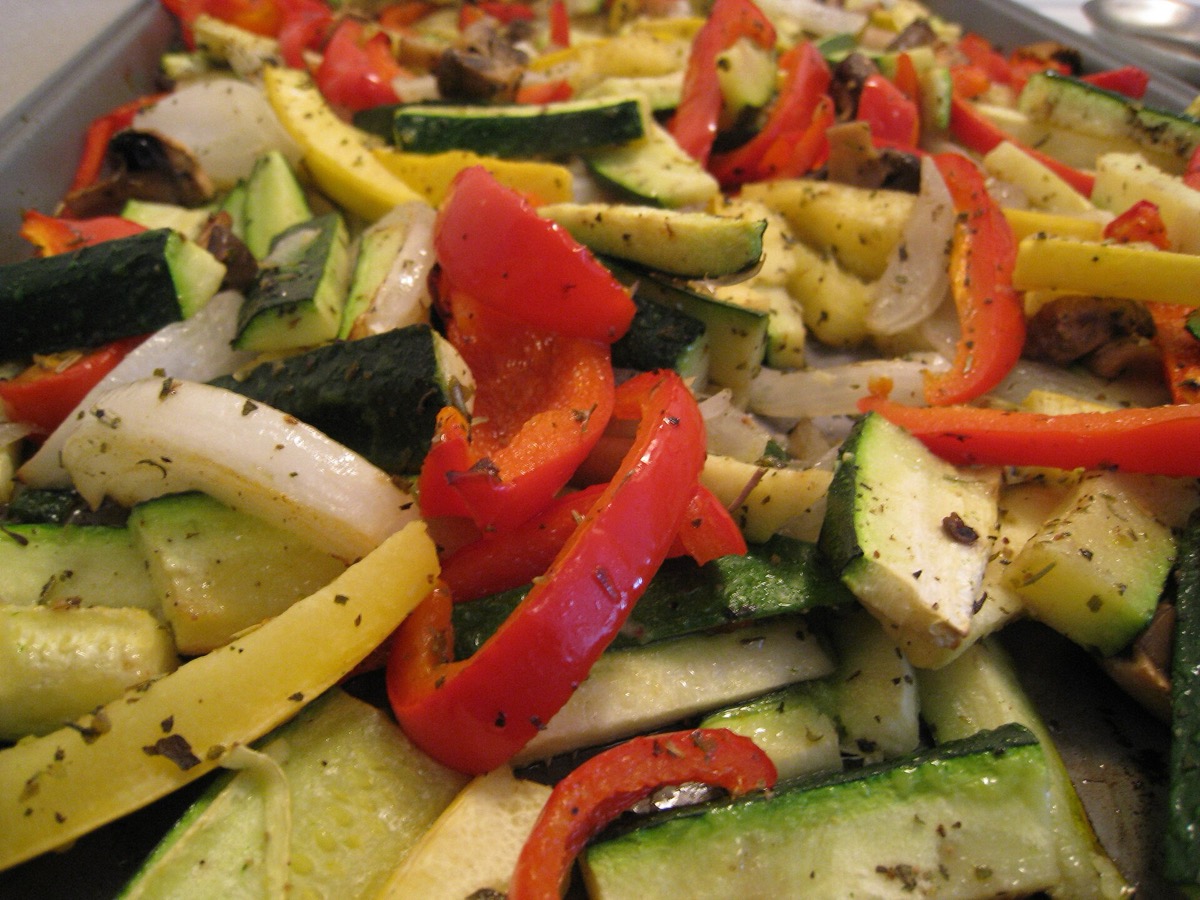
- Minute 20: Toss the vegetables with just enough oil to coat them, spread them in one layer on a baking sheet and roast for about 15 minutes, stirring halfway.
- Minute 30: Drain the eggs, cool them under cold running water and refrigerate them in their shells.
- Minute 35: Divide the vegetables between 2 containers and refrigerate them.
- Minute 40: Brown the meat and onion in a large skillet and drain the fat. Wash your hands after handling the raw meat. Add the beans and tomatoes with their liquid and 2 tablespoons of chili powder, then cover and cook on low for 10 minutes.
- Minute 45: Turn off the rice and let it stand for 5 to 10 minutes. Add 1 cup to each vegetable container, put the last cup in a third container and refrigerate all three.
- Minute 60: Check the chili with a thermometer: 165°F for turkey, 160°F for beef. Spoon 1½ cups over the rice in the third container and put it back in the refrigerator. Fill the 3 freezer containers with the rest, date them as Harvard suggests and freeze them.
- Minute 70: Wash boards, pans and utensils with hot, soapy water.
Two habits make the timing safe:
- Nothing waits for the end. FSIS says leftovers must be refrigerated within 2 hours of cooking, or 1 hour when it's above 90°F. Each food here goes in when it's ready, even if it's hot.
- Spread out the freezer containers. FSIS says not to stack packages until they're frozen solid.
What to eat on which day
| Day | Lunch | Comes from | Why it's safe |
|---|---|---|---|
| Monday | Rice, vegetables, 2 eggs, soy sauce | Refrigerator | Day 1 of 3 to 4 |
| Tuesday | Chili over rice | Refrigerator | Day 2 |
| Wednesday | Rice, vegetables, 2 eggs, salsa | Refrigerator | Day 3 |
| Thursday | Chili with crackers or bread | Freezer, thawing in the refrigerator from Wednesday morning | Thawed food keeps 3 to 4 days |
| Friday | Open, or the last 2 eggs | Refrigerator | Eggs keep 1 week in the shell |
The thaw. Thursday's chili moves on Wednesday morning because FSIS says even small amounts of frozen food, such as a pound of ground meat, need a full day to thaw in the refrigerator. If it's still icy at lunch, reheat it anyway: FSIS says a frozen soup or stew is safe to reheat without thawing. Never thaw it on the counter.
If plans change. A skipped meal can be eaten or frozen by Thursday, since FSIS says to freeze leftovers within 3 to 4 days. Apart from the eggs, throw out anything you refrigerated on Sunday that's still there after Thursday.
Packing and reheating
- Keep it cold on the way. FSIS says to pack your bag right before you leave, with at least two cold sources: two frozen gel packs, or one with a frozen juice box or bottle of water. Use a refrigerator at work if there is one.
- Reheat to 165°F. In a microwave, cover the food and rotate it. Microwaves have cold spots, so FSIS says to check the temperature in several places with a food thermometer. On a stove, bring chili to a rolling boil.
- Peel eggs the day you eat them. Oregon State University Extension says peeled eggs keep up to 2 days, against a week in the shell. Add them after the rest is hot.
After the first week
You start week two with 2 portions of chili in the freezer, so you can cook less. When you want more, read how to plan a week of dinners or meal prep ideas with chicken. If you follow a diet for a medical condition, ask your doctor or a registered dietitian how to adapt this plan.
Frequently asked questions
How long does meal prep last in the fridge?
Three to 4 days for cooked food, according to USDA and FoodSafety.gov. Hard-cooked eggs last a week in the shell.
Can you meal prep for 5 days?
Not all from the refrigerator. If you cook on Sunday, Friday is day 5, past USDA's 3 to 4 days. Freeze those portions on Sunday and move them to the refrigerator a day ahead.
Is it safe to meal prep rice?
Yes, if you chill it promptly. FSIS gives cooked rice 3 to 4 days in the refrigerator. Don't leave it out to cool: a CDC report on a 1993 outbreak explains that Bacillus cereus spores may survive cooking, and that rice held at room temperature can develop a toxin that can survive brief heating.
Can you put hot food straight in the fridge?
Yes. FSIS says hot food can go directly in the refrigerator. Divide large amounts into shallow containers first, because a big pot cools slowly.
Start Meal Prep
Weekly meal ideas for your household, so you never decide what to buy on the spot.
Psst is invite-only. Sign up with code MEALPREP
Scan with your iPhone / Download Psst
Psst is invite-only. Sign up with code MEALPREP
Sources
- Leftovers and Food Safety (USDA Food Safety and Inspection Service)
- Freezing and Food Safety (USDA Food Safety and Inspection Service)
- The Big Thaw: Safe Defrosting Methods (USDA Food Safety and Inspection Service)
- Keeping "Bag" Lunches Safe (USDA Food Safety and Inspection Service)
- Shelf-Stable Food Safety (USDA Food Safety and Inspection Service)
- Shell Eggs from Farm to Table (USDA Food Safety and Inspection Service)
- Cold Food Storage Chart (FoodSafety.gov)
- Cook to a Safe Minimum Internal Temperature (FoodSafety.gov)
- 4 Steps to Food Safety (FoodSafety.gov)
- Bacillus cereus Food Poisoning Associated with Fried Rice at Two Child Day Care Centers, Virginia, 1993 (CDC, Morbidity and Mortality Weekly Report, 1994)
- Meal Prep Guide (The Nutrition Source, Harvard T.H. Chan School of Public Health)
- Quick Chili (Food Hero, Oregon State University Extension)
- Stovetop Brown Rice (Food Hero, Oregon State University Extension)
- Roasted Vegetables (Food Hero, Oregon State University Extension)
- Perfect Hard-Cooked Eggs (Oregon State University Extension)