How to plan a week of dinners in 15 minutes
A 15-minute Sunday method: check the calendar and fridge, set anchor nights, reuse ingredients, cook once for two dinners and list groceries by aisle.
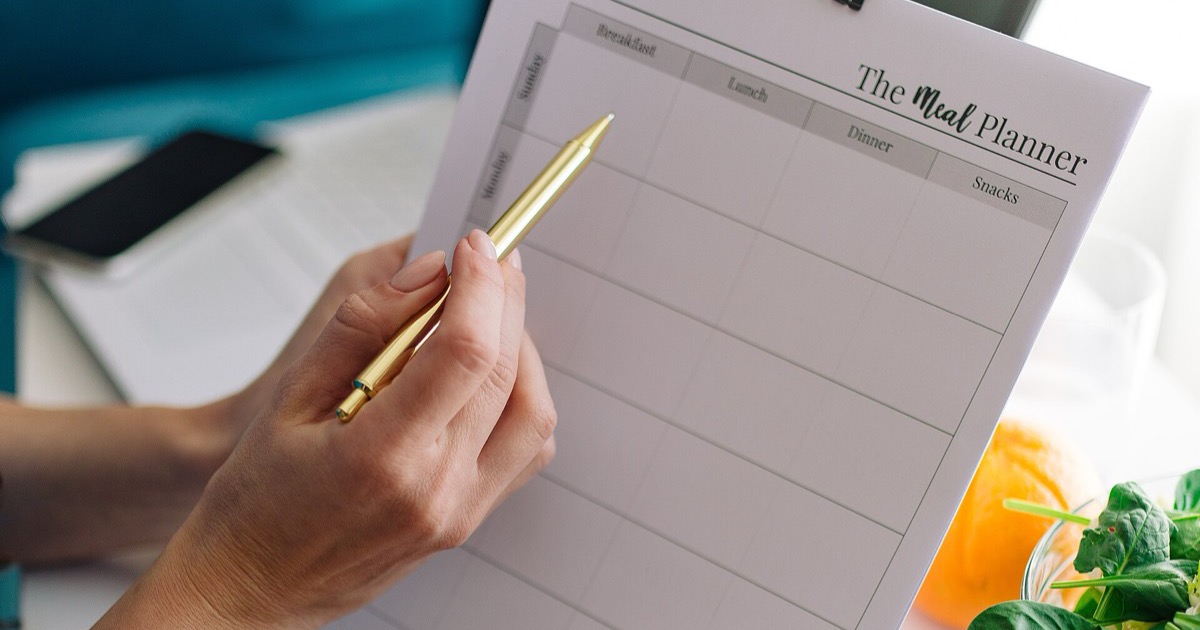
To plan a week of dinners in 15 minutes, do the same six steps in the same order every Sunday: look at the week's calendar, check what's in the fridge and pantry, give a few nights a fixed job (taco night, leftovers night, a no-cook night), fill the open nights with meals that share ingredients, including one big cook that covers two dinners, then write the grocery list by store section and pick two things to prep ahead. Plan four or five cooked dinners, not seven.
It's worth the quarter hour. In a 2017 study of 40,554 French adults, the 57% who planned meals at least occasionally were more likely to have a diet closer to national nutrition guidelines and a wider variety of foods. The study was cross-sectional, so it shows a link, not that planning causes a better diet.
The 15 minutes at a glance
| Minutes | Step |
|---|---|
| 0 to 2 | Check the calendar |
| 2 to 4 | Check the fridge, freezer and pantry |
| 4 to 7 | Set anchor nights |
| 7 to 10 | Fill the open nights |
| 10 to 13 | Write the grocery list |
| 13 to 15 | Choose what to prep and thaw |
1. Start with the calendar
Look at the week before you think about food: who's home, who's late, who's eating out. Food Standards Scotland suggests asking which days you'll be too tired to cook, and planning something simple or cooked in advance for those.
Then decide how many dinners you'll cook. The Massachusetts Department of Transitional Assistance suggests eating dinner at home six days a week while cooking on only three nights, doubling recipes to cover the gaps, and keeping the seventh day for eating out. If planning is new, Harvard's Nutrition Source suggests starting with dinners for two or three days.
2. Check what you already have
Open the fridge, freezer and pantry and note what needs using up: half a bag of spinach, a block of cheese, the chicken thighs at the back of the freezer. Build the first dinners around those.
Then order the week by how long the raw ingredients keep. FoodSafety.gov's storage chart gives raw chicken and ground meat 1 to 2 days in the fridge, and steaks, chops and roasts 3 to 5 days. Fresh chicken goes early, chops can wait, and pantry meals go last, in case plans change.
3. Give three nights a fixed job
Anchor nights take most of the deciding out of planning. Harvard's Nutrition Source notes that some families like knowing what to expect, with examples like Meatless Mondays, Whole Grain Wednesdays and Stir-Fry Fridays.
A theme night
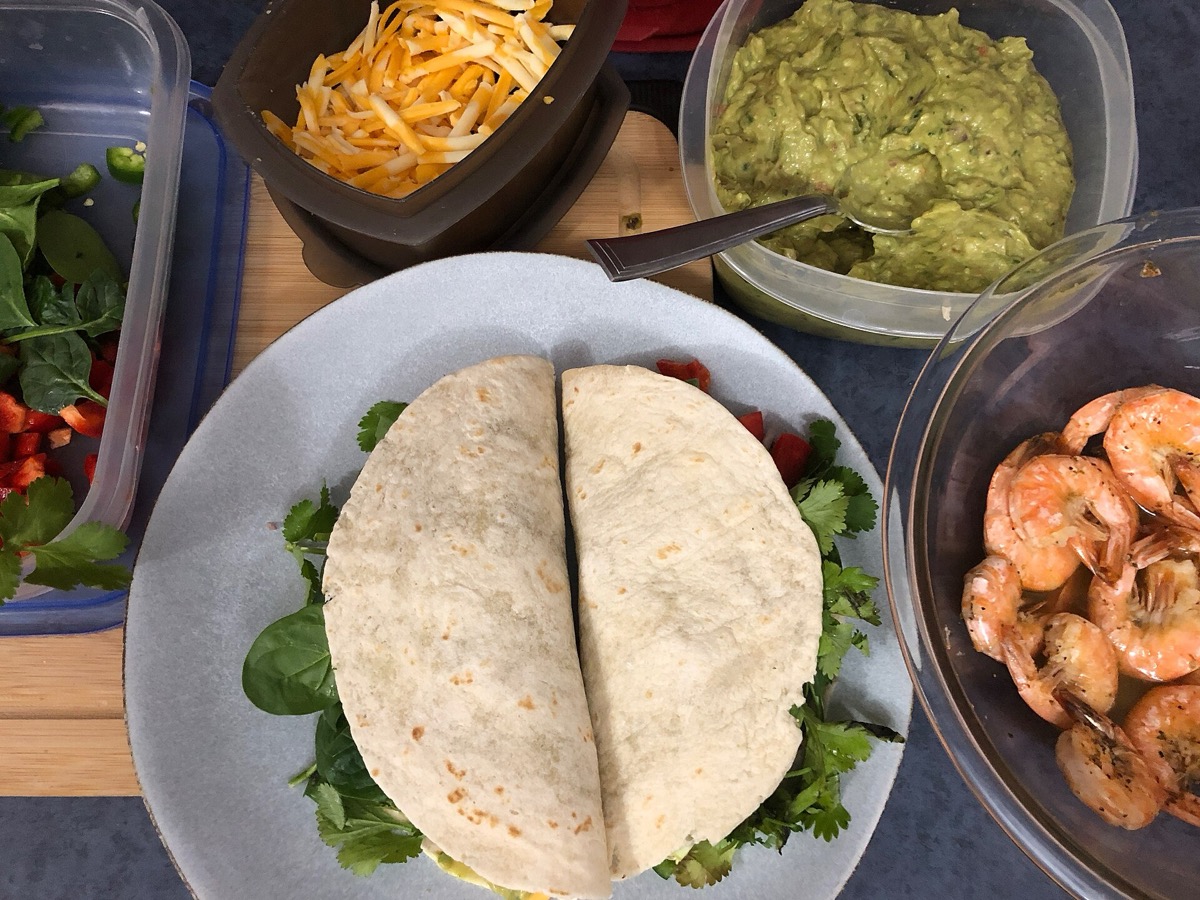
Tacos, pasta, soup or breakfast for dinner. The theme stays and the filling changes: shrimp one week, black beans the next.
A leftovers night
Combine what's left from earlier dinners into one meal, late in the week. The Massachusetts guide calls it a purposeful leftovers night.
A no-cook night
Hummus, cut vegetables, cheese, crackers and fruit, or sandwiches, or a big salad with canned beans. Food Standards Scotland counts meals put together from jars and packets as part of a week's mix. Give this one to your busiest night.
4. Fill the open nights so ingredients do double duty
Two or three nights are left. Fill them with meals that share ingredients: Food Standards Scotland suggests using fresh ingredients across a few days, or freezing some if you don't need them all. Three peppers cover a skillet dinner and tacos. One jar of marinara covers spaghetti and meatball subs.
Plan one big cook that becomes two dinners
Make one dish in double. The Massachusetts guide's example is a roast chicken one night and chicken burritos the next. Harvard's Nutrition Source suggests making extra portions for another day or two, or to freeze for a different week, dated and labeled.
Keep the second dinner inside USDA's window. USDA's Food Safety and Inspection Service (FSIS) says: "Leftovers can be kept in the refrigerator for 3 to 4 days or frozen for 3 to 4 months." A Sunday big cook can come back on Wednesday. Anything meant for Thursday or later goes into the freezer on Sunday.
Check each dinner against the plate
Harvard's Healthy Eating Plate is a quick test: half the plate vegetables and fruits, a quarter whole grains, a quarter protein, and potatoes don't count as vegetables. If a dinner has no vegetable, add a salad or roasted broccoli. If you follow a diet for a medical condition, ask your doctor or a registered dietitian how to adapt the plan.
5. Write the grocery list by store section
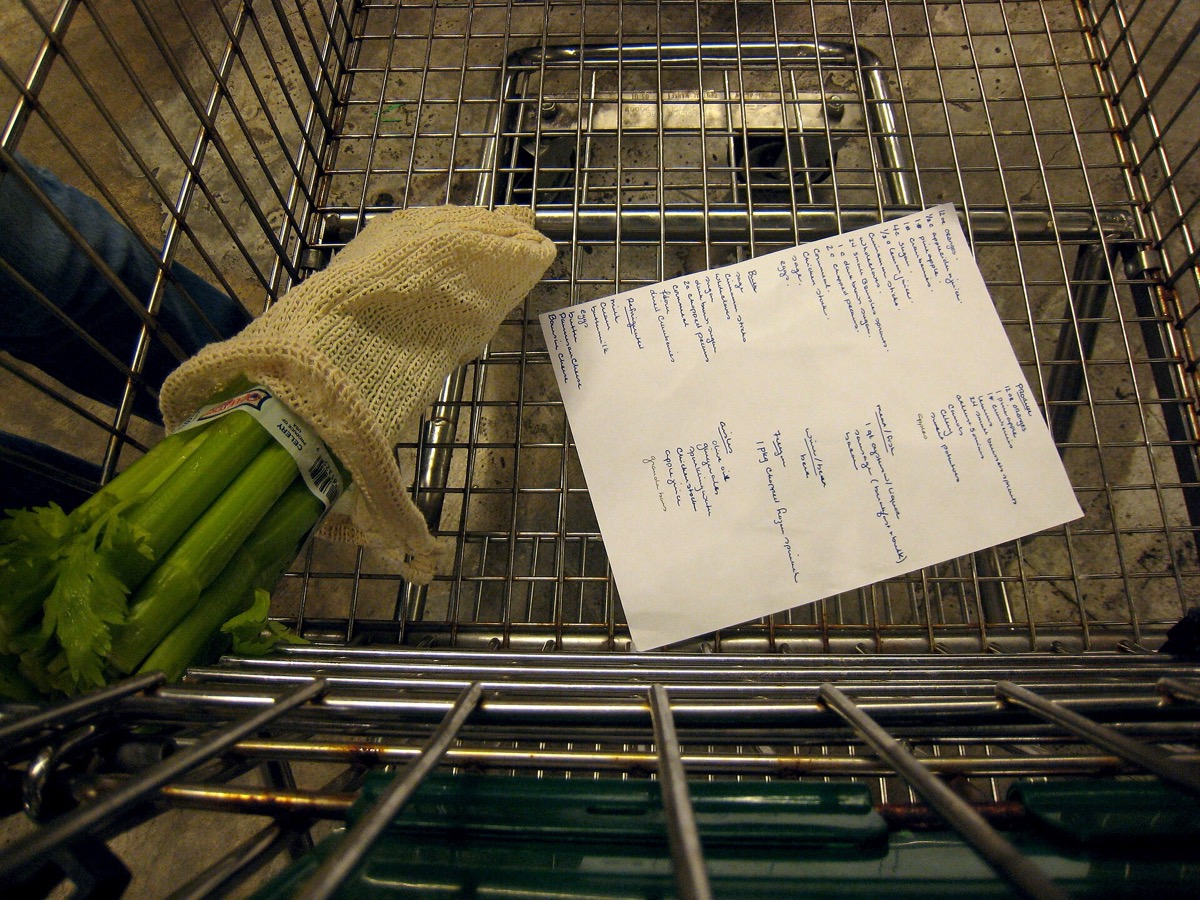
Go through the plan dinner by dinner and list every ingredient you don't have, with amounts: a double batch means double the meat. Then sort it in the order you walk the store: produce, meat and seafood, dairy and refrigerated, bakery, the center aisles, frozen. You won't double back, and gaps are easy to spot.
Add a backup meal. Food Standards Scotland suggests keeping canned beans, pasta and frozen vegetables stocked for when the fresh food runs out.
6. Pick two things to prep ahead
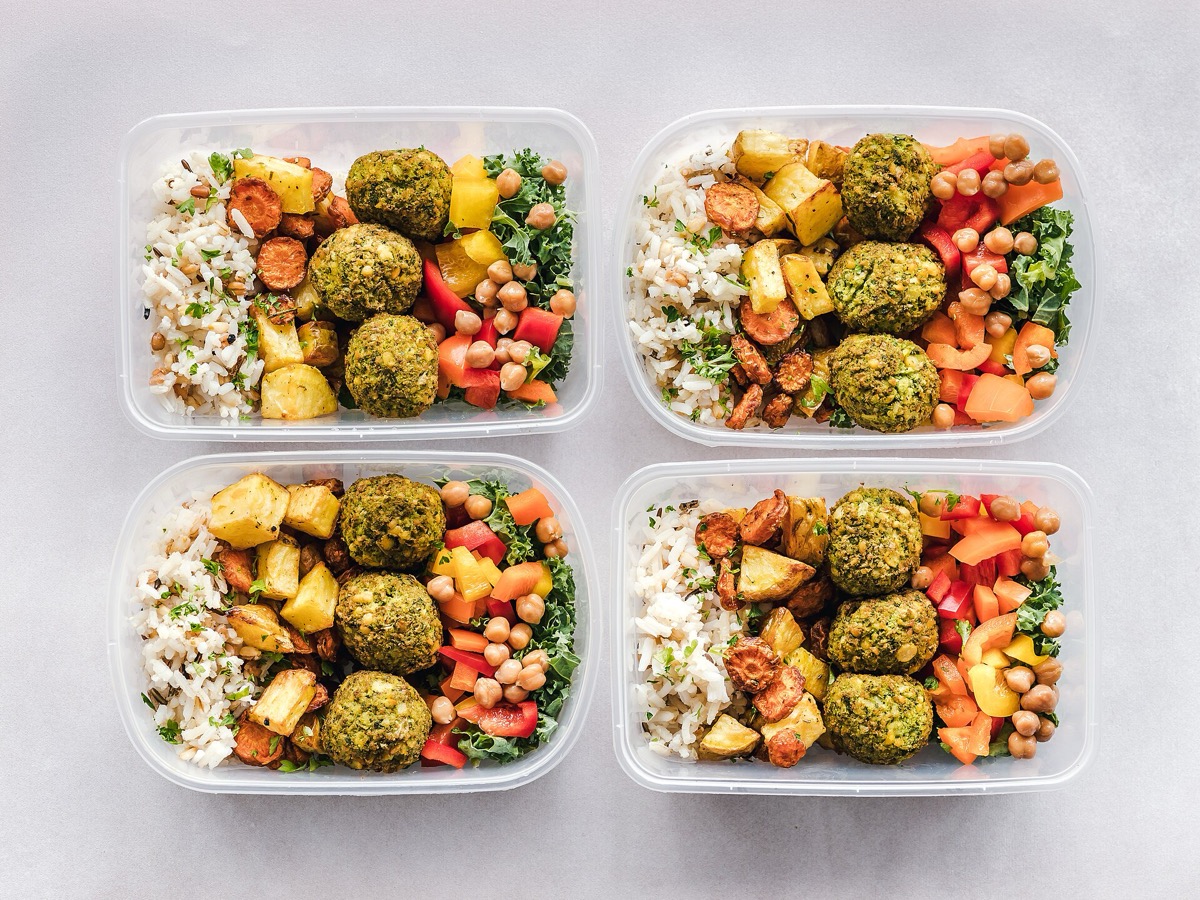
The 15 minutes are for planning; the prep comes after you shop. Harvard's Nutrition Source suggests starting with the foods that take longest to cook: proteins such as chicken and fish, whole grains such as brown rice and quinoa, dried beans and roasted vegetables. Washed greens and hard-boiled eggs are quick wins too.
Then put thawing on the plan. FSIS says it's best to plan ahead and thaw in the refrigerator, and that even a pound of ground meat or boneless chicken breasts takes a full day there. Write "move the shrimp to the fridge" on the day before taco night.
A sample week
One 15-minute plan, with Friday out and Sunday as the shopping and prep day:
| Day | Dinner | Why it's easy |
|---|---|---|
| Sunday | Whole-wheat spaghetti and turkey meatballs, salad | The big cook: bake a double batch, refrigerate half |
| Monday | Shakshuka (eggs baked in tomato and pepper sauce), crusty bread | Meatless, using peppers and onions sliced on Sunday |
| Tuesday | Shrimp tacos with peppers, slaw and lime | Taco night; shrimp moved to the fridge Monday morning |
| Wednesday | Meatball subs, roasted broccoli | Sunday's second batch, three days on |
| Thursday | Hummus, cut vegetables, cheese, crackers, fruit | No-cook night |
| Friday | Dinner out | It was on the calendar |
| Saturday | Leftovers night | Midweek leftovers: Sunday's food is past 3 to 4 days |
The list, by section:
- Produce: 3 bell peppers, 2 onions, garlic, salad greens, broccoli, half a cabbage, limes, carrots, cucumbers, fruit
- Meat: 2 pounds ground turkey
- Dairy and refrigerated: eggs, Parmesan, sliced provolone, cheese, hummus
- Bakery: crusty bread, sub rolls, tortillas
- Center aisles: whole-wheat spaghetti, 2 jars of marinara, crushed tomatoes, breadcrumbs, crackers
- Frozen: 1 pound shrimp
Keep it safe
The rules from USDA and FoodSafety.gov:
- Refrigerate within 2 hours of cooking (1 hour above 90°F), in shallow containers so it cools quickly.
- Keep the fridge at 40°F or below and the freezer at 0°F or below.
- Count from the day you cooked it: 3 to 4 days in the fridge. Frozen leftovers are safe indefinitely, but FSIS says they can lose moisture and flavor when stored for longer times.
- Thaw in the fridge and use thawed leftovers within 3 to 4 days.
- Reheat to 165°F, and bring sauces and soups to a rolling boil.
Frequently asked questions
How many dinners should I plan for a week?
Four or five cooked dinners, plus a leftovers night, a no-cook night and any night you're out. If you're new to planning, start with two or three.
Can I cook everything on Sunday for the whole week?
Only partly. USDA says leftovers keep 3 to 4 days in the fridge, so Sunday's cooking lasts through Wednesday or Thursday. Freeze later portions the day you cook them and thaw them in the fridge the day before.
What are good theme nights for dinner?
Tacos, pasta, stir-fry, soup, pizza and breakfast for dinner, because each takes many fillings. Pick the ones your household already likes.
How do I stop wasting food when I meal plan?
Check what you have first, put the most perishable food early in the week, choose ingredients that cover two meals, and end the week with a leftovers night.
Start Meal Prep
Weekly meal ideas for your household, so you never decide what to buy on the spot.
Psst is invite-only. Sign up with code MEALPREP
Scan with your iPhone / Download Psst
Psst is invite-only. Sign up with code MEALPREP
Sources
- Leftovers and Food Safety (USDA Food Safety and Inspection Service)
- The Big Thaw: Safe Defrosting Methods (USDA Food Safety and Inspection Service)
- Cold Food Storage Chart (FoodSafety.gov)
- Meal Prep Guide (The Nutrition Source, Harvard T.H. Chan School of Public Health)
- Healthy Eating Plate (The Nutrition Source, Harvard T.H. Chan School of Public Health)
- Meal planning (Food Standards Scotland)
- Planning Healthy Meals (Massachusetts Department of Transitional Assistance)
- Meal planning is associated with food variety, diet quality and body weight status in a large sample of French adults (Ducrot and colleagues, International Journal of Behavioral Nutrition and Physical Activity, 2017)