How many push-ups should you be able to do?
There's no single right number. Mayo Clinic's good level runs from 28 for men and 20 for women at 25 to 10 each at 65. See the norms and how to test fairly.
There is no single right number of push-ups, but published norms give you a fair range. Mayo Clinic lists a good fitness level as 28 for men and 20 for women at age 25, 16 and 14 at 45, and 10 each at 65, done until you need to rest. A table in the American College of Sports Medicine (ACSM) guidelines rates men in their 20s as good at 22 to 28 from the toes, and women in their 20s as good at 15 to 20 from the knees. These numbers depend on the test, so compare yours only with a table that used the same rules.
Good push-up counts by age and sex
Mayo Clinic's fitness-test page gives these counts as a good fitness level:
| Age | Women | Men |
|---|---|---|
| 25 | 20 | 28 |
| 35 | 19 | 21 |
| 45 | 14 | 16 |
| 55 | 10 | 12 |
| 65 | 10 | 10 |
The test. Lie facedown with your palms next to your shoulders and your back straight. Push up to full arm length, lower until your chin touches the floor, and repeat until you need to rest.
The limits. Mayo allows knee push-ups if you're starting a fitness program, and the table doesn't separate them from classic ones. The page doesn't say who was tested, though its references include an ACSM assessment manual and a 2013 Cooper Institute book of norms for adults and law enforcement. Mayo treats the counts as targets: below yours is a goal to work toward, and above it means better fitness.
The ACSM ratings for your 20s
In this test, men push from their toes and women from their knees, for as many good reps as they can do. A 2022 paper in the International Journal of Exercise Science reprints the ratings for ages 20 to 29:
| Rating | Women, from knees | Men, from toes |
|---|---|---|
| Excellent | 30 or more | 36 or more |
| Very good | 21 to 29 | 29 to 35 |
| Good | 15 to 20 | 22 to 28 |
| Fair | 10 to 14 | 17 to 21 |
| Poor | 9 or fewer | 16 or fewer |
The paper traces these standards to the Canadian Association of Sport Sciences in 1987, and its authors say they haven't been updated to reflect current training. They tested 72 college women aged 18 to 24 both ways and proposed a scale for women on their toes: 8 to 11 is good, and 18 or more is excellent. They say it still needs validating.
What adults actually did in studies
These are measured counts, not targets, and each study set its own rules.
Norway. A national study published in 2016 tested 726 randomly selected adults aged 20 to 65, counting reps in 40 seconds. People started face down, touched their hips, did a push-up with a straight body, and a rep counted when one hand was placed over the other with elbows straight. These are the means, with the middle half of scores in parentheses:
| Age | Men | Women |
|---|---|---|
| 20 to 29 | 14.2 (12 to 16) | 10.3 (7 to 13) |
| 30 to 39 | 14.3 (11 to 17) | 9.5 (7 to 13) |
| 40 to 49 | 12.6 (9 to 16) | 7.7 (6 to 10) |
| 50 to 59 | 10.5 (8 to 13) | 7.8 (5 to 10.5) |
| 60 to 64 | 8.4 (6 to 10) | 5.1 (2 to 7) |
The women's counts come only from the 150 who could keep a straight body. The other 196 did it on their knees and averaged 7.9. The authors warn that these values may overstate fitness, since those who took part had a higher socioeconomic background, and the women's group at 60 to 64 had only 11 people.
Google employees. A 2025 study of 152 employees aged 21 to 59 in the San Francisco Bay Area used a one-minute test, with men on their toes and most women on their knees by choice. Men's means were 26.9 in their 20s and 20.9 in their 50s, and women's were 20.8 and 18.5. The authors say this convenience sample may not represent the general population.
What the firefighter study showed
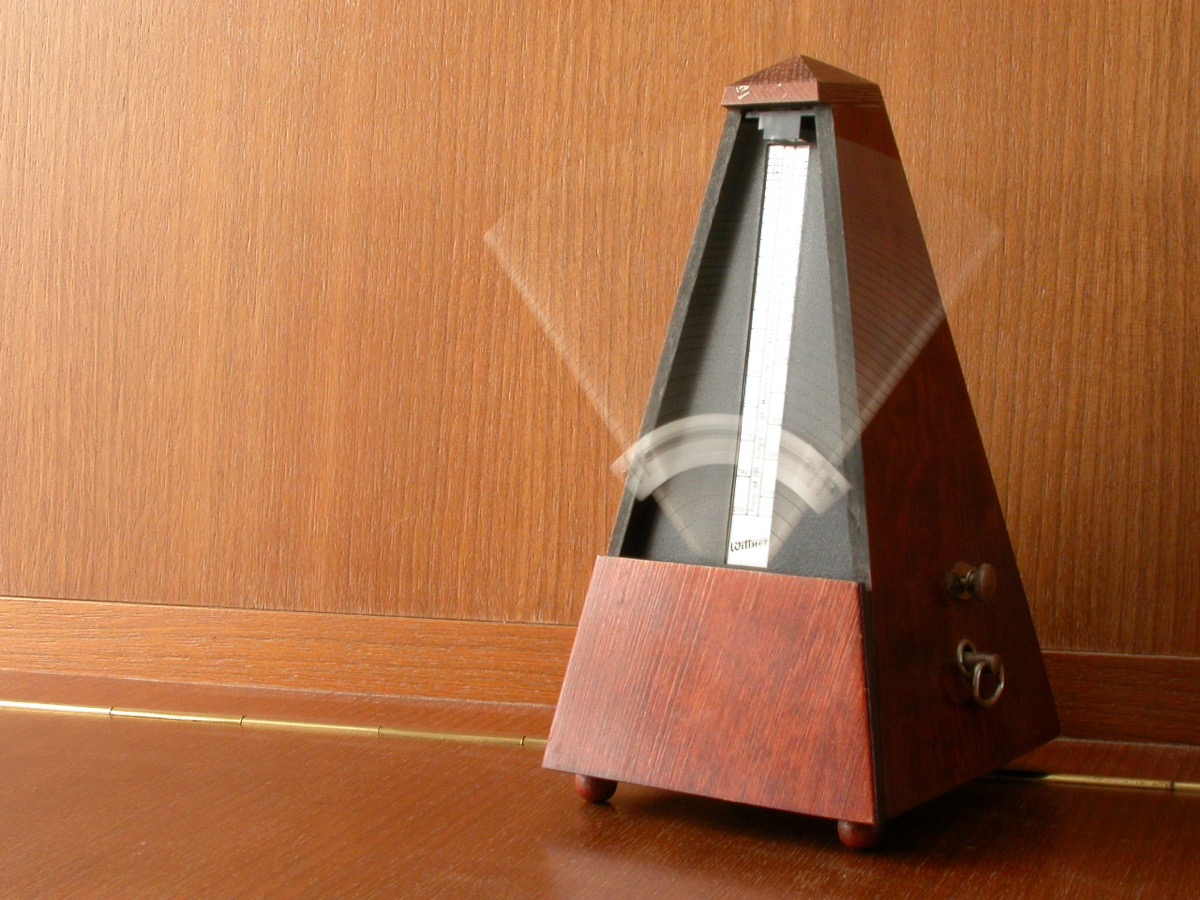
A 2019 study in JAMA Network Open used the records of 1,104 active male firefighters from 10 Indiana fire departments, with a mean age of 39.6. At a baseline exam they did push-ups in time with a metronome until they reached 80, missed 3 or more beats, or stopped. Over up to 10 years, the records showed 37 new cases of coronary artery disease or other major cardiovascular events.
Men who did more than 40 had a 96% lower event rate than men who did 0 to 10: 1 event among 155 men, against 8 among 75.
What it didn't show:
- A target. The authors describe their groups of 10 as arbitrary, so 40 isn't a line they found.
- Cause and effect. The study didn't test whether training up to a higher count lowers risk. The top group was also younger (mean age 35.1 against 48.4) with a lower body mass index, or BMI (26.8 against 33.1). After adjusting for age and BMI, its difference was no longer statistically significant, and the authors write that the results don't support push-up capacity as an independent predictor of risk.
- A result for everyone. They say it may not apply to women, older or inactive people, or other occupations.
They do suggest push-ups may be a simple, no-cost measure of functional status.
How to test yourself fairly
- Warm up. The 2022 paper used five minutes of fast walking and light arm and shoulder moves.
- Pick one version and write it down. Choose toes or knees, then compare only with the matching column.
- Set your depth. Mayo's test goes down until your chin touches the floor. The ACSM protocol used in the 2022 paper bends the elbows to at least 90 degrees, with the chest about 2 inches from the floor, no pause at the top, and shoulders, hips and knees in line.
- Count only clean reps. Mayo suggests having someone count. In the 2022 paper, testers gave one correction per flaw and ended the test if the next rep didn't fix it.
- Keep your pace the same each time. Pace can change the count: in a 2022 study of 44 adults aged 21 to 36, counts were highest at a self-chosen pace or at 60 a minute.
- Stop for symptoms. The firefighters' test could end for dizziness, lightheadedness, chest pain or shortness of breath. If you have a heart condition or a shoulder or wrist problem, check with your doctor before an all-out test.
What to do with your result
- You can't do one yet. Eight of the 72 college women couldn't do one from their toes, and 8 of the 152 Google employees couldn't do any. Start on a wall or counter with this wall-to-floor routine.
- You're below your number. Build up gradually on a version you can do with good form. The same routine covers this.
- You're at or above it. Set a higher goal if you like. Before any daily challenge, read what 100 push-ups a day for a month involves.
- Test again. Mayo suggests repeating your measurements about six weeks after you begin an exercise program, then once in a while. Use the same version and rules.
- Look past this one number. The CDC asks adults to work all major muscle groups on 2 or more days a week, including the legs, hips, back and abdomen.
Frequently asked questions
Is 40 push-ups good?
By these tables, yes. It's above Mayo's good level at every age listed, and it rates excellent for men in their 20s from the toes and women in their 20s from the knees. It isn't a proven health cutoff: the firefighter study's groups were arbitrary and covered only men.
How many push-ups should a 40-year-old be able to do?
Mayo has no row for 40. Its nearest rows are 21 for men and 19 for women at 35, and 16 and 14 at 45.
Do knee push-ups count?
Yes, when the table allows them: Mayo's for people starting a fitness program, and ACSM's for women. They aren't equal to toe push-ups. One study cited in the 2022 paper put the load at 49% of body weight from the knees and 64% from the toes, and the paper's 72 college women averaged 17.5 from the knees and 9 from the toes.
Start Saitama Challenge
Quick sets of push-ups, sit-ups and squats, plus a run. Log them anywhere and climb the power levels to Saitama.
Psst is invite-only. Sign up with code SAITAMA
Scan with your iPhone / Download Psst
Psst is invite-only. Sign up with code SAITAMA
Sources
- How fit are you? See how you measure up (Mayo Clinic)
- Development of a standard push-up scale for college-aged females (Adams and colleagues, International Journal of Exercise Science, 2022)
- Normative values for musculoskeletal- and neuromotor fitness in apparently healthy Norwegian adults (Kjær and colleagues, BMC Sports Science, Medicine and Rehabilitation, 2016)
- Measuring procedures for the Norwegian fitness tests (additional file, Kjær and colleagues, 2016)
- Active assessment of fitness and performance in a general population (Winslow and colleagues, Frontiers in Sports and Active Living, 2025)
- Association between push-up exercise capacity and future cardiovascular events among active adult men (Yang and colleagues, JAMA Network Open, 2019)
- Male-female differences in push-up test performance at various cadences (Rozenek and colleagues, Journal of Strength and Conditioning Research, 2022)
- Adult Activity: An Overview (CDC)