What to wear running in cold weather: layers by temperature
Dress in layers, as if it's 15 to 20 degrees warmer than it is. What to wear at each temperature, plus hands, feet, wind, rain and when to stay inside.
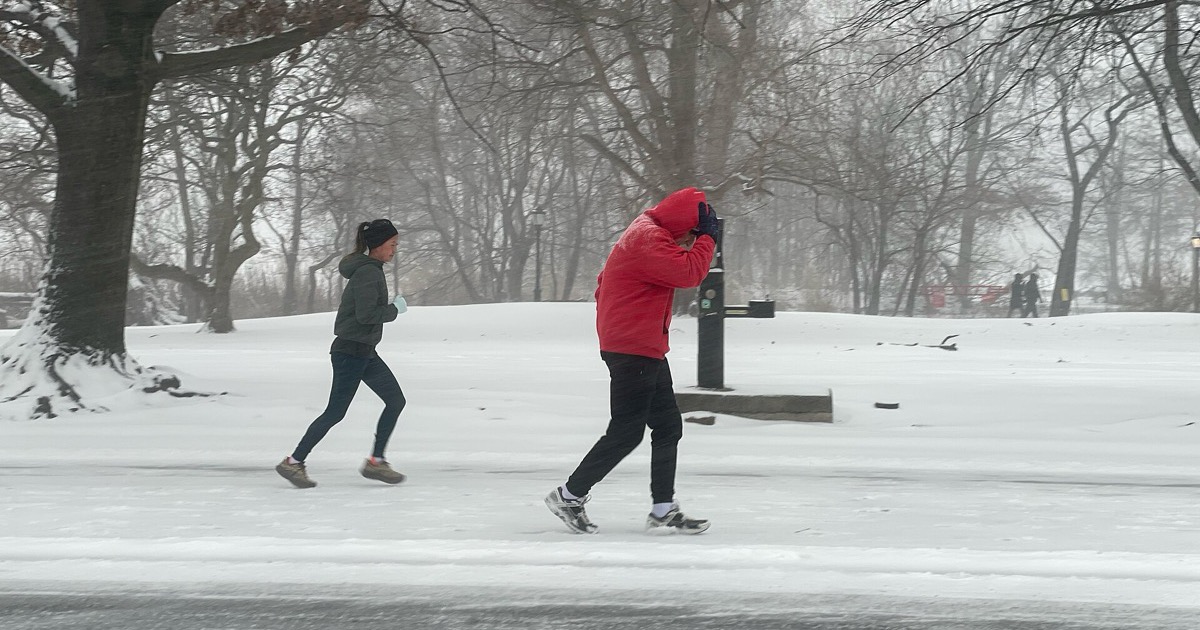
Wear layers you can take off, and dress as if it's 15 to 20 degrees warmer than the thermometer says, because running heats you up quickly. You should feel a little chilly at the start. That usually means a thin top that moves sweat off your skin, an insulating layer as it gets colder, a jacket for wind or rain, plus gloves and a hat or headband. Below 0°F or in extreme wind chill, Mayo Clinic's advice is to consider a break or an indoor workout.
How warm to dress
Karla Marley, a physical therapist at Mayo Clinic Health System, says to dress as if it's 20 degrees warmer than it is. Caitlin Lewis, MD, a Cleveland Clinic sports medicine physician, says 15 to 20 degrees. So on a 30°F morning, dress for about 45 to 50°F.
Corey Wencl, an athletic trainer at Mayo Clinic Health System, gives the test: if you feel a little chilly at the start of your warm-up, you've probably layered correctly, and if you're warm before it, you're probably overdressed.
Then adjust. Even when you exercise with a group, the American College of Sports Medicine (ACSM) says to go by your own response, such as sweating, not a standard amount of clothing. Mayo Clinic adds that lean people may need more insulation, and that mixing walking with running can leave you more vulnerable to the cold, because you sweat and then get chilly. If you run-walk, as in the turkey trot plan, keep a layer to put back on during walk breaks.
What to wear by temperature
Rows marked "Marley" are her rules for running from a 2015 Mayo Clinic article. Rows marked "Starting point" aren't from her or any health body: they're a rough guide worked out from the rule of thumb above, so adjust them to suit you.
| Temperature | Tops | Bottoms | Extras | Numbers from |
|---|---|---|---|---|
| 50°F | 1: short sleeves | 1: shorts | Starting point | |
| 40°F | 1: long sleeves | 1: shorts or tights | Light gloves if your hands run cold | Starting point |
| 30°F | 2 | 1 | Marley | |
| 20 to 30°F | 2 | 1 or 2 | Gloves, hat or headband | Starting point |
| 10 to 20°F | 2: base layer, jacket | 2: tights, wind pants | Marley | |
| 0 to 10°F | 3, with a jacket | 2, possibly wind pants over them | Marley | |
| Minus 10 to 0°F | 3 | 2 | Extra pair of mittens, scarf around your face | Marley |
| Colder | Use a treadmill | Marley |
Marley says to factor in the wind chill too. By the National Weather Service formula, 20°F with a 15 mph wind has a wind chill of about 6°F, which moves you down a row.
Her list doesn't mention a hat or headband, and mentions mittens only in the coldest row. As a starting point, add both near freezing. And since Mayo Clinic's advice is to consider an indoor workout below 0°F, read the minus 10 to 0°F row as what to wear if you go anyway.
The three layers
ACSM describes typical cold-weather clothing as three layers, and Mayo Clinic suggests what each can be:
- Next to your skin: a thin synthetic, such as polypropylene, that draws sweat away. Avoid cotton, which stays wet against your skin.
- In the middle: fleece or wool for insulation. Cleveland Clinic says to pick layers that are easy to take off and carry.
- On the outside: a waterproof, breathable layer. ACSM adds that sweat can build up inside one faster than it escapes, and says the outer layer typically shouldn't be worn during exercise unless it's raining or very windy. It should go on when you rest.
In the dark, wear reflective clothing on the outside: Dr. Lewis warns against covering a reflective shirt with a plain jacket.

Hands, head and feet
- Hands: Mayo Clinic suggests thin wicking liners under heavier gloves or mittens lined with wool or fleece. Put them on before your hands get cold, and take off the outer pair when your hands get sweaty.
- Head and ears: a hat, or a headband to protect your ears. Cleveland Clinic says a moisture-wicking hat is more comfortable over several miles than a wool one.
- Face: if it's very cold, Mayo Clinic says to consider a scarf or ski mask.
- Feet: Mayo Clinic says to consider shoes a half size or one size larger to fit thick thermal socks or an extra pair of regular socks. On clear paths, Cleveland Clinic says your usual running shoes are fine.
When it's windy
Wind can get through your clothes and strip away the warm air around your body, Mayo Clinic says. It puts the risk of frostbite at less than 5% when the air is above 5°F, rising as the wind chill falls. Below a wind chill of minus 18°F (ACSM says minus 17°F), frostbite can occur on exposed skin in 30 minutes or less. ACSM's advice is to avoid exposing skin and to use windproof outer layers.
When it's wet, snowy or icy
Getting wet makes you more vulnerable to the cold, Mayo Clinic says, so consider putting off your workout if it's raining or snowing unless you have waterproof gear. A mild day isn't automatically safe: the CDC says hypothermia can occur above 40°F if a person is chilled by rain or sweat.
Snow and ice greatly increase the risk of slips and falls, Cleveland Clinic says. Mayo Clinic suggests footwear with enough traction. Cleveland Clinic warns that you can still slip in over-the-shoe grips or cleats, and says that if your path isn't clear, it's best to wait a day or two.
Take off damp gear as soon as you get home. Dr. Lewis says that sitting in cold, wet clothes still puts you at risk of hypothermia after a run.
Signs of frostbite and hypothermia
Frostbite is most common on exposed skin, such as the cheeks, nose and ears, and can also affect hands and feet. Mayo Clinic lists numbness, loss of feeling or a stinging sensation as early signs. It says to get out of the cold immediately and slowly warm the area without rubbing it, and to seek emergency care if numbness doesn't go away. The NHS says to get medical help if you think you have frostbite.
Hypothermia is abnormally low body temperature. Mayo Clinic lists intense shivering, slurred speech, loss of coordination and fatigue as signs, and says to seek emergency help right away. The CDC adds confusion, fumbling hands and drowsiness, calls it a medical emergency, and warns that a person may not know it's happening.
ACSM says that in cold air, hypothermia is most likely if someone gets injured or exhausted and can't keep exercising. So Dr. Lewis suggests a shorter distance or loops near home, and Mayo Clinic suggests telling someone your route and when you'll be back.
When to stay in
Mayo Clinic says to consider a break or an indoor workout if the temperature dips below 0°F or the wind chill is extreme, and its 2023 Q&A says such conditions may rule out safe outdoor activity even in the right clothing. Exercise in the cold is safe for almost everyone, Mayo Clinic says, but if you have asthma, heart problems or Raynaud's disease, check with your doctor first.
Frequently asked questions
How cold is too cold to run outside?
There's no single cutoff. Mayo Clinic says to consider an indoor workout below 0°F or in extreme wind chill, and Cleveland Clinic notes that limits vary from person to person.
What should I wear running in 40-degree weather?
As a starting point, a long-sleeved top that wicks sweat, shorts or tights, and light gloves if your hands run cold. Bring a jacket if rain is likely.
Can you get frostbite if it's above freezing but the wind chill is below freezing?
No. The National Weather Service says the actual air temperature has to be below freezing for frostbite to develop on exposed skin, and the NHS likewise ties it to 32°F or below. You might still get hypothermia.
Start Running Club
A running plan that builds toward your race one week at a time, with friends who run it too.
Psst is invite-only. Sign up with code RUNCLUB
Scan with your iPhone / Download Psst
Psst is invite-only. Sign up with code RUNCLUB
Sources
- Exercising outdoors in winter (Mayo Clinic Orthopedics & Sports Medicine)
- Running and Exercising in the Cold (Mayo Clinic News Network, 2015)
- Tips for safe cold-weather training (Corey Wencl, Mayo Clinic Health System, 2023)
- Mayo Clinic Q and A: Exercise safety in cold weather (Mayo Clinic News Network, 2023)
- ACSM Expert Consensus Statement: Injury Prevention and Exercise Performance during Cold-Weather Exercise (Castellani and colleagues, Current Sports Medicine Reports, 2021)
- Everything You Need to Know About Running in Cold Weather (Cleveland Clinic, 2021)
- Preventing Hypothermia (CDC)
- Frostbite (NHS)
- Understanding Wind Chill (National Weather Service)