Your first turkey trot: a three-week training plan to race day
A simple three-week walk-run plan to finish your first turkey trot on Thanksgiving, plus what to wear, race-day tips and how to find a race near you.
Updated
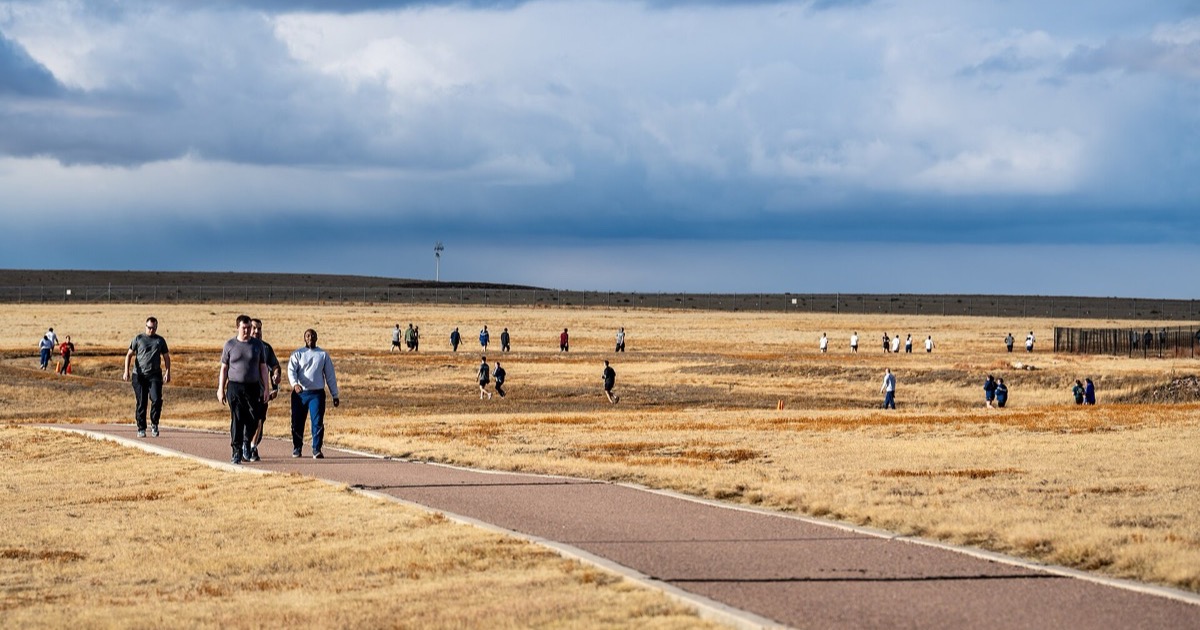
A turkey trot is a road race held on Thanksgiving morning, and most are 5K, or 3.1 miles. Three weeks is enough to get ready to finish one, even if you haven't run in years: do three short walk-run sessions a week, run a little more each week, and rest the day before the race. Thanksgiving 2026 is Thursday, November 26, so the plan below starts on November 5 and ends on race day.
What a turkey trot is
RunSignup, a race registration site, calls Thanksgiving the biggest running day in the US. On Thanksgiving 2025 it counted 1,330,726 people registered for 1,056 turkey trots, and those are only the races that use its site.
Most turkey trots are short and friendly. In RunSignup's 2025 count, 91% of turkey trots included a 5K. Some offer other distances too: 21% had a one-mile race, 24% a kids' dash and 12% a 10K.
The tradition is old. The Buffalo Turkey Trot in New York was first run in 1896, with six runners, four of whom finished. It's a fundraiser for the local YMCA, it's now an 8K (just under 5 miles), and it calls itself the oldest continually running public footrace in North America.
Can you really get ready in three weeks?
You can get ready to finish, not to run every step. The NHS Couch to 5K plan, a well-known program for beginners, takes nine weeks to build up to 30 minutes of running without stopping. It starts with short runs broken up by walks, and that's the model for the plan below. Three weeks takes you through its first stage, so on race day you'll mix running and walking, which is a perfectly good way to do a turkey trot.
To set your expectations: at a walking pace of 3 miles an hour, 3.1 miles takes a little over an hour. Every stretch you run brings that down.
If you're starting after a long break, have a health condition, or are worried about your health, talk to your doctor before you begin. Whatever your fitness, listen to your body and stop if something doesn't feel right.
The three-week plan
Do three walk-run sessions a week with a rest day between them, as Couch to 5K does. Each session takes about 30 minutes. You don't need much gear: running shoes with arch support and cushioning, and clothes you can move in.
Every session
- Walk briskly for 5 minutes to warm up.
- Do that week's run-walk intervals.
- Walk for 5 minutes to cool down.
Run slowly. At first, a pace that feels almost too easy is the right one. If a week feels too hard, repeat its sessions rather than moving on.
On days between runs, a brisk 30-minute walk is a good extra session. The CDC recommends that adults get 150 minutes a week of moderate activity, such as brisk walking, or 75 minutes of vigorous activity, such as running. Three walk-run sessions and two brisk walks a week add up to 150 minutes, a habit worth keeping after Thanksgiving.
Week 1: November 5 to 11
Three sessions, for example on Thursday, Saturday and Monday.
- Run 1 minute, walk 90 seconds. Repeat 8 times, about 20 minutes.
These are the intervals Couch to 5K starts with.
Week 2: November 12 to 18
Three sessions, on the same days.
- Run 90 seconds, walk 2 minutes. Repeat 6 times, about 21 minutes.
Week 3: November 19 to 25
Two full sessions, one short one, then rest.
- Thursday and Saturday: run 90 seconds, walk 90 seconds, run 3 minutes, walk 3 minutes, run 90 seconds, walk 90 seconds, run 3 minutes. That's 15 minutes, the pattern from Couch to 5K's third week.
- Monday: an easy session of week 1's intervals, run 1 minute and walk 90 seconds, for 15 minutes.
- Tuesday: an easy walk, or rest.
- Wednesday: rest. Lay out what you'll wear in the morning.
Race day: Thursday, November 26
Use the intervals that felt comfortable in training, such as week 2's run 90 seconds, walk 2 minutes, and keep repeating them to the finish. The race is longer than any of your sessions, so walk more whenever you need to.
What to wear in the cold
Thanksgiving morning can be cold, so dress in layers you can take off as you warm up.
- Next to your skin: a top that pulls sweat away and dries quickly, in a synthetic blend or wool. Avoid cotton, which soaks up sweat, dries slowly and can leave you cold.
- Over it: a warmer layer, such as a fleece.
- On top, if it's windy or wet: a water-resistant jacket.
- Hands and head: gloves, a hat and something over your ears, as needed.
Dress as if it's 15 to 20 degrees warmer than the temperature, as Cleveland Clinic sports medicine physician Caitlin Lewis, MD, advises, because you'll heat up once you're moving and should feel a little cold at the start. After the finish you'll cool down fast in damp clothes, and the CDC notes that hypothermia can happen even above 40°F when you're chilled by sweat or rain. Bring a dry top and a warm jacket for afterward.
Race-day tips
- Read the race page a few days before. Check the start time, where to collect your bib, parking or transit, and whether the course has a time limit.
- Get there early. Give yourself time to park, find your bib, use the bathroom and walk for 5 minutes to warm up before the start.
- Line up near the back. If you'll be walking part of the way, starting behind the faster runners lets you set your own pace from the first step.
- Start slower than feels right. The crowd at the start makes it easy to go out too fast. Use the talk test: the CDC says that if you can't say more than a few words without pausing for a breath, you're working at vigorous intensity. If that happens early, walk until you can talk again.
- Wear nothing new. Race in the shoes and clothes you trained in.
- Walk it off. Keep walking for a few minutes after the finish line, then change into dry clothes.
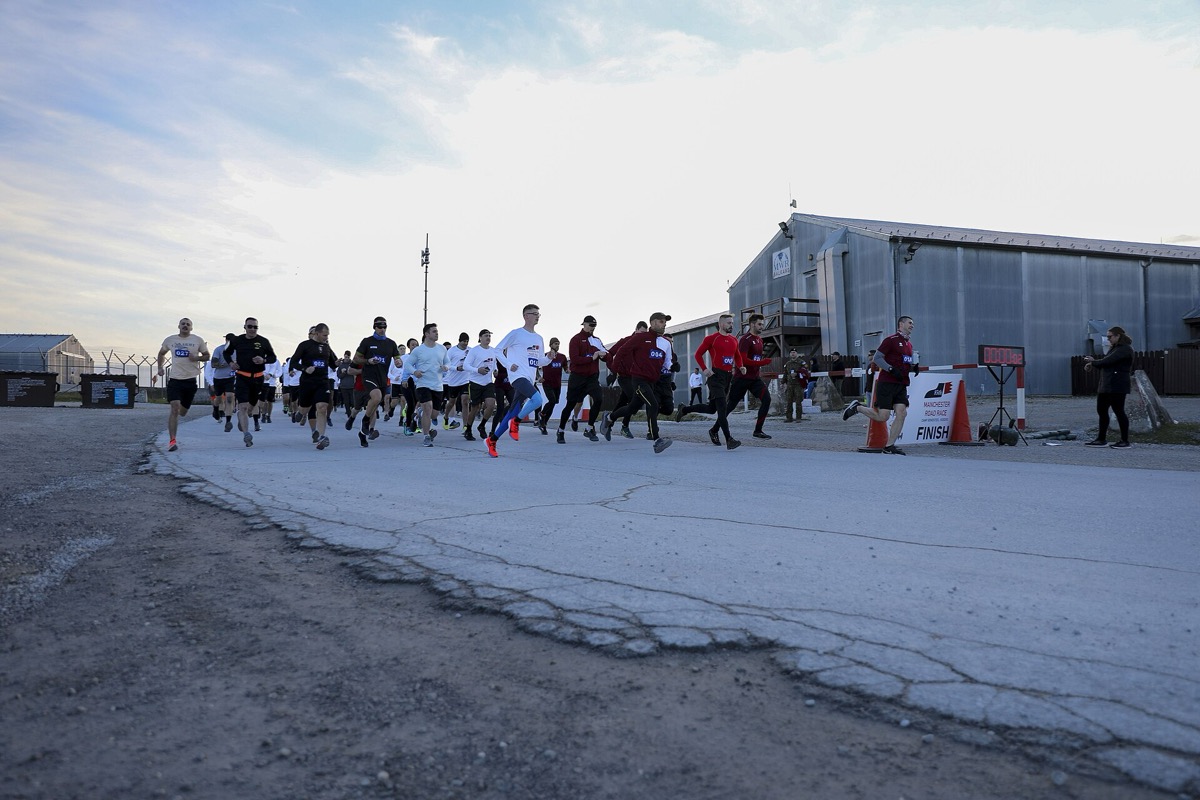
How to find a turkey trot near you
- Search a race finder. RunSignup's race search lets you filter by distance from your zip code, by race distance and by date. Set the date to November 26.
- Ask a running club. The Road Runners Club of America has a Find a Running Club directory you can search by state and city. A local club can tell you which races nearby suit a first-timer.
- Pick an easy first race. A 5K on a flat course is the friendliest place to start.
- Register soon. Popular races cap their fields. Buffalo's turkey trot drew 12,500 runners in 2010, the most the YMCA would allow, and the field was raised to 14,000 by 2012.
Frequently asked questions
How long is a turkey trot?
Most are 5K, or 3.1 miles. In RunSignup's 2025 count, 91% of turkey trots included a 5K, 21% a one-mile race and 12% a 10K. The Buffalo Turkey Trot, the oldest, is an 8K, just under 5 miles.
Can you walk a turkey trot?
You can walk all or part of any race that has no strict time limit. Check the race page for a time limit, and line up near the back so faster runners can pass.
Can you train for a 5K in three weeks?
You can train to finish one by mixing running and walking. Running the whole way takes longer to build up to: the NHS Couch to 5K plan takes nine weeks to reach 30 minutes of running without stopping.
What should you wear to a turkey trot?
Layers: a sweat-wicking top in a synthetic blend or wool, a warmer layer over it, and a water-resistant jacket if it's windy or wet. Skip cotton, wear gloves and a hat if it's cold, dress for 15 to 20 degrees warmer than the temperature, and bring dry clothes for after.
Start Running Club
A running plan that builds toward your race one week at a time, with friends who run it too.
Psst is invite-only. Sign up with code RUNCLUB
Scan with your iPhone / Download Psst
Psst is invite-only. Sign up with code RUNCLUB
Sources
- RunSignup Reports Record-Setting Thanksgiving Day Race Participation of 1.3 Million
- 2025 Turkey Trots Report: Record-Setting Race Participation
- Buffalo Turkey Trot
- Couch to 5K running plan (NHS)
- Get running with Couch to 5K (NHS)
- Physical activity guidelines for adults (CDC)
- How to Measure Physical Activity Intensity (CDC)
- Exercise clothing and shoes (MedlinePlus, National Library of Medicine)
- Everything You Need to Know About Running in Cold Weather (Cleveland Clinic, 2021)
- Preventing Hypothermia (CDC)
- Find a race (RunSignup)
- Find a Running Club (Road Runners Club of America)