How to eat well while traveling for the holidays
Pack food that needs no fridge, learn TSA's 3.4-ounce rule, keep perishables cold, carry an empty water bottle, and add fiber at someone else's table.
To eat well while traveling for the holidays, pack a small bag of food that needs no fridge, learn what TSA lets through security, keep anything perishable cold, carry an empty water bottle, and add a little fiber to your days at someone else's table. Thanksgiving is on November 26, 2026, and the holiday travel season runs on from there. None of this means skipping your family's food. It means not arriving hungry and thirsty after a day of whatever was closest to the gate.
What to pack for a flight or a drive
The easiest travel meal is the one you brought. The CDC's holiday travel tips suggest fruit, vegetables and unsalted nuts, which can help keep you satisfied. The USDA's Food Safety and Inspection Service (FSIS) says some foods need no cold source, including whole fruits and vegetables, hard cheese, bread, crackers and peanut butter.
The Dietary Guidelines for Americans, 2025 to 2030, say every meal should prioritize protein, and they favor fiber-rich whole grains, so pair foods that give you some of each:
- An apple or banana with a handful of unsalted nuts
- Whole-grain crackers with hard cheese
- A peanut butter sandwich on whole-grain bread, with carrots
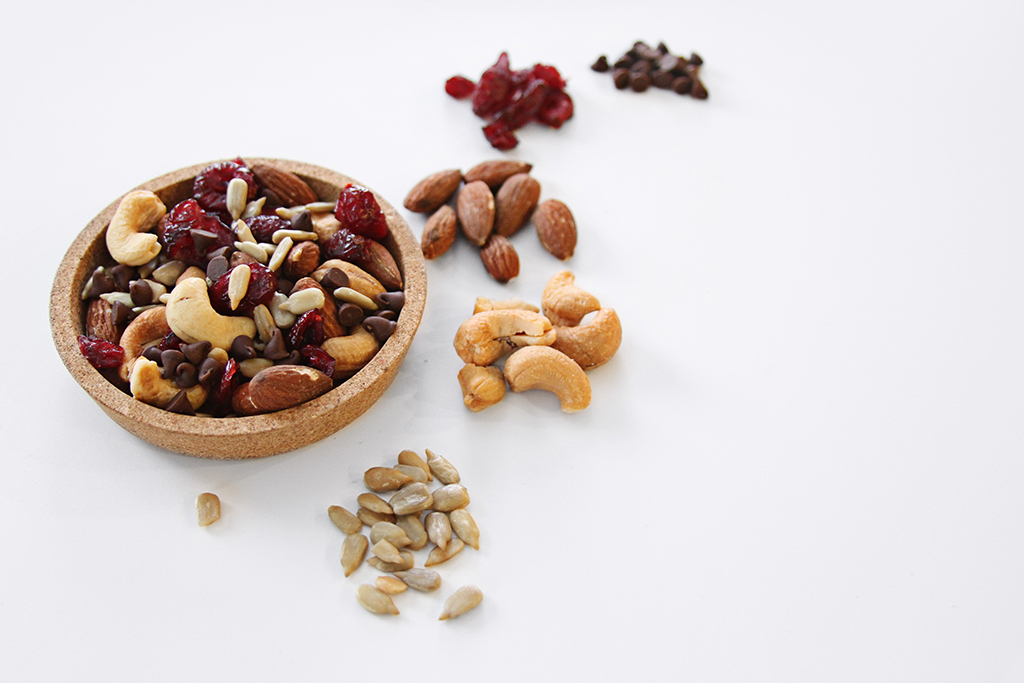
- Dried fruit and nuts in a small bag
A sandwich with meat needs cold packs. FSIS says freezing it helps it stay cold, though mayonnaise, lettuce and tomato are best added later.
What TSA lets through security
Solid food can go in a carry-on or a checked bag. Liquid or gel food larger than 3.4 ounces can't go in a carry-on, and smaller containers go in your quart-size bag of liquids. TSA's Thanksgiving tips from November 2025 put it this way: if you can spill, spread, spray, pump or pour it and it's larger than 3.4 ounces, check it. This table follows TSA's What Can I Bring? page as of November 8, 2026, so check it again before you fly.
| Food | Carry-on | Checked bag |
|---|---|---|
| Sandwiches, snack bars, nuts, crackers, solid cheese, dried fruit | Yes | Yes |
| Fresh fruit and vegetables, within the continental U.S. | Yes | Yes |
| Pies, cakes, cooked meat with no liquid | Yes | Yes |
| Yogurt, hummus, peanut butter, creamy cheese, salsa, soup | 3.4 ounces or less | Yes |
| Gravy, juice, bottled water | 3.4 ounces or less | Yes |
| Empty water bottle or thermos | Yes | Yes |
| Ice packs and gel packs | Frozen solid | Yes |
Two things trip people up:
- Peanut butter is limited. It needs no cold source, but TSA holds it to 3.4 ounces in a carry-on, so spread it on the sandwich at home.
- Holiday dishes vary. TSA's 2025 tips clear stuffing and solid casseroles for the checkpoint, and send cranberry sauce, gravy, jam, maple syrup and wine to a checked bag.
Keep food near the top of your bag, since officers may ask you to take it out. The officer has the final say.
How to keep packed food safe
FSIS says bacteria grow most rapidly between 40°F and 140°F, doubling in number in as little as 20 minutes. Never leave food out of refrigeration over 2 hours, or over 1 hour if the temperature is above 90°F. A holiday trip can easily outlast that.
- In a small bag. FSIS's advice for bag lunches works here: an insulated, soft-sided bag with at least two cold sources, such as two frozen gel packs, or a gel pack and a frozen bottle of water, one above the food and one below. At the airport, they must be frozen solid.
- In the car. FSIS says to bring a cooler packed with plenty of ice, frozen gel packs or another cold source. USDA says an appliance thermometer in the cooler is the best way to check: it should read 40°F or below.
- Bringing a dish. FSIS says it's hard to keep food hot without a heat source, so cook before you leave, cool the food and transport it cold. Reheat it to 165°F, checked with a food thermometer.
How to choose at an airport or highway stop
You're looking for a better option, not a perfect one. The CDC's travel tips for people with diabetes list these ideas for airports and roadside restaurants: fresh fruit with nuts, a sandwich on whole wheat bread with grilled chicken or fish, a salad with grilled chicken or fish, and scrambled or hard-boiled eggs. The CDC wrote them for people with diabetes. Offering them to other travelers is this guide's suggestion, not the CDC's. Mayo Clinic Health System's vacation tips suggest grilled rather than crispy chicken, sides that aren't deep fried, and your own snacks as the side dish.
A few habits help:
- Ask for the numbers. Under FDA rules, restaurants and similar food sellers in a chain of 20 or more locations must post calories and give you written nutrition information, including sodium, fiber and protein, if you ask.
- Read the label. On packaged food, the FDA says 5% Daily Value or less per serving is low and 20% or more is high. Look for more fiber and less sodium.
- Go easy on the salt. The FDA, citing the CDC, says about 40% of the sodium Americans eat comes from foods including deli meat sandwiches, pizza, burgers and savory snacks. Ask for sauces and dressings on the side.
- Walk a little. The CDC suggests 10 minutes on foot at a rest stop, and walking to your gate when you can.
How to keep drinking water
Pack the bottle empty: TSA lets you take empty drink containers through the checkpoint and fill them afterward. In the car, the CDC suggests water or low-calorie drinks over sugary ones, with slices of lemon, lime or cucumber for flavor.
Planes are dry. The CDC Yellow Book says cabin air is typically 10% to 20% humidity. If you're crossing time zones, Mayo Clinic's jet lag advice is to drink plenty of water before, during and after the flight, and to avoid alcohol and caffeine.
Mayo Clinic says you may be drinking enough if you don't often feel thirsty and your urine is colorless or light yellow.
How to eat well in someone else's house
You're a guest, so aim for a few small habits, not a separate menu.
- Keep one meal your own. A quick grocery stop for your usual breakfast gives you a familiar start each day. For the big meal, see how to eat healthy at Thanksgiving.
- Stop at comfortable. For big family dinners on vacation, Mayo Clinic Health System says to mind your portions and never eat to the point of discomfort. "That was great, I'm full" is a complete answer to seconds.
- Keep the fiber coming. The National Institute of Diabetes and Digestive and Kidney Diseases (NIDDK) says constipation can happen when your daily routine changes, including when you travel. It lists whole grains, legumes, fruits, vegetables and nuts as good fiber sources.
- Plan the trip home. The 2-hour limit applies to leftovers on the road too. FoodSafety.gov says Thanksgiving leftovers keep in the fridge three to four days, which means eating or freezing them by the Monday after, November 30, 2026. The drive home doesn't restart that clock.
If you manage a condition with food, check with your doctor or a dietitian before you go. The CDC says people with diabetes can bring more than 3.4 ounces of liquid medicine, juice and gel packs through security, and shouldn't keep insulin in a checked bag.
Frequently asked questions
What are good healthy snacks for traveling?
The CDC suggests fruit, vegetables and unsalted nuts. Whole fruits and vegetables, hard cheese, crackers and peanut butter need no cold source, according to FSIS.
Can I take a pie on a plane?
Yes. TSA allows pies and cakes in both carry-on and checked bags.
How long can packed food stay out of a cooler?
FSIS says 2 hours, or 1 hour if the temperature is above 90°F. Past that, throw perishable food away, restaurant leftovers included. Cookies, crackers, bread and whole fruit are exceptions.
Why do I get constipated when I travel?
NIDDK says a change in your daily routine, including travel, can cause it. High-fiber foods, plenty of liquids and regular physical activity may help. Add fiber a little at a time, and talk with a doctor if it doesn't improve.
Start Eat Well
Pick a goal, work on one eating habit at a time, and log meals with a photo or a few words.
Psst is invite-only. Sign up with code EATWELL
Scan with your iPhone / Download Psst
Psst is invite-only. Sign up with code EATWELL
Sources
- Food: What Can I Bring? (Transportation Security Administration)
- Coffee Thermos (empty): What Can I Bring? (Transportation Security Administration)
- Gel Ice Packs: What Can I Bring? (Transportation Security Administration)
- Liquids, Aerosols, and Gels Rule (Transportation Security Administration)
- TSA prepared for busy Thanksgiving travel in Cleveland, offers special packing tips (Transportation Security Administration, November 25, 2025)
- Tips for Healthy Holiday Travel (Centers for Disease Control and Prevention)
- Tips for Traveling With Diabetes (Centers for Disease Control and Prevention)
- Air Travel (CDC Yellow Book, 2026 edition)
- Danger Zone, 40°F to 140°F (USDA Food Safety and Inspection Service)
- How Temperatures Affect Food (USDA Food Safety and Inspection Service)
- Keeping Bag Lunches Safe (USDA Food Safety and Inspection Service)
- Safe Handling of Take-Out Foods (USDA Food Safety and Inspection Service)
- Tailgating Food Safety Q & A (USDA Food Safety and Inspection Service)
- USDA Provides Tips to Keep Holiday Food Safe at Home or When Traveling (USDA, December 14, 2017)
- Thanksgiving Leftovers for Safe Keeping, Weekend Grazing (FoodSafety.gov)
- Menu Labeling Requirements (U.S. Food and Drug Administration)
- The Lows and Highs of Percent Daily Value on the Nutrition Facts Label (U.S. Food and Drug Administration)
- Sodium in Your Diet (U.S. Food and Drug Administration)
- Eat Real Food: Dietary Guidelines for Americans, 2025 to 2030
- Symptoms & Causes of Constipation (National Institute of Diabetes and Digestive and Kidney Diseases)
- Treatment for Constipation (National Institute of Diabetes and Digestive and Kidney Diseases)
- Eating, Diet, & Nutrition for Constipation (National Institute of Diabetes and Digestive and Kidney Diseases)
- Water: How much should you drink every day? (Mayo Clinic)
- Jet lag disorder: Symptoms and causes (Mayo Clinic)
- How to avoid weight gain during your vacation (Mayo Clinic Health System)