How much protein do you need a day?
The RDA for most healthy adults is 0.8 grams of protein per kilogram of body weight a day, about 0.36 per pound. Who may want more, and how to reach it.
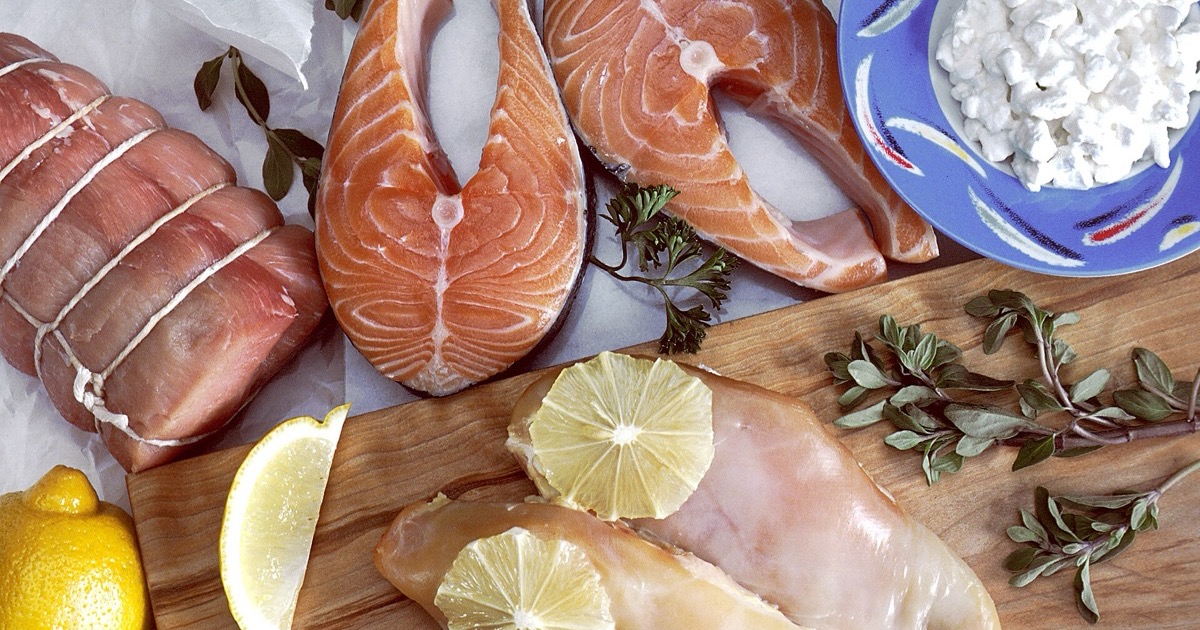
The recommended dietary allowance (RDA) of protein for most healthy adults is 0.8 grams per kilogram of body weight a day, or about 0.36 grams per pound. At 150 pounds (68 kilograms), that's about 54 grams a day. The RDA is a level meant to cover nearly all healthy people, not a personal ideal, and older adults, athletes and people who are pregnant or breastfeeding may want more. The Dietary Guidelines for Americans, 2025 to 2030, set a higher goal of 1.2 to 1.6 grams per kilogram.
Protein by body weight
To work out your RDA, multiply your weight in kilograms by 0.8, or your weight in pounds by 0.36. All figures below are grams a day, rounded.
| Body weight | RDA (0.8 g/kg) | Dietary Guidelines goal (1.2 to 1.6 g/kg) |
|---|---|---|
| 120 pounds (54 kg) | 44 | 65 to 87 |
| 150 pounds (68 kg) | 54 | 82 to 109 |
| 180 pounds (82 kg) | 65 | 98 to 131 |
| 200 pounds (91 kg) | 73 | 109 to 145 |
| 250 pounds (113 kg) | 91 | 136 to 181 |
The National Academies' summary table gives the adult RDA as 46 grams a day for women and 56 for men, based on a reference body weight rather than yours.
What the RDA is and isn't
It's a level for nearly everyone healthy. The National Academies defines an RDA as the average daily intake sufficient to meet the requirements of nearly all (97 to 98 percent) healthy individuals in a group. It's calculated from the Estimated Average Requirement, the level estimated to meet the needs of half of healthy people.
It isn't a personal prescription. The NIH's Office of Dietary Supplements says individual requirements may be higher or lower.
It isn't a ceiling. Harvard T.H. Chan School of Public Health describes 0.8 grams per kilogram as a minimum. The Food and Nutrition Board hasn't set an upper limit for protein, noting that the risk of adverse effects from excess protein from food is very low, though it advises caution with high intakes from foods and supplements because the data are limited.
It isn't the only number. The acceptable range for adults is 10% to 35% of calories. At 4 calories per gram, that's 50 to 175 grams on a 2,000-calorie diet. Nutrition Facts labels use a Daily Value of 50 grams.
It isn't the Dietary Guidelines' goal. The guidelines, dated January 2026, give 1.2 to 1.6 grams per kilogram, adjusted as needed for your calorie needs. The National Academies calls its values distinct from the guidelines. Those values were set in 2005, and its page last updated February 3, 2026, says an update is needed and under consideration.
Who may want more
Older adults
The RDA doesn't rise with age: the table lists the same 46 and 56 grams for people over 70. A 2013 position paper from the PROT-AGE Study Group, appointed by the European Union Geriatric Medicine Society with other scientific organizations, recommends that people over 65 average at least 1.0 to 1.2 grams per kilogram a day to help maintain and regain lean body mass and function.
It advises 1.2 grams or more for those who are exercising and otherwise active, and says most older adults with acute or chronic diseases need even more, 1.2 to 1.5 grams. The Dietary Guidelines add that some older adults need fewer calories but still require equal or greater amounts of key nutrients such as protein.
People who train
The Office of Dietary Supplements says data more recent than the RDA suggest that athletes require 1.2 to 2.0 grams per kilogram a day (0.55 to 0.9 grams per pound) to support metabolic adaptations, muscle repair and remodeling, and protein turnover. Athletes might benefit from even more, it adds, for short periods of intense training or when cutting calories to improve physique or reach a competition weight.
More has limits. A 2018 meta-analysis in the British Journal of Sports Medicine pooled 49 studies with 1,863 participants, healthy adults in resistance training for at least six weeks. Protein supplements improved gains in strength and muscle size, but supplementing beyond a total intake of 1.62 grams per kilogram a day, about 0.73 grams per pound, brought no further gains in fat-free mass.
Pregnancy and breastfeeding
The National Academies' table lists an RDA of 71 grams a day during pregnancy and the same while breastfeeding, compared with 46 for other adult women.
A 2015 study in The Journal of Nutrition points higher. In 29 healthy pregnant women aged 24 to 37, it estimated an average requirement of 1.22 grams per kilogram a day at 11 to 20 weeks and 1.52 grams at 31 to 38 weeks, against the 0.88 grams of the Dietary Reference Intakes' Estimated Average Requirement. It's one small study, so ask your prenatal care provider what fits you.
If you have kidney disease
Check with your doctor before you change how much protein you eat. The National Institute of Diabetes and Digestive and Kidney Diseases says people with chronic kidney disease may need to adjust their protein and should work with a dietitian or health care professional to find the right balance, since too little may lead to malnutrition. It says people on dialysis may need to eat more.
The PROT-AGE paper makes an exception for older people with severe kidney disease who aren't on dialysis, who may need to limit protein.
How to reach it: protein in common foods
These figures come from USDA FoodData Central: each is its value per 100 grams worked out for the amount shown, rounded to the nearest gram.
| Food | Amount | Protein (grams) |
|---|---|---|
| Chicken breast, roasted | 3 ounces (85 g) | 26 |
| Ground beef, 90% lean, pan-browned | 3 ounces (85 g) | 24 |
| Atlantic salmon, farmed, cooked | 3 ounces (85 g) | 19 |
| Light tuna, canned in water, drained | 3 ounces (85 g) | 16 |
| Egg, whole, raw | 1 large (50 g) | 6 |
| Cottage cheese, 2% | 1 cup (226 g) | 24 |
| Greek yogurt, plain, nonfat | 1 container (156 g) | 16 |
| Milk, 2% | 1 cup (244 g) | 8 |
| Soy milk, unsweetened | 1 cup (243 g) | 7 |
| Firm tofu, made with calcium sulfate | ½ cup (126 g) | 22 |
| Edamame, frozen, prepared | 1 cup (155 g) | 18 |
| Lentils, cooked | 1 cup (198 g) | 18 |
| Black beans, cooked | 1 cup (172 g) | 15 |
| Peanut butter, smooth | 2 tablespoons (32 g) | 7 |
| Almonds | 1 ounce, 23 nuts (28 g) | 6 |
Check labels where you can: half a cup of another firm tofu in the USDA's data, made with calcium sulfate and magnesium chloride, has about 11 grams.
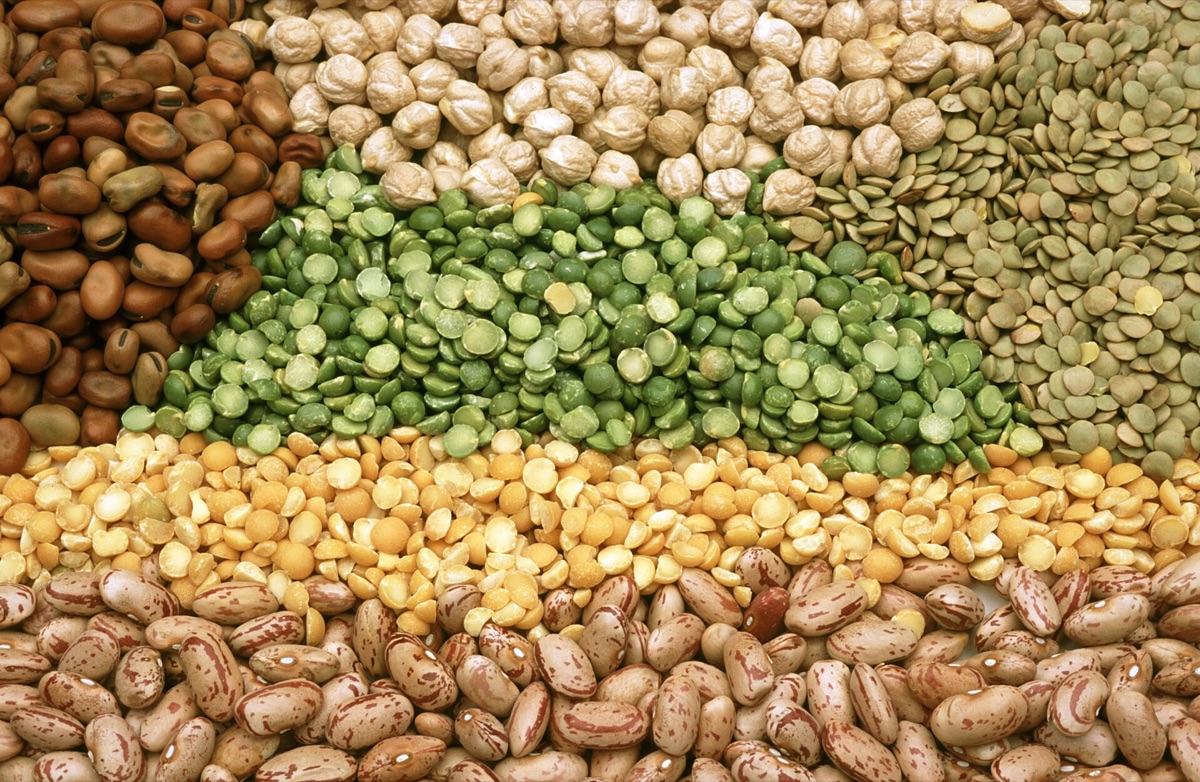
Two sample days show how these add up:
- With meat and dairy: Greek yogurt with an ounce of almonds (22 grams), a cup of lentils (18), 3 ounces of chicken (26) and a cup of milk (8) come to 74 grams.
- Plant foods only: half a cup of the calcium sulfate tofu (22), a cup of lentils (18), a cup of edamame (18), 2 tablespoons of peanut butter (7) and a cup of soy milk (7) come to 72 grams.
Before anything else on the plate, both clear the 54-gram RDA for a 150-pound person and fall short of the guidelines' 82 to 109 grams. Another 3 ounces of canned tuna would bring the first day to 90.
The Dietary Guidelines advise prioritizing protein foods at every meal, and breakfast is one place to start: see high-protein breakfasts without eggs. Harvard's Nutrition Source says the protein "package" (the fats, fiber and sodium alongside it) is likely what makes a difference for health, and that eating beans, nuts, fish or poultry in place of red meat and processed meat can lower the risk of several diseases and premature death.
Frequently asked questions
How much protein does a woman or a man need a day?
The RDA is 46 grams a day for adult women and 56 for adult men, based on a reference body weight. During pregnancy and breastfeeding, the table lists 71.
Is 100 grams of protein a day too much?
No upper limit has been set for protein. MedlinePlus uses 100 grams as its example: on a 2,000-calorie diet it supplies 20% of calories, inside the 10% to 35% range. If you have kidney disease, ask your doctor first.
How much protein do I need to build muscle?
The Office of Dietary Supplements gives 1.2 to 2.0 grams per kilogram a day for athletes, up to about 136 grams at 150 pounds. In the 2018 analysis of resistance training, supplements added no further fat-free mass past about 1.6 grams per kilogram.
A gram per pound, a figure you may have seen, isn't a target in any of these sources. It works out to about 2.2 grams per kilogram, above both numbers.
Start Eat Well
Pick a goal, work on one eating habit at a time, and log meals with a photo or a few words.
Psst is invite-only. Sign up with code EATWELL
Scan with your iPhone / Download Psst
Psst is invite-only. Sign up with code EATWELL
Sources
- Dietary Reference Intakes: Recommended Dietary Allowances and Adequate Intakes, Total Water and Macronutrients, and Acceptable Macronutrient Distribution Ranges (Food and Nutrition Board, National Academies)
- Updates and Innovation Opportunities for the Dietary Reference Intakes Process (National Academies)
- Nutrient Recommendations and Databases (NIH Office of Dietary Supplements)
- Dietary Supplements for Exercise and Athletic Performance: Health Professional Fact Sheet (NIH Office of Dietary Supplements)
- Protein (Harvard T.H. Chan School of Public Health, The Nutrition Source)
- Protein in diet (MedlinePlus Medical Encyclopedia)
- Daily Value on the Nutrition and Supplement Facts Labels (U.S. Food and Drug Administration)
- Dietary Guidelines for Americans, 2025 to 2030
- Eat Real Food (realfood.gov)
- Evidence-based recommendations for optimal dietary protein intake in older people: a position paper from the PROT-AGE Study Group (Bauer and colleagues, Journal of the American Medical Directors Association, 2013)
- A systematic review, meta-analysis and meta-regression of the effect of protein supplementation on resistance training-induced gains in muscle mass and strength in healthy adults (Morton and colleagues, British Journal of Sports Medicine, 2018)
- Protein requirements of healthy pregnant women during early and late gestation are higher than current recommendations (Stephens and colleagues, The Journal of Nutrition, 2015)
- Healthy Eating for Adults with Chronic Kidney Disease (National Institute of Diabetes and Digestive and Kidney Diseases)
- Chicken, broilers or fryers, breast, meat only, cooked, roasted (USDA FoodData Central)
- Beef, ground, 90% lean meat / 10% fat, crumbles, cooked, pan-browned (USDA FoodData Central)
- Fish, salmon, Atlantic, farmed, cooked, dry heat (USDA FoodData Central)
- Fish, tuna, light, canned in water, drained solids (USDA FoodData Central)
- Egg, whole, raw, fresh (USDA FoodData Central)
- Cheese, cottage, lowfat, 2% milkfat (USDA FoodData Central)
- Yogurt, Greek, plain, nonfat (USDA FoodData Central)
- Milk, reduced fat, fluid, 2% milkfat, with added vitamin A and vitamin D (USDA FoodData Central)
- Soymilk (all flavors), unsweetened, with added calcium, vitamins A and D (USDA FoodData Central)
- Tofu, raw, firm, prepared with calcium sulfate (USDA FoodData Central)
- Tofu, firm, prepared with calcium sulfate and magnesium chloride (nigari) (USDA FoodData Central)
- Edamame, frozen, prepared (USDA FoodData Central)
- Lentils, mature seeds, cooked, boiled, without salt (USDA FoodData Central)
- Beans, black, mature seeds, cooked, boiled, without salt (USDA FoodData Central)
- Peanut butter, smooth style, with salt (USDA FoodData Central)
- Nuts, almonds (USDA FoodData Central)