High-fiber foods, and how much fiber you need
Most adults need 21 to 38 grams of fiber a day, depending on age and sex. The beans, grains, vegetables, fruit and nuts with the most, and how to add more.
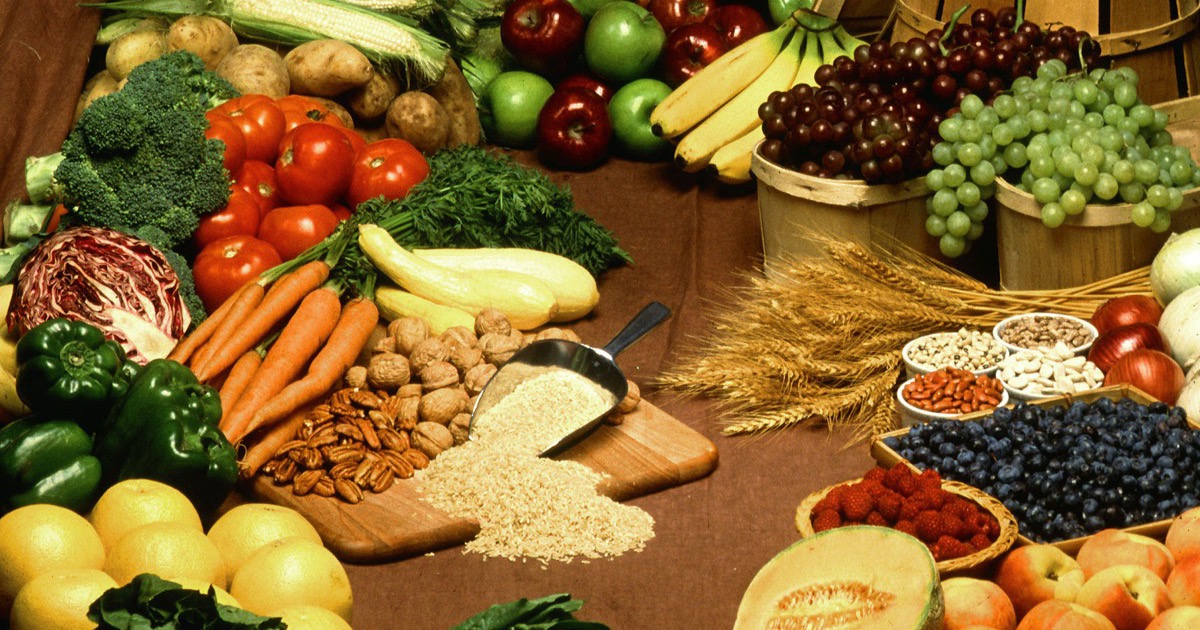
Most adults need 21 to 38 grams of fiber a day, depending on age and sex. The Adequate Intake set by the National Academies' Food and Nutrition Board is 38 grams a day for men 19 to 50 and 25 grams for women 19 to 50, then 30 and 21 grams from age 51. The current Dietary Guidelines for Americans, 2025 to 2030, tell you to prioritize fiber-rich whole grains but give no gram target. Beans, split peas and lentils give 6 to 10 grams in half a cup cooked, and whole grains, vegetables, fruit, nuts and seeds add the rest.
How much fiber you need a day
The board's figures:
| Group | Fiber (grams a day) |
|---|---|
| Children 1 to 3 | 19 |
| Children 4 to 8 | 25 |
| Boys 9 to 13 | 31 |
| Boys 14 to 18 | 38 |
| Girls 9 to 18 | 26 |
| Men 19 to 50 | 38 |
| Men 51 and older | 30 |
| Women 19 to 50 | 25 |
| Women 51 and older | 21 |
| Pregnancy | 28 |
| Breastfeeding | 29 |
These are Adequate Intakes, set when the evidence isn't strong enough to calculate a Recommended Dietary Allowance. Each is believed to cover the needs of all healthy people in its group, though the board can't say with confidence what share it covers.
A 2015 position paper from the Academy of Nutrition and Dietetics gives the Adequate Intake as 14 grams of fiber for every 1,000 calories, or 25 grams for adult women and 38 for adult men, based on research showing protection against coronary heart disease. At 2,000 calories, that rate comes to 28 grams, the same as the FDA's Daily Value for fiber on Nutrition Facts labels.
The Dietary Guidelines, dated January 2026, don't set their own number. They ask you to prioritize fiber-rich whole grains and say high-fiber foods, with vegetables, fruits and fermented foods, support a diverse gut microbiome, which may be beneficial for health.
Most Americans fall short
MedlinePlus, the National Library of Medicine's health site, says Americans eat about 16 grams of fiber a day on average, in an article reviewed in July 2026. The Academy's 2015 paper put the mean intake in the United States at 17 grams a day, with only 5% of the population meeting the Adequate Intake.
The Academy says higher fiber intakes reduce the risk of several chronic diseases, including cardiovascular disease, type 2 diabetes and some cancers. The scientific report behind the current Dietary Guidelines cites an umbrella review in which higher fiber intake was associated with a 17% lower risk of death from any cause and a 16% lower risk of colorectal cancer, both rated moderate certainty evidence. It also reports a dose-response analysis that put the optimal intake of total fiber at 25 to 29 grams a day.
High-fiber foods by group
The figures below come from USDA FoodData Central: each is the food's value per 100 grams worked out for the amount shown, rounded to the nearest gram.
Beans, peas and lentils
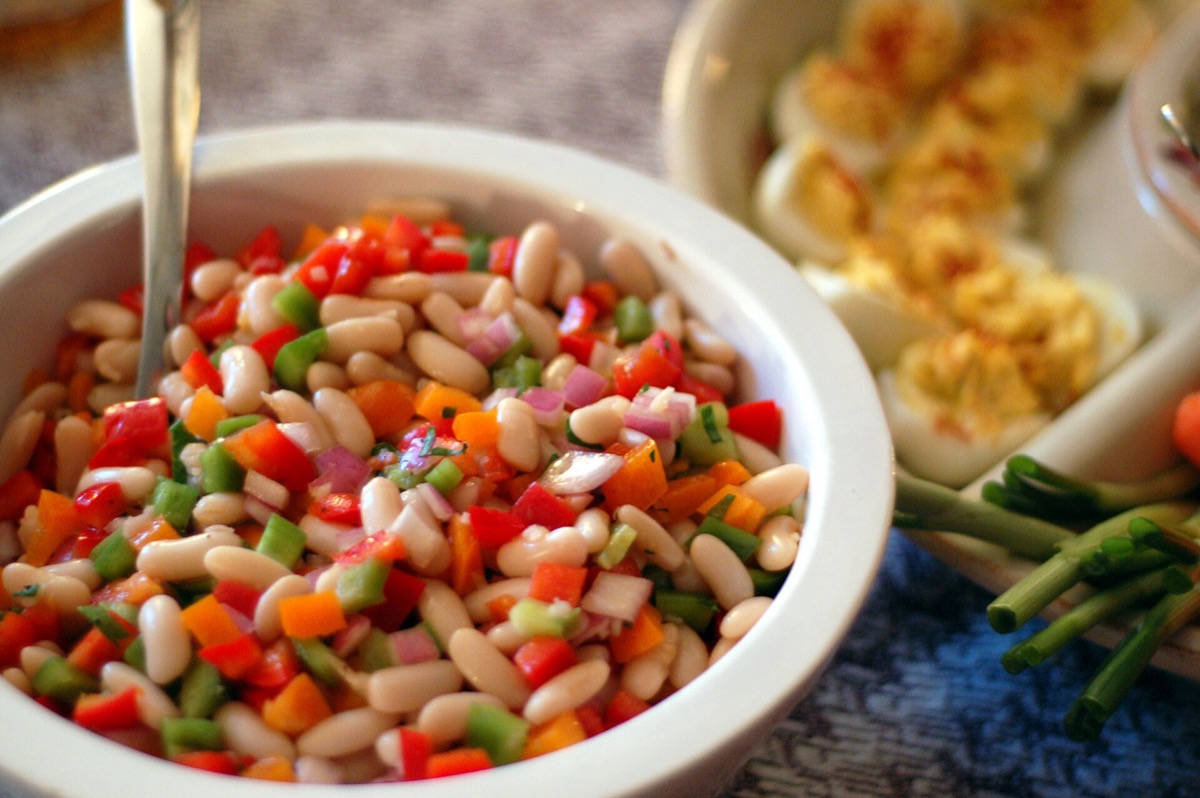
Half a cup of cooked beans, split peas or lentils gives more fiber than most servings of anything else in this guide. For ways to stretch a bag of dried beans across a week, see how to eat healthy on a budget.
| Food, cooked | Amount | Fiber (grams) |
|---|---|---|
| Navy beans | ½ cup (91 g) | 10 |
| Split peas | ½ cup (98 g) | 8 |
| Lentils | ½ cup (99 g) | 8 |
| Pinto beans | ½ cup (86 g) | 8 |
| Black beans | ½ cup (86 g) | 7 |
| Chickpeas | ½ cup (82 g) | 6 |
Whole grains
The scientific report behind the guidelines says refined grains contain 60% to 80% less fiber than whole grains, and that whole grains make up only about 13% of the grains Americans eat. Whole grains differ too: a cup of cooked bulgur has more than twice the fiber of a cup of brown rice.
| Food | Amount | Fiber (grams) |
|---|---|---|
| Bulgur, cooked | 1 cup (182 g) | 8 |
| Pearled barley, cooked | 1 cup (157 g) | 6 |
| Whole-wheat spaghetti, cooked | 1 cup (117 g) | 5 |
| Quinoa, cooked | 1 cup (185 g) | 5 |
| Oatmeal, cooked with water | 1 cup (234 g) | 4 |
| Popcorn, air-popped | 3 cups (24 g) | 3 |
| Brown rice, long-grain, cooked | 1 cup (202 g) | 3 |
Vegetables
Acorn squash, collard greens and artichokes lead this list. Leave the skin on potatoes: MedlinePlus notes that peeling fruits and vegetables reduces the fiber you get.
| Food | Amount | Fiber (grams) |
|---|---|---|
| Acorn squash, baked | 1 cup, cubed (205 g) | 9 |
| Collard greens, cooked | 1 cup, chopped (190 g) | 8 |
| Artichoke, cooked | 1 medium (120 g) | 7 |
| Green peas, frozen, cooked | ½ cup (80 g) | 4 |
| Potato, baked, with skin | 1 medium (173 g) | 4 |
| Broccoli, cooked | ½ cup, chopped (78 g) | 3 |
Fruit
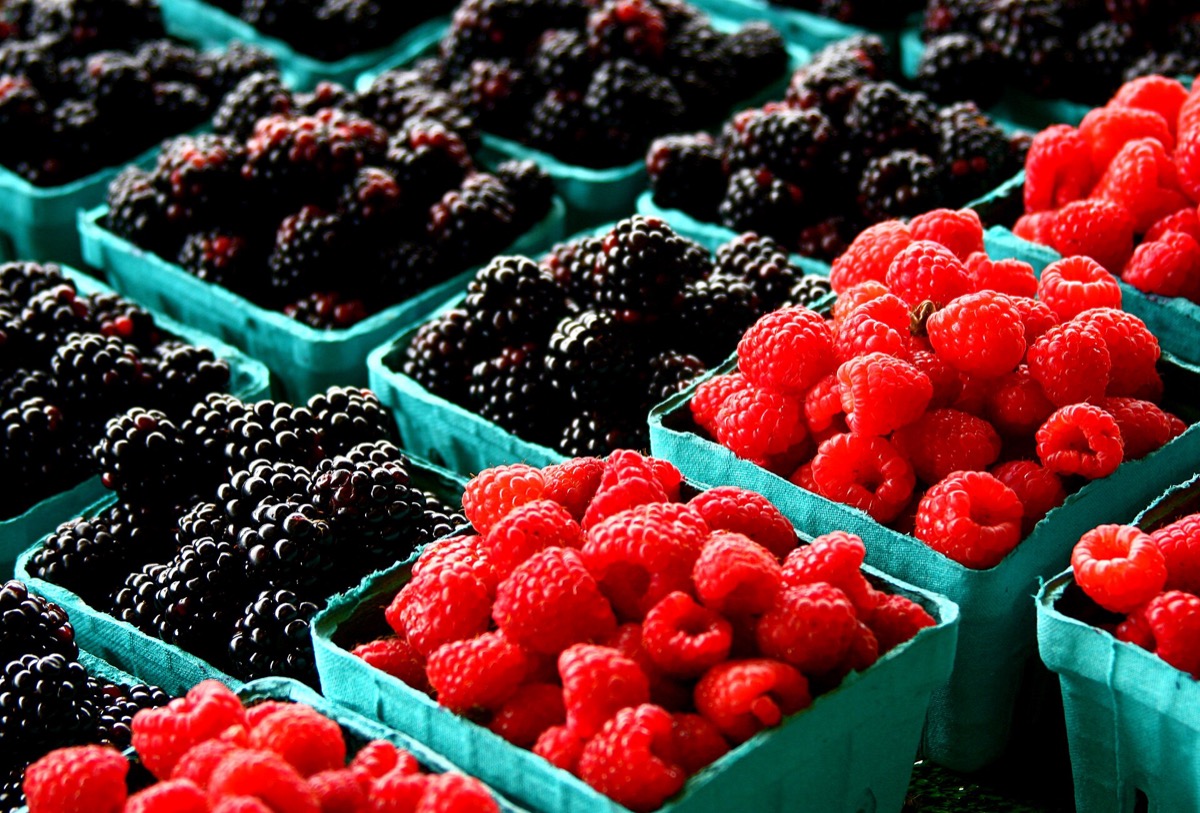
Berries top the list. Eat fruit whole: Harvard T.H. Chan School of Public Health suggests whole fruit instead of juice, and the Dietary Guidelines say 100% juice should come in limited portions or diluted with water.
| Food | Amount | Fiber (grams) |
|---|---|---|
| Raspberries | 1 cup (123 g) | 8 |
| Blackberries | 1 cup (144 g) | 8 |
| Avocado | ½ avocado (101 g) | 7 |
| Pear | 1 medium (178 g) | 6 |
| Apple, with skin | 1 medium (182 g) | 4 |
| Banana | 1 medium (118 g) | 3 |
Nuts and seeds
Chia seeds stand out. Harvard suggests adding 1 to 2 tablespoons of almonds, ground flaxseeds or chia seeds to cereal.
| Food | Amount | Fiber (grams) |
|---|---|---|
| Chia seeds | 1 ounce (28 g) | 10 |
| Flaxseed, ground | 2 tablespoons (14 g) | 4 |
| Almonds | 1 ounce, 23 nuts (28 g) | 4 |
| Pistachios, raw | 1 ounce, 49 kernels (28 g) | 3 |
| Walnuts | 1 ounce, 14 halves (28 g) | 2 |
Easy ways to get more fiber
- Raise it slowly, and drink water. MedlinePlus advises adding fiber gradually over a few weeks, since a large amount in a short time can cause gas, bloating and cramps. It notes that water helps fiber pass through the digestive system, and Harvard says drinking more fluids can ease the bloating and cramping that come with a sudden increase.
- Trade refined grains for whole ones. Harvard suggests replacing white rice, bread and pasta with brown rice and other whole grains, and choosing a breakfast cereal with a whole grain as its first ingredient and at least 20% of the Daily Value for fiber. The guidelines' scientific report adds a label check: most true whole-grain foods have at least 1 gram of fiber for every 8 grams of carbohydrate.
- Put beans in place of meat. Harvard suggests doing it two to three times a week in chili and soups.
- Snack on plants. Harvard suggests crunchy raw vegetables or a handful of almonds instead of chips and crackers.
- Plan a day. A cup of oatmeal with a cup of raspberries, half a cup of black beans with an apple at lunch, an ounce of almonds, and a cup of whole-wheat spaghetti with half a cup each of broccoli and peas come to about 39 grams by the rounded figures above, more than any group's Adequate Intake. If you eat far less now, build up to a day like this over a few weeks.
If you have a digestive condition or take regular medicine, check with your doctor before making a big change to your fiber or starting a supplement.
Frequently asked questions
How much fiber should a woman eat a day? And a man?
The Adequate Intake is 25 grams a day for women 19 to 50 and 21 from age 51, or 28 during pregnancy and 29 while breastfeeding. For men it's 38 grams a day from 19 to 50 and 30 from age 51.
What food is highest in fiber?
Of the foods in this guide, an ounce of chia seeds and half a cup of cooked navy beans have the most, about 10 grams each, then a cup of baked acorn squash at about 9.
Can you eat too much fiber?
Adding a lot at once can cause gas, bloating and cramps, MedlinePlus says, and too much may interfere with the absorption of minerals such as iron, zinc, magnesium and calcium. Build up gradually and drink plenty of fluids.
Are fiber supplements as good as food?
Harvard says a supplement such as psyllium or methylcellulose can be used if it's hard to get enough from food, but supplements aren't meant to replace high-fiber foods completely.
Start Eat Well
Pick a goal, work on one eating habit at a time, and log meals with a photo or a few words.
Psst is invite-only. Sign up with code EATWELL
Scan with your iPhone / Download Psst
Psst is invite-only. Sign up with code EATWELL
Sources
- Dietary Reference Intakes: Recommended Dietary Allowances and Adequate Intakes, Total Water and Macronutrients (Food and Nutrition Board, National Academies)
- Position of the Academy of Nutrition and Dietetics: Health Implications of Dietary Fiber (Dahl and Stewart, Journal of the Academy of Nutrition and Dietetics, 2015)
- Dietary Guidelines for Americans, 2025 to 2030
- Eat Real Food (realfood.gov)
- The Scientific Foundation for the Dietary Guidelines for Americans, 2025 to 2030
- Daily Value on the Nutrition and Supplement Facts Labels (U.S. Food and Drug Administration)
- Dietary fiber (MedlinePlus Medical Encyclopedia)
- Fiber (Harvard T.H. Chan School of Public Health, The Nutrition Source)
- Beans, navy, mature seeds, cooked, boiled, without salt (USDA FoodData Central)
- Peas, split, mature seeds, cooked, boiled, without salt (USDA FoodData Central)
- Lentils, mature seeds, cooked, boiled, without salt (USDA FoodData Central)
- Beans, pinto, mature seeds, cooked, boiled, without salt (USDA FoodData Central)
- Beans, black, mature seeds, cooked, boiled, without salt (USDA FoodData Central)
- Chickpeas (garbanzo beans, bengal gram), mature seeds, cooked, boiled, without salt (USDA FoodData Central)
- Bulgur, cooked (USDA FoodData Central)
- Barley, pearled, cooked (USDA FoodData Central)
- Pasta, whole-wheat, cooked (USDA FoodData Central)
- Quinoa, cooked (USDA FoodData Central)
- Cereals, oats, regular and quick, unenriched, cooked with water, without salt (USDA FoodData Central)
- Snacks, popcorn, air-popped (USDA FoodData Central)
- Rice, brown, long-grain, cooked (USDA FoodData Central)
- Squash, winter, acorn, cooked, baked, without salt (USDA FoodData Central)
- Collards, cooked, boiled, drained, without salt (USDA FoodData Central)
- Artichokes, (globe or french), cooked, boiled, drained, without salt (USDA FoodData Central)
- Peas, green, frozen, cooked, boiled, drained, without salt (USDA FoodData Central)
- Potatoes, baked, flesh and skin, without salt (USDA FoodData Central)
- Broccoli, cooked, boiled, drained, without salt (USDA FoodData Central)
- Raspberries, raw (USDA FoodData Central)
- Blackberries, raw (USDA FoodData Central)
- Avocados, raw, all commercial varieties (USDA FoodData Central)
- Pears, raw (USDA FoodData Central)
- Apples, raw, with skin (USDA FoodData Central)
- Bananas, raw (USDA FoodData Central)
- Seeds, chia seeds, dried (USDA FoodData Central)
- Seeds, flaxseed (USDA FoodData Central)
- Nuts, almonds (USDA FoodData Central)
- Nuts, pistachio nuts, raw (USDA FoodData Central)
- Nuts, walnuts, english (USDA FoodData Central)