A half marathon training plan for beginners, week by week
A 19-week half marathon plan for beginners who can run about 3 miles, with three runs a week and a long run that builds to 12 miles in small steps.
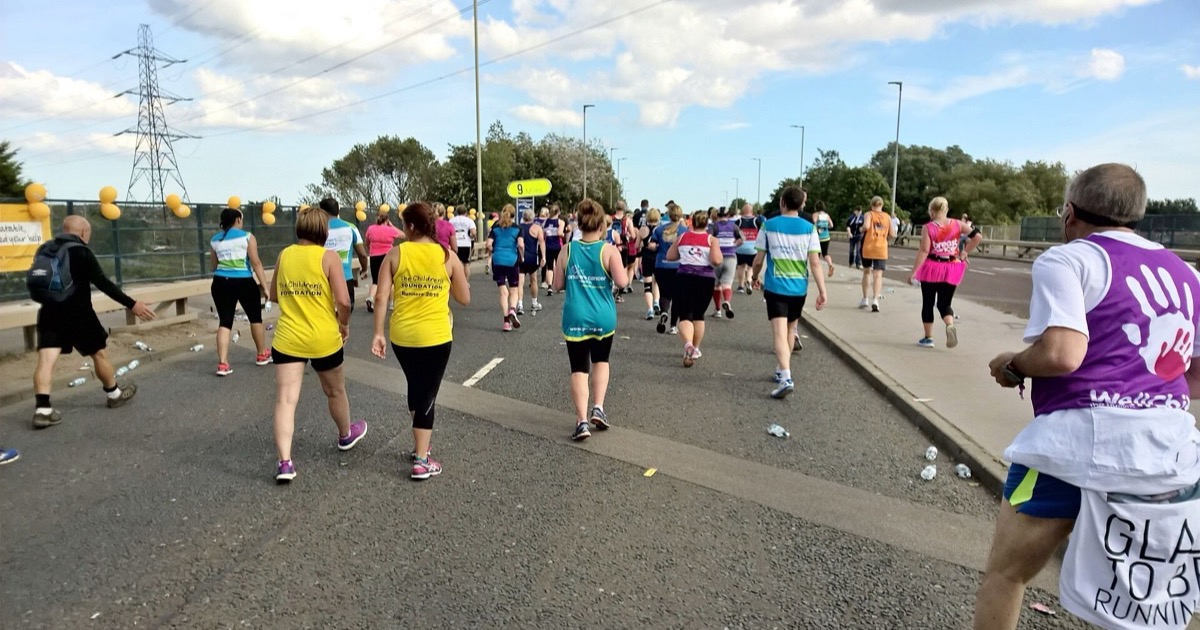
If you can already run about 3 miles, you can train to finish a half marathon, 13.1 miles (21.1 km), in about 19 weeks. Run three times a week: two short easy runs and one long run that grows from 3 miles to 12, by 10% or less at a step, with two lighter weeks at the end. The table below is this guide's own sample plan, not one published by any health body.
Before you start
If you can't run 3 miles yet, start with a beginner's plan such as Couch to 5K, which builds up to 30 minutes of running without stopping.
Check with your doctor first, especially if you have a health condition or have been inactive. Mayo Clinic Health System advises anyone starting a running program to meet with a primary care clinician.
Pick a race at least 19 weeks away and count back. For a race on Sunday, April 4, 2027, week 1 starts on Monday, November 23, 2026. A spare week or two lets you repeat one.
Start in a new pair of shoes. Mayo Clinic Health System says an older pair will break down too quickly, and that a good pair typically lasts 300 to 500 miles. This plan, race included, comes to about 225.
The 19-week plan
Distances are in miles. Monday, Friday and Sunday are rest days. Wednesday is optional cross-training: 20 minutes through week 4, 25 through week 8, 30 through week 17, 20 in week 18, then rest.
| Week | Tue: easy run | Thu: easy run | Sat: long run | Miles that week |
|---|---|---|---|---|
| 1 | 2.5 | 2.5 | 3 | 8 |
| 2 | 2.5 | 2.5 | 3.3 | 8.3 |
| 3 | 2.5 | 2.5 | 3.6 | 8.6 |
| 4 | 2.5 | 2.5 | 3.9 | 8.9 |
| 5 | 2.5 | 2.5 | 4.2 | 9.2 |
| 6 | 2.5 | 2.5 | 4.6 | 9.6 |
| 7 | 2.5 | 2.5 | 5 | 10 |
| 8 | 2.5 | 2.5 | 5.5 | 10.5 |
| 9 | 2.5 | 2.5 | 6 | 11 |
| 10 | 2.5 | 2.5 | 6.6 | 11.6 |
| 11 | 2.5 | 2.5 | 7.2 | 12.2 |
| 12 | 2.5 | 2.5 | 7.9 | 12.9 |
| 13 | 2.5 | 2.5 | 8.6 | 13.6 |
| 14 | 2.5 | 2.5 | 9.4 | 14.4 |
| 15 | 2.5 | 2.5 | 10.3 | 15.3 |
| 16 | 2.5 | 2.5 | 11.3 | 16.3 |
| 17 | 2.5 | 2.5 | 12 | 17 |
| 18 (lighter) | 2.5 | 2 | 6 | 10.5 |
| 19 (race) | 2 | 2 | Race: 13.1 | 17.1 |
- Easy runs. You should be able to talk in complete sentences without being short of breath, as Mayo Clinic Health System physical therapists put it.
- Long runs. Go at a slow speed, as Mayo Clinic Health System advises, and take walk breaks if you need them.
- Race week. If your race is on Sunday, rest on Saturday.
- Missed runs. Skip a missed run rather than doubling up. After a week or more off, repeat the last week you finished.
The principles behind the plan
Add distance slowly
Mayo Clinic Health System physical therapists say not to raise your mileage by more than 10% a week. Through week 17, every week here stays within that, because the easy runs hold at 2.5 miles and only the long run grows.
A 2025 study in the British Journal of Sports Medicine followed 5,205 adult runners for up to 18 months. Compared with runs shorter than, or up to 10% past, the longest run of the previous 30 days, overuse injury rates were 64% higher for a run more than 10% to 30% past it, 52% higher for more than 30% to 100%, and 128% higher for more than 100%. Comparing one week's total with the last showed no such link. The authors say runners should avoid passing that 10% line, and that smaller steps aren't necessarily safe either.
The study shows an association, not a cause, and most of its runners weren't beginners: their median experience was 9.5 years. This plan stays inside the line anyway. Every long run, race included, is at most 10% past the longest before it, one step a week. That's why it takes 19 weeks and the distances aren't round.
Leave room to recover
The same physical therapists advise at least one easy or rest day for every heavy training day. Mayo's big-run article says novices should avoid the same exercise on consecutive days until they build tolerance. So no two runs here are back to back, and two rest days follow the long run.
Cross-train and build strength
Mayo Clinic Health System suggests bikes, elliptical machines and swimming pools for extra cardio, since reducing repetitive impact on your legs can help cut your injury risk. It also says every running program should include strength training, with core and hip strength among the most important areas. The CDC recommends muscle-strengthening activity for all major muscle groups on at least 2 days a week, and two short sessions fit on your easy-run days.

Ease off before the race
A 2007 meta-analysis of 27 studies of competitive athletes found that the most efficient taper seemed to last two weeks, with training volume cut by 41% to 60% and intensity and frequency unchanged. Those were competitive athletes, so treat it as a rough guide. This plan's last two weeks still have three runs each, and before the race they average about 57% fewer miles than week 17.
Practice eating and drinking on long runs
At 12 minutes a mile, your long run passes an hour in week 8 and two hours in week 15.
- Food. A Mayo Clinic Health System dietitian suggests 30 to 60 grams of carbohydrate an hour on training runs longer than one to two hours, from sports drinks or from energy gels or chews with water. A Mayo Clinic dietitian says race day is not a good day to try new things, so test what your body tolerates in training.
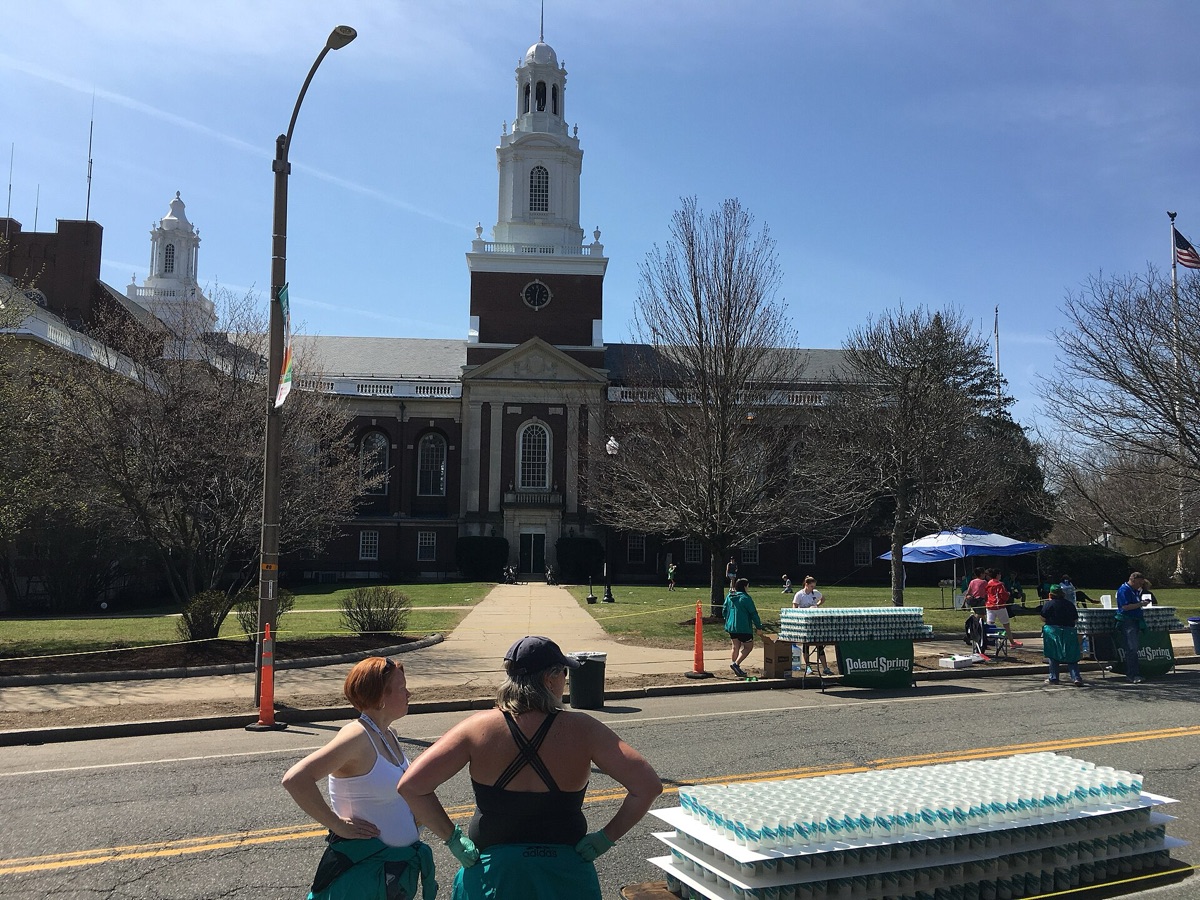
- Drink. A Mayo Clinic family physician says the general rule among physicians is to drink to thirst, because too little can dehydrate you and too much can cause low blood sodium, or hyponatremia. A Mayo Clinic Health System dietitian offers a schedule instead, about 1 cup every 20 minutes, because thirst can be unreliable when you're focused on the activity. Use your long runs to learn what suits you.
- Warning signs. Mayo Clinic says to seek emergency care for serious signs of hyponatremia, such as nausea and vomiting, confusion, seizures or lost consciousness.
When to stop
If something hurts, stop and don't run through it. Mayo Clinic Health System says muscle soreness that's gone within 24 hours is normal, and that the idea of "no pain, no gain" is incorrect.
- Stop running if pain affects your gait, or if pain or stiffness doesn't improve after the first 10 minutes.
- Get it checked if you have swelling or pain that worsens. The NHS says not to run if you're in pain, and to see a doctor straight away if knee pain is severe or the knee is swollen.
- Check in with your primary care provider if you notice excessive fatigue, a higher resting heart rate, sorer muscles, irritability, difficulty sleeping or decreased motivation.
Race day
Start at your easy-run pace. The race goes 1.1 miles past your longest run, so save something for those miles.
Frequently asked questions
How long does it take to train for a half marathon?
This plan takes 19 weeks from a 3-mile starting point. If you already run 5 miles comfortably, you could join at week 7, which leaves 13 weeks.
Do I need to run 13 miles before race day?
Not in this plan. The longest run is 12 miles.
How long does a half marathon take?
At 10 minutes a mile, 13.1 miles takes about 2 hours 11 minutes. At 12 minutes it takes about 2 hours 37 minutes, and at 14 minutes about 3 hours 3 minutes.
Can I walk during a half marathon?
In training, yes: Mayo Clinic Health System says a run-and-walk program can help new runners succeed. For race day, read your race's rules and time limit before you sign up.
Start Running Club
A running plan that builds toward your race one week at a time, with friends who run it too.
Psst is invite-only. Sign up with code RUNCLUB
Scan with your iPhone / Download Psst
Psst is invite-only. Sign up with code RUNCLUB
Sources
- Half marathon (Wikipedia)
- Get running with Couch to 5K (NHS)
- Planning for your big run (Troy Hoehn and Peter Johnson, Mayo Clinic Health System, 2023)
- Want to become a better runner? Tips to step up your performance, prevent injuries (Leslie Grommersch, Kimberly Olsen and Desiree Essler, Mayo Clinic Health System, 2024)
- Maximize your running potential with cross-training (Mayo Clinic Health System, 2024)
- How much running is too much? Identifying high-risk running sessions in a 5200-person cohort study (Frandsen and colleagues, British Journal of Sports Medicine, 2025)
- Effects of tapering on performance: a meta-analysis (Bosquet and colleagues, Medicine & Science in Sports & Exercise, 2007)
- Physical activity guidelines for adults (CDC)
- Fueling strategies for distance runners (Mayo Clinic Health System, 2018)
- Mayo Clinic Q and A: Nutrition tips for running virtual races (Mayo Clinic News Network, 2021)
- Mayo Clinic Minute: Drink to thirst when exercising (Mayo Clinic News Network, 2021)
- Tips to keep runners hydrated (Mayo Clinic Health System, 2018)
- Hyponatremia: symptoms and causes (Mayo Clinic, 2025)
- Knee pain and other running injuries (NHS)