Fun facts about the human body
True, surprising facts about the human body, from bones and muscles to the brain, heart, skin, senses and gut, plus the popular myths that don't hold up.
The human body is stranger than most trivia lets on. Most of your adult skeleton is replaced about every 10 years. Your brain is about 2% of your body weight but uses about 20% of the calories your body burns. Most of your cells are red blood cells, and the bacteria in your body roughly match your own cells in number, not ten to one. Here are 22 facts, grouped by body system, each from a health agency, an encyclopedia or a peer-reviewed study, with the popular myths marked.
Bones
1. Your skeleton rebuilds itself all your life
Bone is constantly removed and replaced at the same spots, a process called remodeling. It repairs small cracks and keeps old bone from turning brittle, and most of the adult skeleton is replaced about every 10 years, according to the Surgeon General's 2004 report on bone health.
2. Your bones are a mineral bank
The skeleton stores calcium and phosphorus, which nerves and muscles depend on. Hormones withdraw them from bone when supplies run short, and bone takes them back when supplies are ample.
3. You're a little taller in the morning
In a 1985 study, eight young adults lost an average of 19.3 millimeters (1.1% of their height) over the day. More than half of the loss came in the first hour after getting up, and about 70% returned in the first half of the night.
Muscles
4. Muscles make most of your body heat
Nearly 85% of the heat your body produces comes from muscle contraction, according to the National Cancer Institute.
5. Muscle is roughly a third of your weight
A 2000 study measured 468 men and women with whole-body MRI. Skeletal muscle averaged 33 kilograms in the men, 38.4% of their body mass, and 21 kilograms in the women, 30.6%. The gap was bigger in the upper body than the lower.
6. The decline starts earlier than you'd think
In the same study, muscle as a share of body weight began to fall in the 20s, but the amount of muscle didn't drop noticeably until the late 40s, mostly in the lower body.
The brain
7. It has about 86 billion neurons, not 100 billion
The often-quoted 100 billion neurons, with ten times as many support cells, were never confirmed by a count. A 2009 study counted the cells in adult male brains and found an average of 86.1 billion neurons and 84.6 billion other cells, close to one to one.
8. It runs on a fifth of your energy
Your brain weighs about three pounds and is about 2% of your body weight in an average adult. Yet it accounts for about 20% of the oxygen, and so the calories, that your body uses.
9. Myth: you use only 10% of your brain
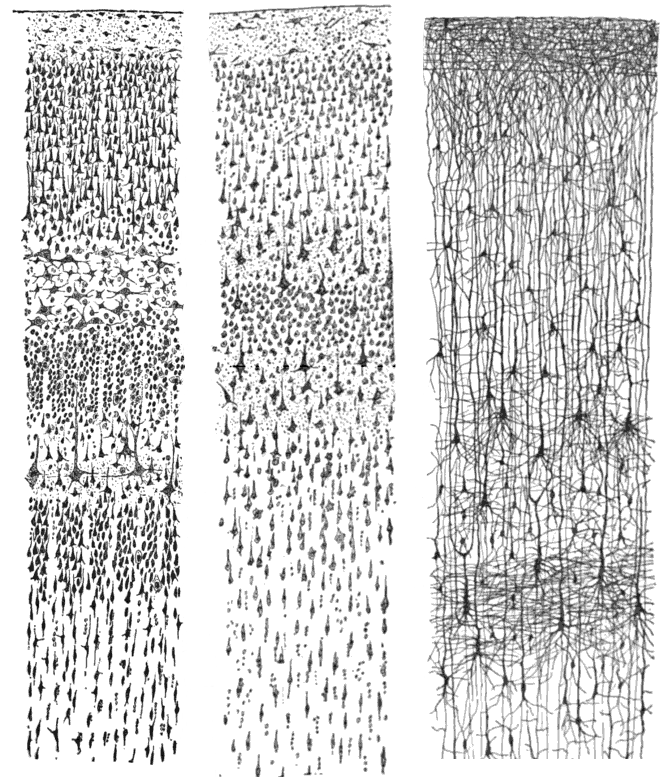
You use all of it, all the time. A 2007 review of medical myths in the BMJ points out that damage to almost any area of the brain has lasting effects, and that brain imaging shows no area is completely silent. Scans show activity far beyond 10% even at rest. The myth is often pinned on William James, who never gave a percentage. One early mention is in the preface to Dale Carnegie's How to Win Friends and Influence People (1936).
Heart and blood
10. Your heart pumps about 5 liters a minute
A normal adult heart pumps about 5 liters of blood every minute, and it keeps that up for life.
11. Heart muscle cells do renew, slowly
A 2009 study dated heart muscle cells using carbon-14 left in DNA by Cold War nuclear bomb tests. About 1% are replaced each year at age 25, falling to 0.45% at 75, so fewer than half are exchanged over a normal life.
12. Most of your cells are red blood cells
A 2016 estimate put a 70-kilogram adult man at about 30 trillion human cells. Red blood cells, among the smallest cells in the body, make up 84% of that count.
13. You replace about 330 billion cells a day
A 2021 study in Nature Medicine estimated that the body turns over about 330 billion cells every day, close to 90% of them blood cells. By weight, that's about 80 grams of cells a day, mostly blood cells and cells lining the gut.
Skin
14. Skin is your largest organ
MedlinePlus, the National Library of Medicine's health site, calls skin your body's largest organ.
15. The outside of your skin is dead
The epidermis, the skin's outer part, has a lower layer of living cells and a top layer of compact dead ones. New cells form at the bottom, rise while making keratin, and die near the top. The epidermis is thicker on the palms and soles.
16. Not even identical twins share fingerprints
The ridges on your palms and soles are mostly set before birth. Every small patch of ridge detail is unmatched anywhere else on you or on anyone else, even an identical twin.
Senses
17. Each eye has a blind spot you never notice
The optic disk, where the optic nerve leaves the eye, has no rods or cones, so it detects nothing. It's about 1.5 millimeters across, and the nerve fibers of more than a million retinal cells gather there. You don't see the gap because the two eyes' views overlap, and the brain fills in what's missing.
18. Much of what you call taste is smell
Chewing releases aromas that travel up a channel from the roof of the throat to the nose. When a cold blocks it, you lose much of a food's flavor. Some people who see a doctor about losing their sense of taste learn that they've lost their sense of smell instead.
19. Myth: the tongue map
The diagram that gives sweet, sour, salty and bitter their own zones of the tongue has long been discredited. Researchers have linked it to a 1942 textbook by the psychologist Edwin G. Boring, which redrew data from David Hänig's thesis of 1901. Sensitivity differs only slightly across the tongue, the soft palate and the throat, all places with taste buds.
The gut
20. Your gut has a nervous system of its own
Two thin layers of more than 100 million nerve cells line your digestive tract from the esophagus to the rectum. Johns Hopkins Medicine calls this enteric nervous system a second brain. It controls digestion and communicates back and forth with the brain in your skull.
21. Myth: bacteria outnumber your cells ten to one
The 2016 study that counted your cells also counted your bacteria: about 38 trillion, against about 30 trillion human cells, so roughly one to one. The bacteria weigh about 0.2 kilograms in all. The usual claim of 100 trillion or more bacteria traces back to an old back-of-the-envelope calculation.
22. Myth: swallowed gum stays in you for seven years
Your body can't digest gum, but it doesn't stay in your stomach. It moves through relatively intact and leaves in your stool, according to Mayo Clinic. On very rare occasions, large amounts of swallowed gum combined with constipation have blocked children's intestines, so it's best not to swallow gum often.
Frequently asked questions
How many bones are in the human body?
The adult skeleton usually has 206 named bones, according to the National Cancer Institute's anatomy training.
What is the largest organ in the human body?
The skin, according to MedlinePlus, from the National Library of Medicine.
Do we only use 10 percent of our brain?
No. Brain scans show activity in far more than 10% of the brain, even at rest, and scientists have yet to find a part that does nothing.
Are there more bacteria than human cells in your body?
About the same number: a 2016 estimate put a 70-kilogram man at about 38 trillion bacteria and 30 trillion human cells.
Start Smarty Pants
Facts and clever insights to casually impress people.
Psst is invite-only. Sign up with code SMARTYPANTS
Scan with your iPhone / Download Psst
Psst is invite-only. Sign up with code SMARTYPANTS
Sources
- The Basics of Bone in Health and Disease (Bone Health and Osteoporosis: A Report of the Surgeon General, 2004)
- Divisions of the Skeleton (National Cancer Institute SEER Training)
- Circadian variation in stature and the effects of spinal loading (Tyrrell, Reilly and Troup, Spine, 1985)
- Introduction to the Muscular System (National Cancer Institute SEER Training)
- Skeletal muscle mass and distribution in 468 men and women aged 18-88 yr (Janssen, Heymsfield, Wang and Ross, Journal of Applied Physiology, 2000)
- Equal numbers of neuronal and nonneuronal cells make the human brain an isometrically scaled-up primate brain (Azevedo and colleagues, Journal of Comparative Neurology, 2009)
- Appraising the brain's energy budget (Raichle and Gusnard, PNAS, 2002)
- Brain Basics: Know Your Brain (National Institute of Neurological Disorders and Stroke)
- Do We Really Use Only 10 Percent of Our Brain? (Britannica)
- Medical myths (Vreeman and Carroll, BMJ, 2007)
- Heart (National Cancer Institute SEER Training)
- Evidence for cardiomyocyte renewal in humans (Bergmann and colleagues, Science, 2009)
- Revised Estimates for the Number of Human and Bacteria Cells in the Body (Sender, Fuchs and Milo, PLOS Biology, 2016)
- The distribution of cellular turnover in the human body (Sender and Milo, Nature Medicine, 2021)
- Skin Conditions (MedlinePlus)
- Human skin (Britannica)
- Blind spot (Britannica)
- Smell Disorders (National Institute on Deafness and Other Communication Disorders)
- The tongue map and the spatial modulation of taste perception (Spence, Current Research in Food Science, 2022)
- The Brain-Gut Connection (Johns Hopkins Medicine)
- Swallowing gum: Is it harmful? (Mayo Clinic)