Fun facts about San Francisco: 25 surprising things about the city
True San Francisco facts: the bridge the Navy wanted striped, a ship buried downtown, a film that escaped the 1906 quake, and Alcatraz for $24 in glass beads.
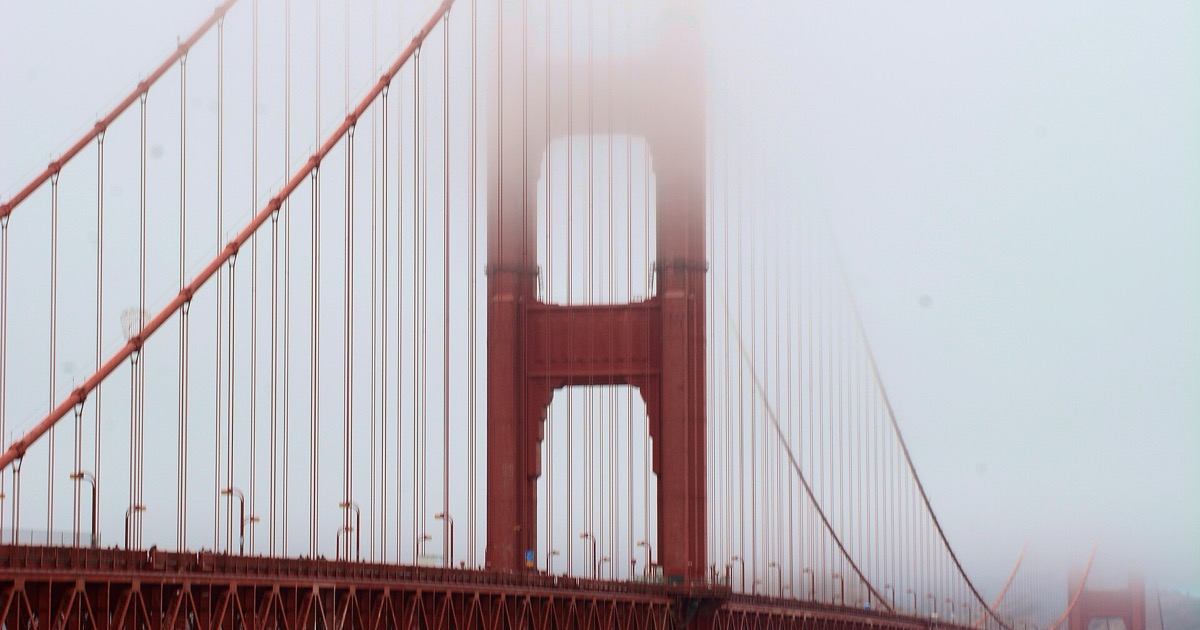
The best San Francisco facts correct something you've already heard. The Golden Gate got its name before the Gold Rush. Mark Twain almost certainly never joked about the city's cold summers, and its warmest month is September. Part of downtown stands on a buried ship. Here are 25 facts, with disputed stories marked.
The Golden Gate Bridge
1. The Navy wanted black and yellow stripes
Had the Navy gotten its way, the bridge district says, it might have been painted in black and yellow stripes so ships could see it. Consulting architect Irving Morrow picked International Orange, inspired by the steel's red primer.
2. The name is older than the Gold Rush
The Golden Gate is the strait, not the bridge. It's generally accepted that John C. Frémont named it around 1846, about two years before gold was found at Sutter's Mill.
3. Its cables hold 80,000 miles of wire
That's the total for the two main cables, enough to circle Earth more than three times.
4. A safety net saved 19 men
They became known as the Halfway-to-Hell Club. Eleven men still died during construction, 10 of them when a scaffold fell through the net on February 17, 1937.
Hills and fog
5. "Seven hills" is a big undercount
The "Seven Hills" are just seven well-known ones. Wikipedia's list of the city's hills has about 50 entries and calls itself incomplete.
6. Lombard Street's title is contested
Lombard's famous block has eight hairpin turns, built in 1922 to tame a 27% grade, and is said to be the world's crookedest street. Vermont Street also claims the city's title, with seven turns on a steeper hill.
7. Mark Twain almost certainly never said it
Quote Investigator found no evidence in Twain's papers or speeches of "the coldest winter I ever spent was a summer in San Francisco." The oldest modern version it traced, from 1900, is about Duluth, Minnesota.
8. The warmest month is September
Downtown, the normal high is 66.3°F in July and 70.2°F in September. October beats July too, especially in the daytime.
The 1906 earthquake
9. The fire did more damage than the shaking
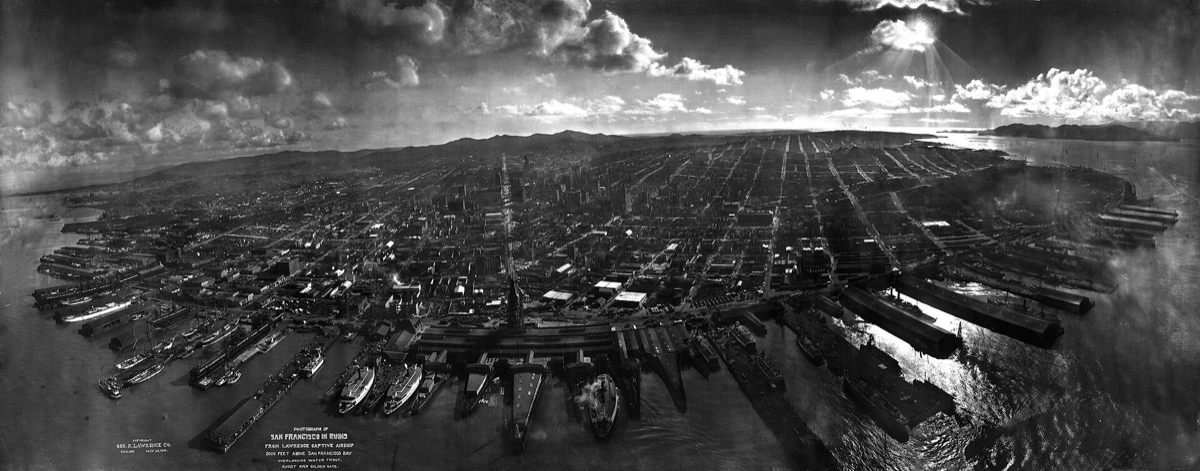
The quake struck at about 5:12 a.m. on April 18, 1906, and the three-day fire after it did more damage. Together they destroyed 28,188 buildings, by one count, and left 225,000 of about 400,000 people homeless. The USGS says the often-quoted toll of 700 deaths is too low by a factor of three or four.
10. A film of Market Street left just in time
In April 1906, the Miles Brothers filmed a trip down Market Street from the front of a cable car. The negative left by train for New York on April 17, the day before the quake. A later film of the same route, through the ruins, was considered lost until a flea market find in 2017.
Cable cars
11. The power isn't in the car
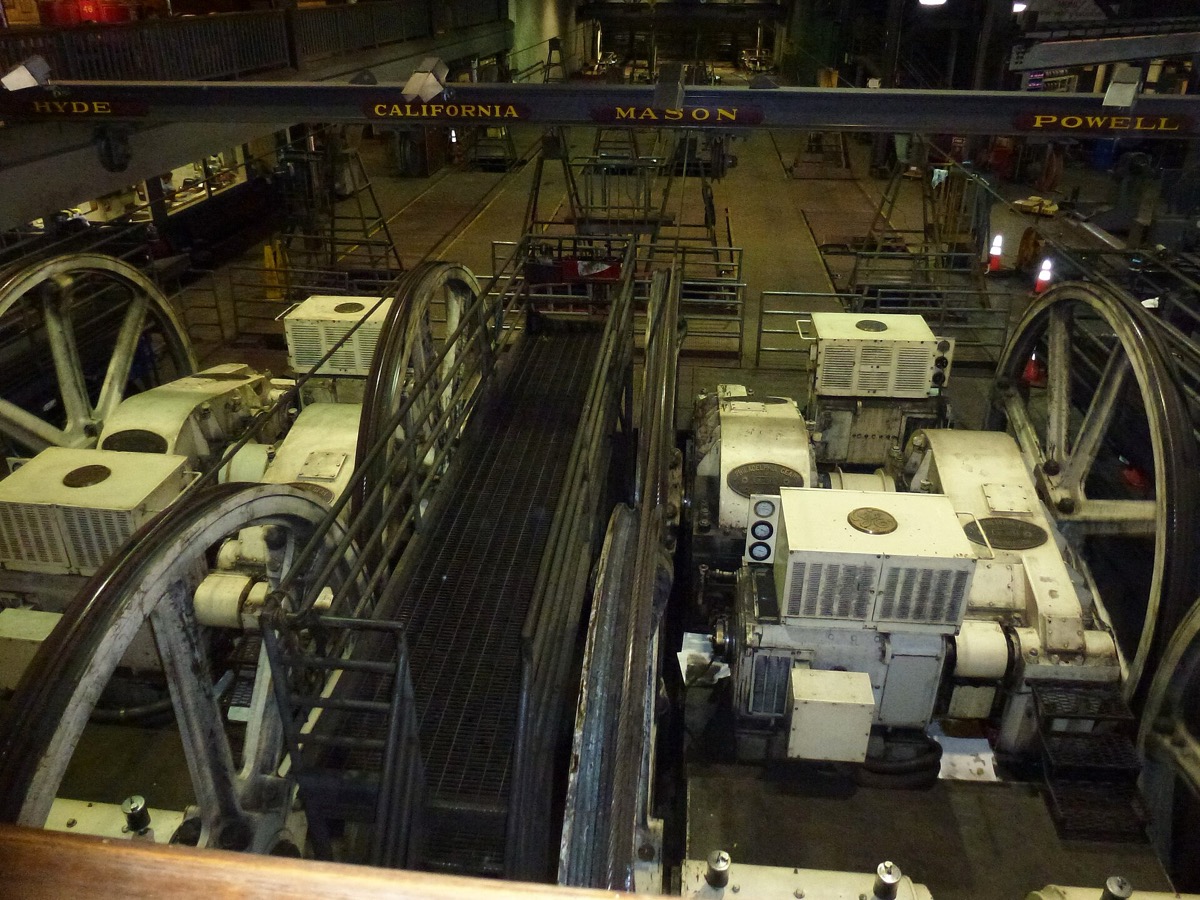
The SFMTA says Andrew Hallidie invented the cable car here, testing the first at 4 a.m. on August 2, 1873. Each car grips a cable moving under the street at 9.5 mph, pulled by motors in a powerhouse.
12. A citizens' committee beat the mayor
In 1947, Mayor Roger Lapham said the city should get rid of its cable cars. Friedel Klussmann founded the Citizens' Committee to Save the Cable Cars, and its ballot measure passed by a landslide.
Alcatraz
13. The name means birds, not bars
In 1775, Juan Manuel de Ayala named an island in the bay Isla de los Alcatraces. National Park Service pages translate that as "Island of the Pelicans" or "Island of the Seabirds." Bay histories say his chart put the name on what's now Yerba Buena Island, and that an English captain's 1826 map moved it here. In 1854 Alcatraz got the first lighthouse built on the U.S. West Coast.
14. The prison closed because it cost too much
It ran only 29 years, from 1934 to 1963. In 1959, a day per inmate cost $10.10 there and $3.00 at the Atlanta penitentiary. The Bureau of Prisons says the decision to close came long before the 1962 escape.
15. The 1962 escape took more than 50 raincoats
Frank Morris and John and Clarence Anglin left dummy heads with real human hair in their beds. The FBI says they drilled out their cell vents with a tool built from a vacuum cleaner motor and turned the raincoats into life preservers and a raft.
16. Children grew up on the island
Guards' families lived in apartments on Alcatraz, and their children rode a boat to school on the mainland each morning and back each afternoon.
17. Occupiers offered to buy it for $24
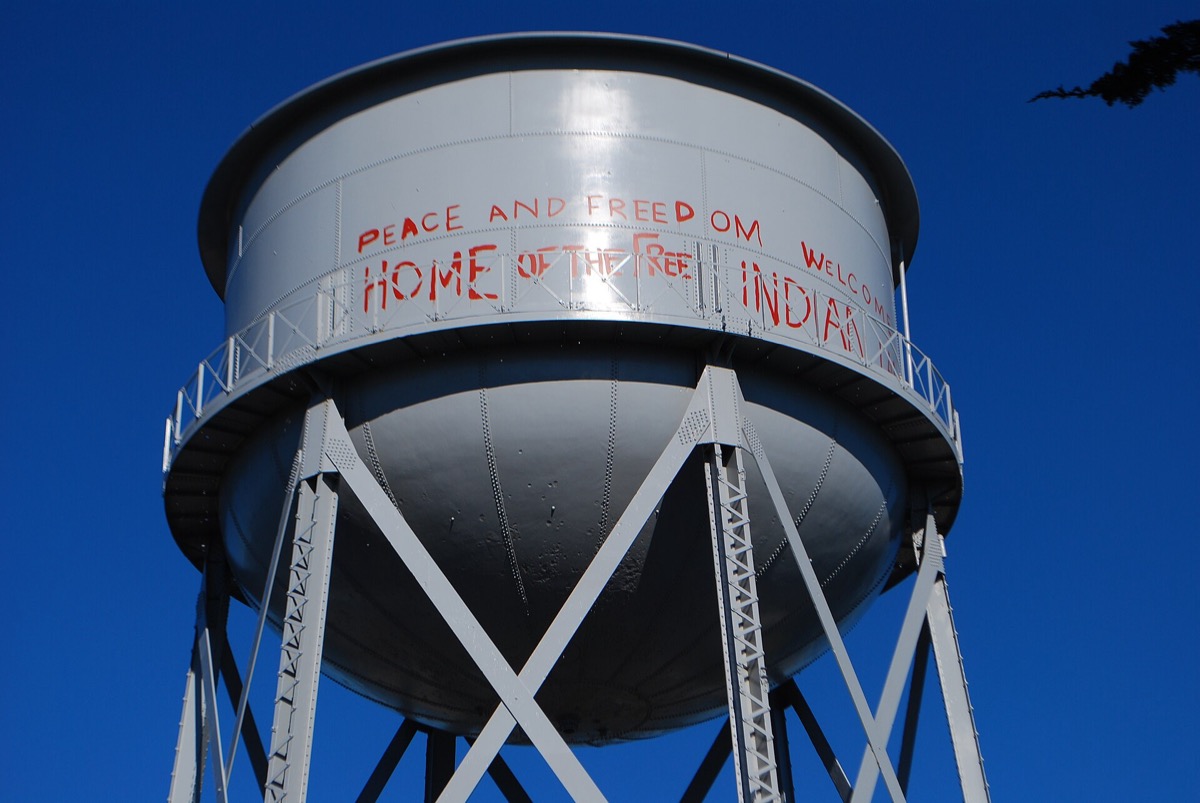
In November 1969, Indians of All Tribes began a 19-month occupation. Its proclamation offered "$24 in glass beads and red cloth" for the island. A sign altered to read "Welcome United Indian Property" is preserved as a historic artifact.
Neighborhoods
18. Part of downtown stands on a buried ship
The Niantic's crew abandoned it in 1849. It became a store, warehouse and hotel, burned to the waterline in May 1851, and was buried under landfill at what's now Clay and Sansome streets. North Beach, too, was once a real beach, filled in around the late 1800s.
19. Chinatown's look came from a fight to stay
After 1906, Mayor Eugene Schmitz proposed moving Chinatown to Hunters Point. Its leaders kept the site, and businessman Look Tin Eli hired an architect and an engineer who had never been to China to rebuild. Pagoda roofs became the look Americans expect.
20. The city evicted its dead
San Francisco banned new burials in 1900 and evicted most cemeteries in 1912. About 150,000 bodies were moved, at $10 per grave and marker. Colma, the "City of Souls," counts about 1,700 residents and over 1.5 million souls.
21. Bison live in Golden Gate Park
The city's parks department says bison have been a park attraction since 1892. They moved to their meadow in the park's western end in 1899.
22. The rainbow flag first flew here
The GLBT Historical Society credits the design to Gilbert Baker, whom Supervisor Harvey Milk and other activists asked for a new symbol. The flag first flew at United Nations Plaza on June 25, 1978, with eight stripes, not six.
Food
23. The fortune cookie's origin is disputed
Makoto Hagiwara of San Francisco's Japanese Tea Garden is reported to be the first in the U.S. to serve the modern version, in the early 1900s. David Jung of Los Angeles claimed he invented it in 1918. A very similar cookie was made in Kyoto in the 19th century.
24. Sourdough's bacterium is named for the city
Fructilactobacillus sanfranciscensis, first isolated in 1971, was named after San Francisco, where it was found in sourdough. But a 2021 eLife study of 500 starters from four continents found little evidence of geographic patterns.
25. Irish coffee needed the mayor's help, the bar says
The Buena Vista Cafe says it set out on November 10, 1952, to recreate the Irish coffee served at Shannon Airport. By its account, the cream wouldn't float, so the problem went to the mayor, a dairy owner. The fix: cream aged 48 hours.
Frequently asked questions
What was San Francisco originally called?
Yerba Buena. It has officially been San Francisco since 1847. The Gold Rush then took the population from about 1,000 in 1848 to about 25,000 by the end of 1849.
Why is San Francisco so foggy in summer?
Hot inland valleys create a pressure difference that pushes the damp marine layer onshore. The Golden Gate is the largest gap in the coast, so the city beside it gets the fog.
Did anyone ever escape from Alcatraz?
Officially, no. The Bureau of Prisons counts 14 attempts by 36 men: 23 caught, 6 shot and killed, 2 drowned and 5 missing and presumed drowned.
Start Smarty Pants
Facts and clever insights to casually impress people.
Psst is invite-only. Sign up with code SMARTYPANTS
Scan with your iPhone / Download Psst
Psst is invite-only. Sign up with code SMARTYPANTS
Sources
- FAQs (Golden Gate Bridge, Highway and Transportation District)
- Design and Construction Stats (Golden Gate Bridge District)
- Facts and Figures About the Bridge (Golden Gate Bridge District)
- Color and Art Deco Styling (Golden Gate Bridge District)
- Painting the Bridge (Golden Gate Bridge District)
- Gold Rush Transforms San Francisco (National Park Service)
- Marshall Gold Discovery State Historic Park (California State Parks)
- List of hills in San Francisco
- Lombard Street (San Francisco)
- San Francisco's Lombard Street: It's twisty, crooked, and it almost didn't happen (San Francisco Chronicle)
- The Coldest Winter I Ever Spent Was a Summer in San Francisco (Quote Investigator)
- San Francisco
- Monthly climate normals 1991 to 2020, San Francisco Downtown (NOAA)
- San Francisco fog
- 5:12 AM, April 18, 1906 (U.S. Geological Survey)
- Casualties and Damage After the 1906 Earthquake (U.S. Geological Survey)
- A Tale of Two Films: The San Francisco Earthquake (1906) Before and After (Library of Congress)
- Cable Car History (SFMTA)
- How Cable Cars Operate (Cable Car Museum)
- The Post on Alcatraces (National Park Service)
- Nature, Alcatraz Island (National Park Service)
- Alcatraz Lighthouse (National Park Service)
- Alcatraz Island
- California Historical Landmark #236: First Ship into San Francisco Bay (Noe Hill)
- Alcatraz (Federal Bureau of Prisons)
- Alcatraz Escape (FBI)
- Staff Housing, Alcatraz Island (National Park Service)
- Alcatraz Proclamation (Teaching American History)
- Occupation of Alcatraz, 50th Anniversary Commemoration (National Park Service)
- Indian Occupation, Alcatraz Island (National Park Service)
- Rehabilitation of the Alcatraz Water Tower (National Park Service)
- Niantic: Buried Gold Rush Ship (National Park Service)
- North Beach, San Francisco
- How an earthquake in 1906 San Francisco sparked the invention of modern-day Chinatown (The Conversation)
- Pagodas and Dragon Gates (99% Invisible)
- Colma, California
- About Colma (Town of Colma)
- Relocated from San Francisco to Colma (Find a Grave)
- Golden Gate Park Points of Interest (San Francisco Recreation and Parks)
- The Rainbow Flag (GLBT Historical Society)
- Fortune cookie
- Who Invented the Fortune Cookie? (American Heritage)
- Chinese fortune cookies are Japanese in origin (Gulf News)
- Fructilactobacillus sanfranciscensis
- The diversity and function of sourdough starter microbiomes (Landis and colleagues, eLife, 2021)
- The Irish Coffee Story (The Buena Vista)