Fun facts about animals: 25 surprising facts, with sources
True animal facts with sources: an octopus's three hearts, cube-shaped wombat droppings, a shark at least 272 years old and penguins that nap for 4 seconds.
An octopus has three hearts and blue blood, a wombat's droppings come out as cubes, and a Greenland shark can live at least 272 years. Here are 25 surprising animal facts, grouped by theme. Each comes from a museum, the Smithsonian, a university, a government science agency or a peer-reviewed journal, and where scientists hedge, the hedge stays in.
Senses
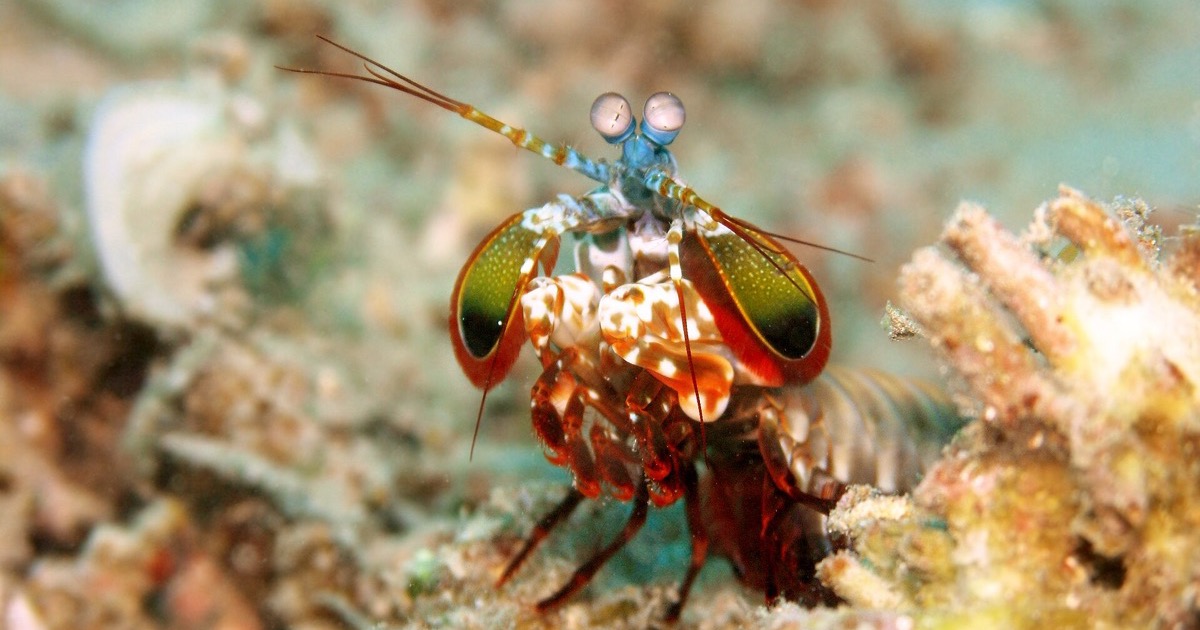
1. Mantis shrimp have 12 color channels and poor color vision
Some mantis shrimp have 12 types of color receptor to your three, yet in tests they did far worse than humans at telling similar colors apart. A 2014 study suggests they recognize colors by scanning with their eyes.
2. Butterflies taste with their feet
Receptors in their feet pick up chemical signals from whatever they land on. Females use extra receptors there to find the right host plants for their eggs.
3. Cats may be unable to taste sugar
Unlike most mammals, cats don't prefer sugar and may be unable to detect its sweetness. A 2005 study found that the gene for one of the sweet receptor's two proteins doesn't work in domestic cats, and a tiger and a cheetah had the same defect.
4. Bogong moths steer by the stars
Each spring, billions of Bogong moths fly up to 1,000 km to a few cool caves in the Australian Alps, a place they have never visited. In a 2025 Nature study, tethered moths in a flight simulator held their seasonal direction under a moonless night sky with the Earth's magnetic field nulled. The authors conclude the moths likely use the stars and the magnetic field together as a compass.
Bodies
5. An octopus has three hearts and blue blood
One heart circulates blood around the body, and two pump it past the gills. The blood is blue because its oxygen-carrying protein, hemocyanin, is copper-based.
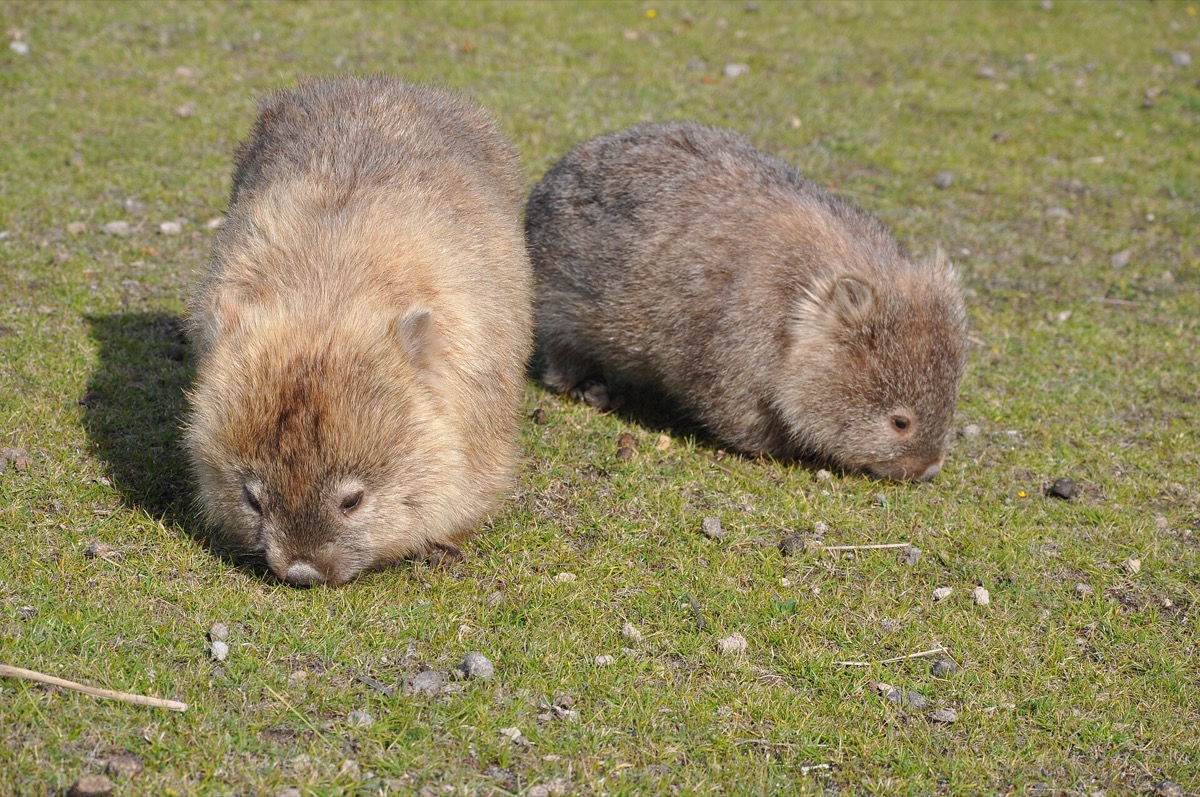
6. Wombats make cube-shaped droppings
A bare-nosed wombat typically produces 80 to 100 cubes a day. A 2021 study found they form in the last 17% of the intestine. One proposed reason for the flat sides is to keep droppings from rolling off the rocks and logs where wombats leave them.
7. An owl can turn its head 270 degrees
Owls turn their heads by as much as 270 degrees in either direction. Johns Hopkins researchers found that 12 of the 14 neck vertebrae have hollow cavities about 10 times wider than the artery inside, giving it room to move.
8. A platypus hunts with its eyes shut
A platypus closes its eyes, ears and nostrils when foraging underwater and relies on its bill, which has receptors for pressure and electricity. Males also have ankle spurs connected to venom glands.
9. A sloth's meal stays in its gut for about a month
Food stays in a two-toed sloth's digestive tract for about a month, and it passes waste only once a week, at the base of trees.
10. Arctic ground squirrels chill below freezing
Hibernating arctic ground squirrels can let their core temperature fall as low as minus 2.9 °C (about 27 °F) without freezing. A 1989 study found no evidence of antifreeze molecules in their plasma.
11. Tardigrades have survived open space
In September 2007, about 3,000 tardigrades, or water bears, spent 12 days in orbit on a European Space Agency mission. They came through the vacuum with no loss in survival, and some recovered after vacuum plus solar radiation, making them the first animals known to survive such exposure.
Records
12. A blue whale's heart can slow to 2 beats a minute
The blue whale, the largest animal on Earth, reaches about 110 feet and more than 330,000 pounds in the Antarctic, according to NOAA. In a 2019 study of one tagged whale on foraging dives, the heart typically beat 4 to 8 times a minute and as few as 2.
13. A moth hears the highest pitches on record
The greater wax moth can hear frequencies approaching 300 kHz, the highest frequency sensitivity of any animal, according to a 2013 study.
14. Greenland sharks can live for centuries
Radiocarbon dating of eye lenses from 28 females showed a life span of at least 272 years. The largest was estimated at about 392 years, give or take 120, and the 2016 study calls the species the longest-lived vertebrate known.
15. A four-month-old bird flew 8,425 miles nonstop
In 2022, a young bar-tailed godwit known as B6 flew for 11 days straight from Alaska to Tasmania. The U.S. Geological Survey's 2022 report called it the longest documented nonstop flight by any animal.
Behavior
16. Frigatebirds sleep in flight
Brain recordings from great frigatebirds flying over the ocean for up to 10 days showed they sleep with one brain hemisphere at a time or both at once, for just about 41 minutes a day.
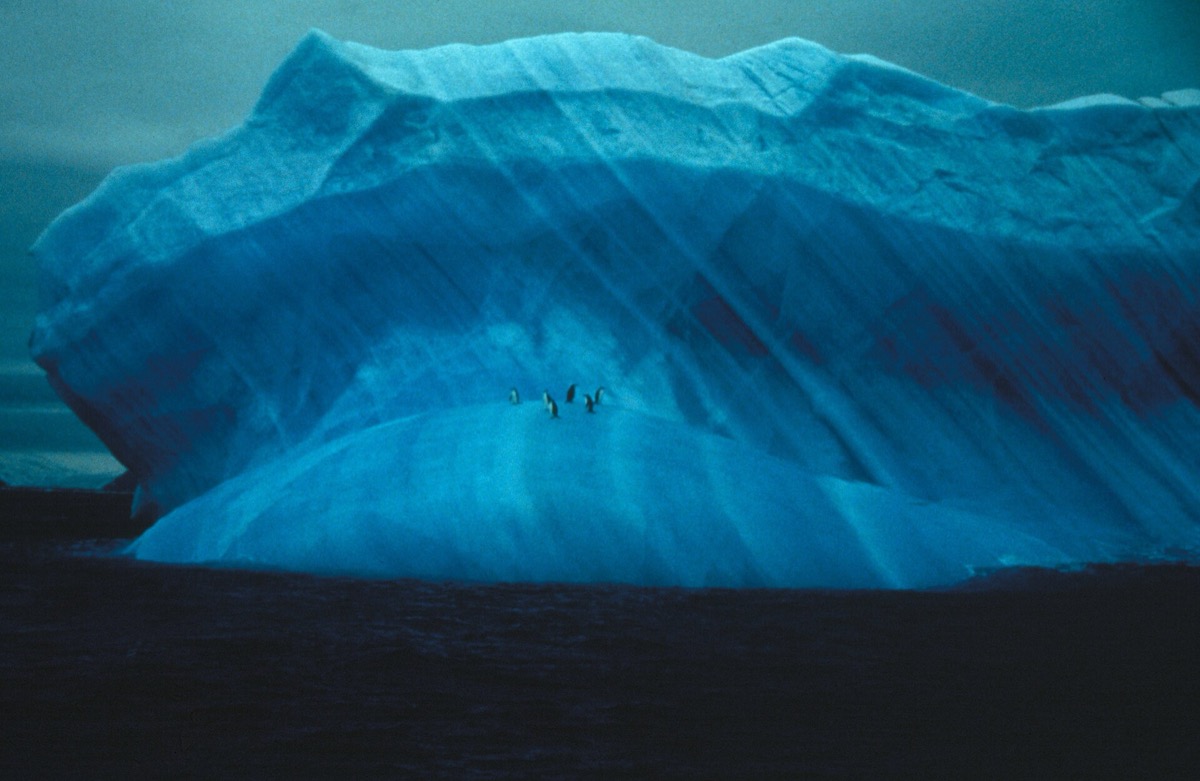
17. Chinstrap penguins sleep in 4-second naps
Nesting chinstrap penguins in Antarctica nodded off more than 10,000 times a day, in bouts averaging 4 seconds. That added up to more than 11 hours of sleep for each brain hemisphere.
18. Elephants and dolphins seem to use something like names
A 2024 study found evidence that wild African elephants address one another with individually specific calls, probably without imitating the receiver. In a 2013 study, wild bottlenose dolphins called back on hearing a copy of their own signature whistle, but not other whistles.
19. Crows teach each other who is dangerous
University of Washington researchers wore a mask while trapping crows near Seattle. Crows that were never caught later scolded the mask too, as did young taught by their parents, and at one site scolding doubled and spread at least 1.2 kilometers over five years.
20. Bumble bees appear to play
In a Queen Mary University of London study, bumble bees rolled wooden balls with no food reward, individuals anywhere from 1 to 117 times. The authors say this fulfills behavioral criteria for animal play.
The ocean
21. Three-quarters of the organisms seen off California can make light
In 17 years of video off the California coast, from the surface to 3,900 meters, 76% of the organisms observed in the water could make light, judged mainly from published descriptions, a 2017 study found.
22. A snapping shrimp's crack comes from a bubble
The claw shuts so fast that its water jet forms a cavitation bubble. The sound comes when the bubble collapses, not when the claw closes, and the snap can stun or kill prey.
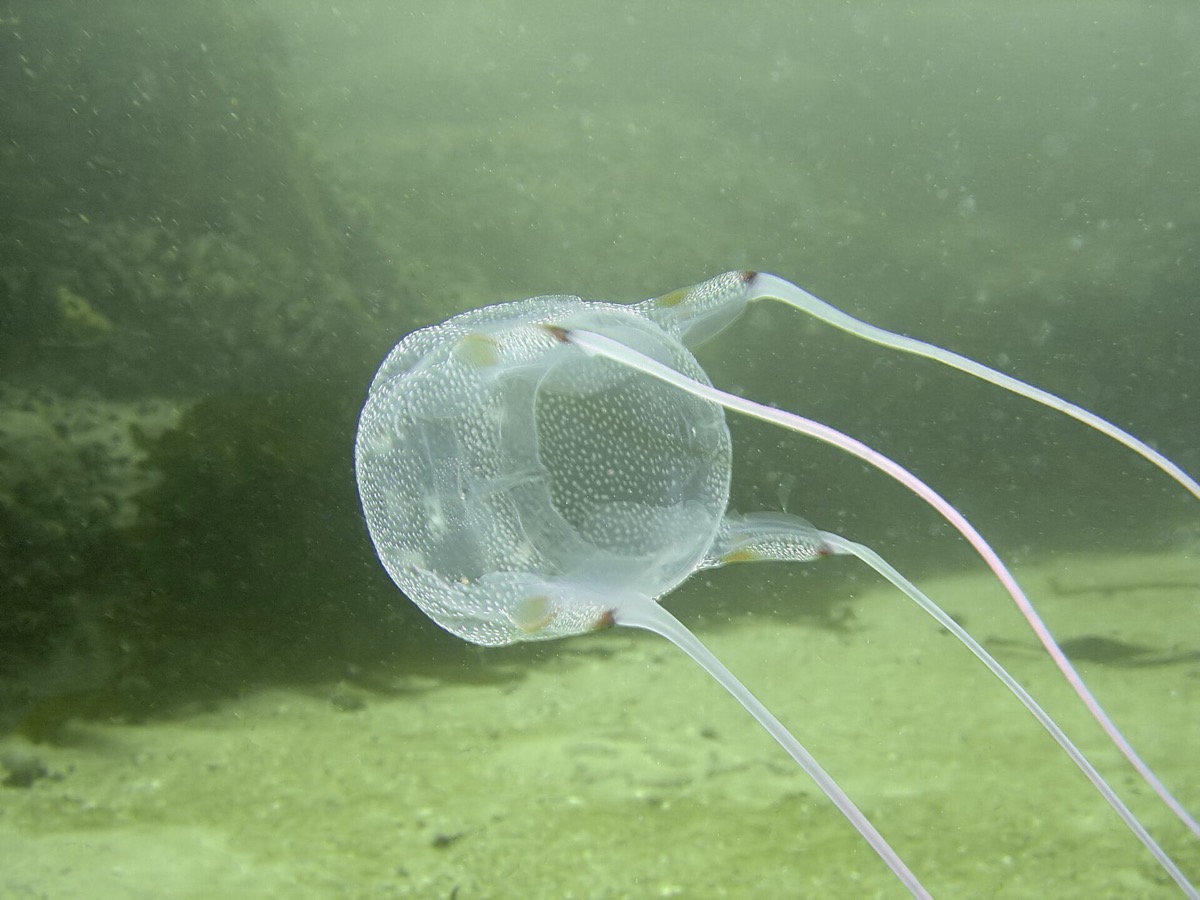
23. Box jellyfish have 24 eyes
The eyes come in four types. One species, Tripedalia cystophora, uses one type to look up through the water's surface at the mangrove canopy and navigate to the edge of mangrove lagoons.
24. Male seahorses carry the pregnancy
The female lays her eggs in the male's brood pouch, where he fertilizes them at the entry and carries the developing embryos until he expels the young.
25. Every clownfish is born male
NOAA says orange clownfish, like all anemonefishes, are born male. When a group's female dies or is removed, the next-largest male changes sex to replace her.
Frequently asked questions
Are bats blind?
No. Bats have small eyes with very sensitive vision, which helps them see in conditions you might consider pitch black, according to the U.S. Geological Survey.
Why are flamingos pink?
Their food. As a flamingo eats algae and brine shrimp, its body metabolizes the pigments, turning its feathers pink. Chicks hatch white-gray and take several years to turn pink, according to the Smithsonian's National Zoo.
How many neck bones does a giraffe have?
Seven, like most other mammals, but proportionally longer, according to a University of Minnesota anatomy collection.
What is the fastest animal in the world?
The National Park Service calls the peregrine falcon arguably the fastest animal on the planet. It may reach up to 200 mph in a dive, though most dives are closer to 100 mph. On land it's the cheetah: collars on five wild cheetahs in Botswana recorded a top speed of 58 mph, and most hunts involved only moderate speeds.
Start Smarty Pants
Facts and clever insights to casually impress people.
Psst is invite-only. Sign up with code SMARTYPANTS
Scan with your iPhone / Download Psst
Psst is invite-only. Sign up with code SMARTYPANTS
Sources
- A different form of color vision in mantis shrimp (Thoen, How, Chiou and Marshall, Science, 2014)
- Shrimp gives insight into colour vision (University of Queensland, 2014)
- Dr. Universe explains how butterflies taste with their feet (Washington State University, 2026)
- Do butterflies really taste through their feet? (Carleton University)
- Pseudogenization of a Sweet-Receptor Gene Accounts for Cats' Indifference toward Sugar (Li and colleagues, PLOS Genetics, 2005)
- Extremely high frequency sensitivity in a 'simple' ear (Moir, Jackson and Windmill, Biology Letters, 2013)
- Bogong moths use a stellar compass for long-distance navigation at night (Dreyer and colleagues, Nature, 2025)
- Octopuses keep surprising us: here are eight examples how (Natural History Museum, London)
- Intestines of non-uniform stiffness mold the corners of wombat feces (Yang and colleagues, Soft Matter, 2021)
- Owl mystery unravelled: Scientists explain how bird can rotate its head without cutting off blood (Johns Hopkins Medicine, 2013)
- Platypus (Australian Museum)
- Two-toed sloth (Smithsonian's National Zoo)
- Freeze avoidance in a mammal: body temperatures below 0 degree C in an Arctic hibernator (Barnes, Science, 1989)
- Tiny animals survive exposure to space (European Space Agency)
- Tardigrades survive exposure to space in low Earth orbit (Jönsson and colleagues, Current Biology, 2008)
- Blue whale (NOAA Fisheries)
- Extreme bradycardia and tachycardia in the world's largest animal (Goldbogen and colleagues, PNAS, 2019)
- Extreme bradycardia and tachycardia in the world's largest animal, full text (eScholarship)
- Peregrine Falcon (Mississippi National River and Recreation Area, National Park Service)
- Locomotion dynamics of hunting in wild cheetahs (Wilson and colleagues, Nature, 2013)
- Eye lens radiocarbon reveals centuries of longevity in the Greenland shark (Nielsen and colleagues, Science, 2016)
- Juvenile bar-tailed godwit "B6" Sets World Record (U.S. Geological Survey, 2022)
- Evidence that birds sleep in mid-flight (Rattenborg and colleagues, Nature Communications, 2016)
- Nesting chinstrap penguins accrue large quantities of sleep through seconds-long microsleeps (Libourel, Lee and colleagues, Science, 2023)
- African elephants address one another with individually specific name-like calls (Pardo and colleagues, Nature Ecology & Evolution, 2024)
- Bottlenose dolphins can use learned vocal labels to address each other (King and Janik, PNAS, 2013)
- Social learning spreads knowledge about dangerous humans among American crows (Cornell, Marzluff and Pecoraro, Proceedings of the Royal Society B, 2012)
- First-ever study shows bumble bees 'play' (Queen Mary University of London, 2022)
- Do bumble bees play? (Galpayage Dona and colleagues, Animal Behaviour, 2022)
- Quantification of bioluminescence from the surface to the deep sea demonstrates its predominance as an ecological trait (Martini and Haddock, Scientific Reports, 2017)
- How snapping shrimp snap: through cavitating bubbles (Versluis and colleagues, Science, 2000)
- Box jellyfish use terrestrial visual cues for navigation (Garm, Oskarsson and Nilsson, Current Biology, 2011)
- Seahorse Male Pregnancy as a Model System to Study Pregnancy, Immune Adaptations, and Environmental Effects (International Journal of Molecular Sciences, 2023)
- Status Review Report: Orange Clownfish (Amphiprion percula) (NOAA Technical Memorandum NMFS-PIFSC-52, 2016)
- Are bats blind? (U.S. Geological Survey)
- Why Are Flamingos Pink? And Other Flamingo Facts (Smithsonian's National Zoo)
- Cervical Vertebrae: Giraffe (University of Minnesota)