20 fall photography ideas you can shoot with your phone
Twenty late-fall photo ideas, from the sun through red leaves to morning fog, frost and city windows at dusk, each with one tip for your phone camera.
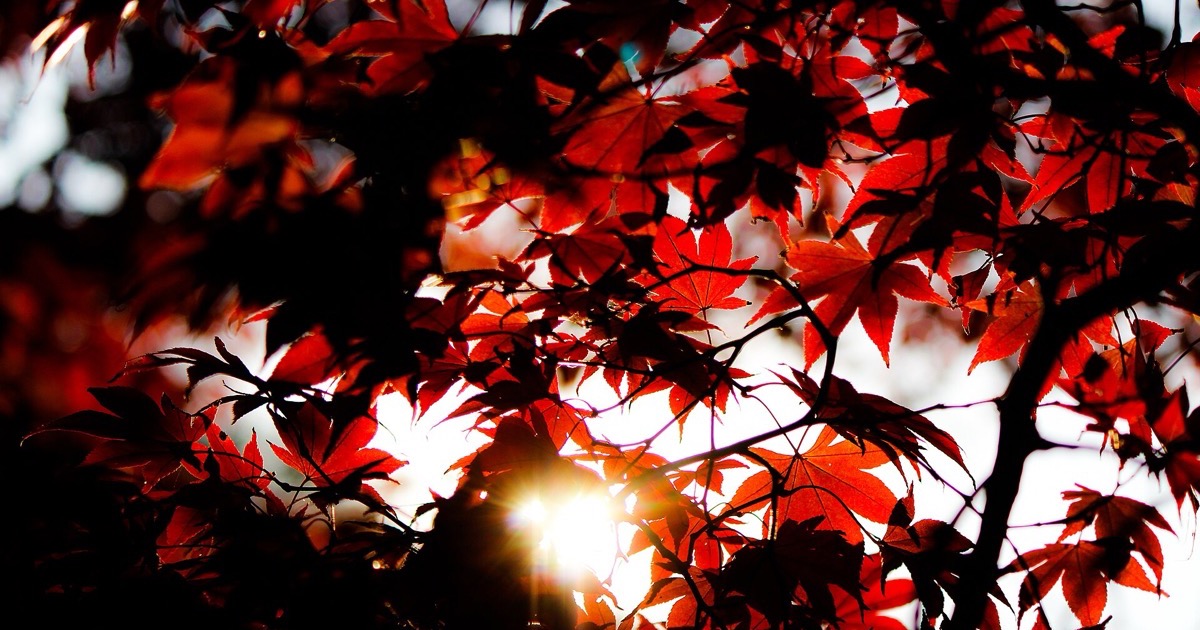
The best fall photos in November come from low light and late-season weather as much as from color: the sun breaking through red leaves, valley fog, frost on a fallen leaf, city windows glowing before dinner. Here are 20 ideas you can shoot with your phone, each with one tip that makes it work.
When to go in November
Fall color peaks first in the north and at higher elevations and reaches lower ground weeks later, so by now you'll find either the last of the color or fallen leaves and bare branches, and both make good pictures.
Leaves change because lengthening nights tell trees the growing season is ending. As the green chlorophyll breaks down, yellow and orange pigments show through, and sunny days with cool nights help bring out the reds.
Clocks went back an hour on November 1, 2026, so evenings get dark early: in New York City the sun sets at 4:45 PM on November 7 and will set at 4:28 PM on December 7. The upside is sunrise at 6:33 AM on November 7, early enough to catch frost and fog before work.
Light
1. The sun through the leaves
Shoot straight into the sun through a tree that still has color, so the leaves glow and light breaks through the gaps. Tip: move until a leaf or branch covers most of the sun and only a sliver shows.
2. Patches of sun indoors
As the winter solstice nears, around December 21, the sun stays low and its path runs toward the south, so light slants through south-facing windows and lays bright shapes across floors and walls. Photograph the shape, or a cat asleep in it. Tip: on an iPhone, swipe up from the camera modes, tap Exposure and drag the slider down until only the patch stays bright.
3. One leaf held up to the sky
Hold a single leaf against the sky and its veins show like a map. Tip: hold it so it hides the sun completely and fills most of the frame.
Leaves
4. Leaves as they fall
A breeze in a half-bare tree sends leaves spinning down, and catching one in the right spot takes luck. Tip: take a Live Photo on an iPhone, edit it in Photos, slide the white frame to the moment you like and tap Make Key Photo. On a Pixel, take a Motion Photo and pick your favorite frame from it.
5. One bright leaf on dark ground
After rain, a single red or yellow leaf on wet asphalt, slate or a dark car roof stands out. Tip: switch to the square format (on an iPhone, swipe up from the camera modes, tap Aspect, then 1:1) and shoot straight down.
6. A carpet of leaves from ground level
Set the phone almost on the ground on a leaf-covered path, so the leaves loom in front and the path runs off behind them. Tip: use the 0.5x ultra-wide lens, a few inches from the nearest leaves.
7. Fall color doubled in still water
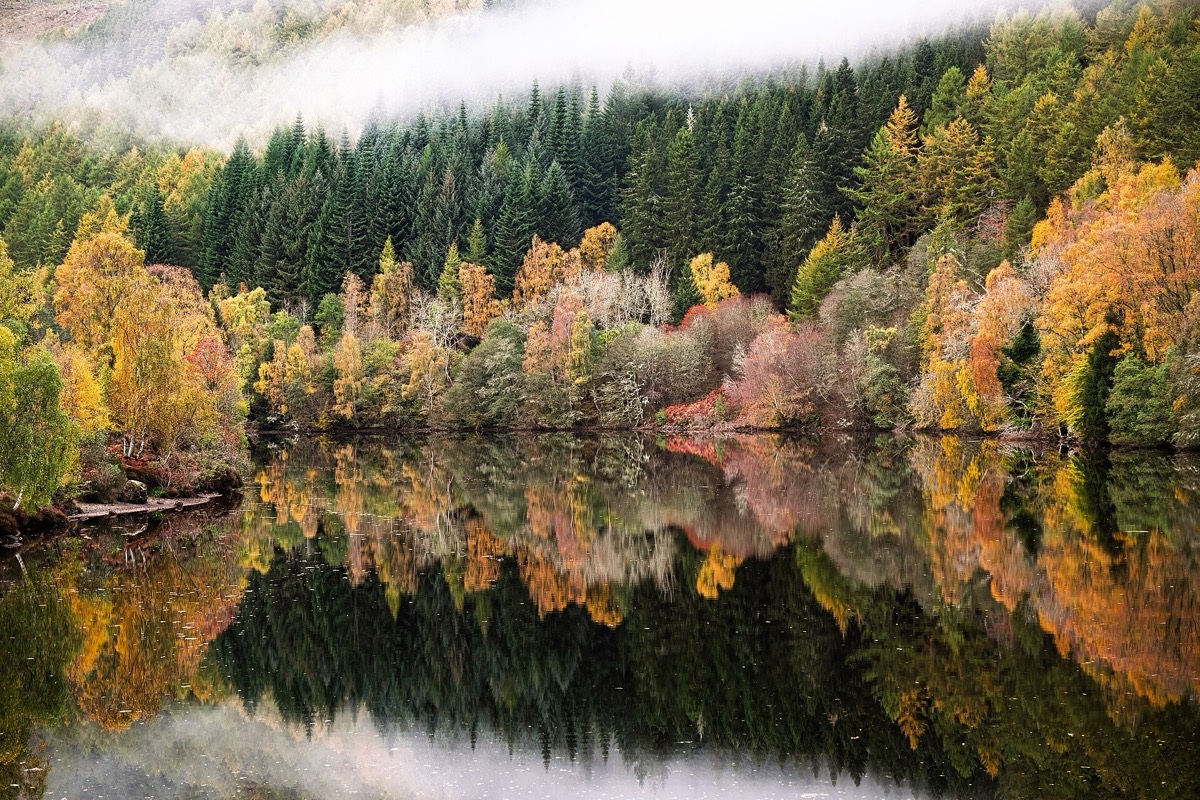
A pond or lake holds the trees upside down when the water is flat; even a light breeze breaks the reflection into ripples. Tip: from the shore, tap a zoom button such as 3x so the frame holds only the trees and their reflection.
Weather
8. Morning fog
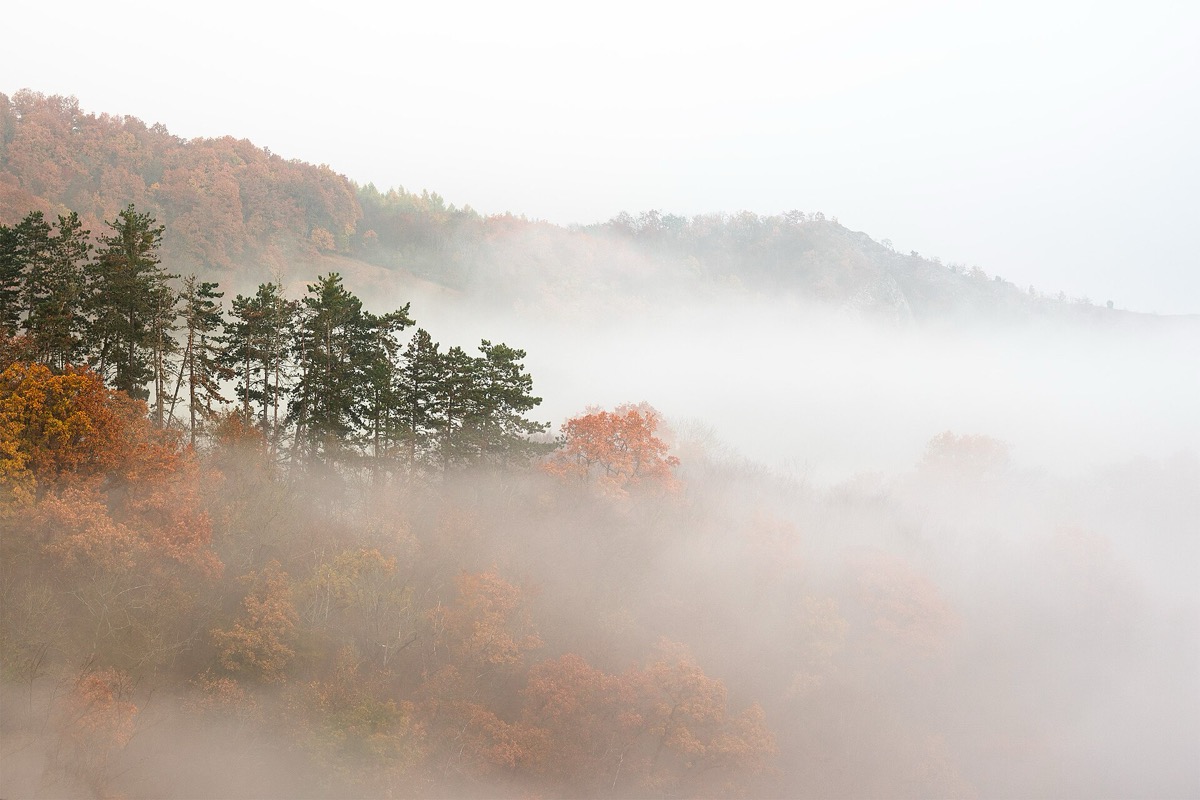
Fog that forms overnight as the air near the ground cools, after a clear night with light winds, is most common in fall and winter and thickest in sheltered valleys and over calm water. Tip: put something dark and close in the frame, like a trunk or a fence, and if the fog looks dull gray, raise the Exposure slider a little.
9. Fog burning off
Valley fog usually evaporates within a few hours after sunrise. Tip: set the phone on a wall or tripod pointed at the fog, switch to Time-lapse mode, and let it record while the sun clears the view.
10. Frost up close
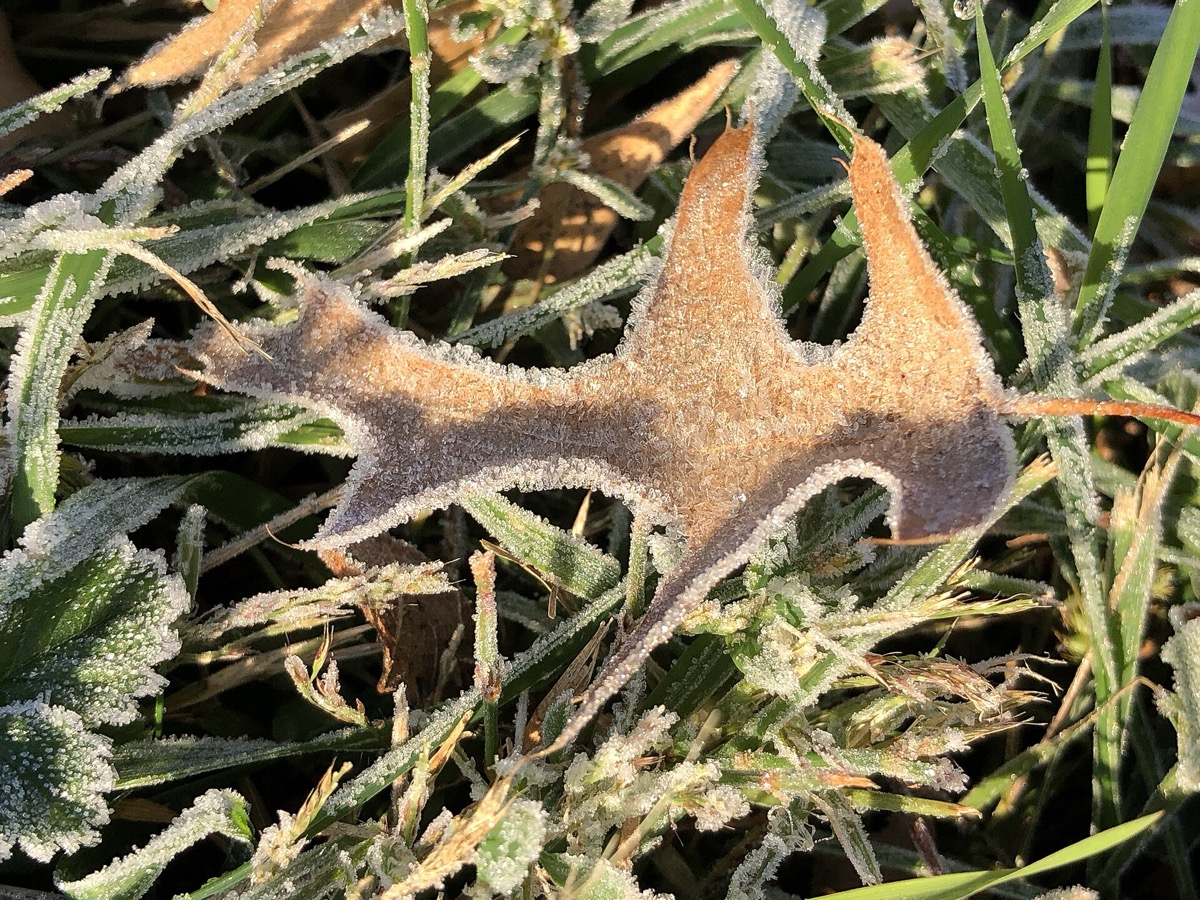
Frost can form even when the official low is above freezing: temperatures are measured about 2 meters up, and on a clear, calm night the air near the ground can be 5 or more degrees colder. Tip: go out before the sun reaches the spot, get low, tap the frost to focus, and don't breathe on it.
11. Rain on the window
Drops on a window with streetlights or headlights behind them make a picture from indoors. Tip: tap one drop to focus on it, and the lights behind blur into soft circles.
People and pets
12. Someone walking away
Photograph someone walking down a leafy path or into fog, seen from behind and small in the frame. Tip: if the walker is you, prop the phone on a bench, set the timer to 10 seconds (on an iPhone, swipe up from the camera modes and tap Timer) and start walking.
13. The jump into the leaf pile
Let someone jump into a raked pile, and shoot from the side or behind so the flying leaves are the point. Tip: on an iPhone, drag the shutter button to the left for a burst, then keep the best frame. On a Pixel, turn on Top Shot, which takes a burst and chooses the best shot for you.
14. A dog in the leaves
Dogs dig and roll through leaf piles. Tip: use Portrait mode, which keeps a pet sharp and blurs what's around it, so the dog stands out from a busy carpet of leaves.
Food and cozy indoors
15. Steam from a hot drink
Steam from cider, tea or soup shows best with light behind it and something dark beyond it. Tip: set the cup between you and a window or lamp, with a dark wall behind the steam.
16. A room lit by lamps
Turn off the overhead light and leave one lamp, a string of lights or a few candles on. Tip: keep the flash off so the lamps, not the flash, light the room. On an iPhone, Night mode turns on by itself in low light, so brace the phone on a table and hold still.
17. A market table in soft light
Crates of apples, squash and pumpkins at a farmers market fill a frame with fall color. Tip: shoot on a cloudy day or in the shade. Light on a slightly overcast day is much softer than direct sun.
The city
18. Blue hour
Evening civil twilight runs from sunset until the sun is 6 degrees below the horizon, after which you normally need lights to see outdoors. The sky still holds some light while windows and streetlights are on. Tip: look up your city's times and shoot from sunset to the end of twilight: in New York City on November 7, 4:45 PM to 5:14 PM.
19. Windows lit from the inside
Cafés and shops glow against dark streets by late afternoon now. Tip: cross the street so the window sits inside the dark wall around it, then wait for someone to walk past. Lit from behind, they become a silhouette rather than a face.
20. The last tree in color
Look for a single street tree still in color between gray buildings. Tip: walk down the block and tap a zoom button such as 3x or 5x, so the tree fills the frame with the buildings close behind it.
Frequently asked questions
What is the best time of day for fall photos?
The golden hour, shortly after sunrise or before sunset, when the light is warmer and softer. Avoid high noon, when direct sun is harsh. Early mornings also bring fog and frost.
When does fall color peak?
It depends on latitude and elevation. In Pennsylvania, northern counties and high forests often reach their best in early to mid-October, while lower areas can keep good color into early November. In Great Smoky Mountains National Park, the most vivid color below 4,000 feet comes between mid-October and early November.
Why are fall colors brighter some years?
Sunny days and cool nights bring out the reds. In a wet, cloudy fall the green lasts longer and the reds may not develop as well, and severe drought, damaging frost, windstorms or heavy rain can cut the display short.
Start Pics Please
A weekly photo contest: pitch the theme, shoot the challenge, and see who won and why at the weekend.
Psst is invite-only. Sign up with code PICSPLEASE
Scan with your iPhone / Download Psst
Psst is invite-only. Sign up with code PICSPLEASE
Sources
- The Science Behind Autumn Leaf Color (Penn State Extension)
- Fall Colors, Great Smoky Mountains National Park (National Park Service)
- Beginner's Photography Guide (National Park Service)
- Radiation Fog (National Weather Service)
- Weather in Action: Valley Fog (National Weather Service, Binghamton)
- Why Frost Forms at Temperatures Above Freezing (National Weather Service, Louisville)
- What Causes the Seasons? (National Weather Service, Sioux Falls)
- Why does Earth have Seasons? (NOAA NESDIS)
- Daylight Saving Time (NIST)
- Complete Sun and Moon Data for One Day: New York, NY, November 7, 2026 (U.S. Naval Observatory)
- Complete Sun and Moon Data for One Day: New York, NY, December 7, 2026 (U.S. Naval Observatory)
- Rise, Set, and Twilight Definitions (U.S. Naval Observatory)
- Use iPhone camera tools to set up your shot (Apple Support)
- iPhone camera basics (Apple Support)
- Edit Live Photos on iPhone (Apple Support)
- Capture action shots with Burst mode on your iPhone camera (Apple Support)
- Take portraits with your iPhone camera (Apple Support)
- Take Night mode photos with your iPhone camera (Apple Support)
- Record a video with your iPhone camera (Apple Support)
- Get a great photo every time with Top Shot (Pixel Camera Help)