The best short podcasts for learning: 10 shows, most under 20 minutes
Ten short podcasts that teach you something, from two-minute words and stars to 15-minute history, with who makes each, how long it runs and when it's out.
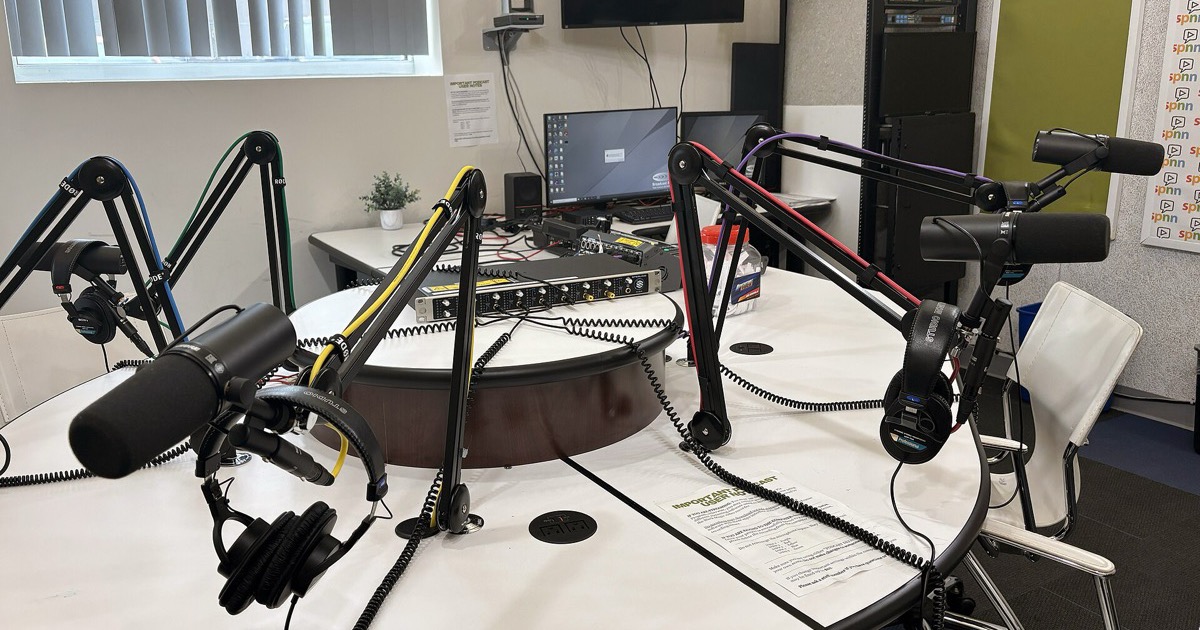
To learn something in the time it takes to walk to the train, start with NPR's Short Wave for science (10 to 15 minutes), The Indicator from Planet Money for money and the economy (under 10) or the BBC's Witness History for a moment from the past, told by someone who was there (9 to 11). With only two minutes, Merriam-Webster's Word of the Day teaches you a word and StarDate tells you what's in the night sky. All ten shows below put out new episodes at least once a week. The lengths and schedules come from each show's own page and feed in early November 2026, and a single episode can run longer.
The ten shows at a glance
| Podcast | Who makes it | Typical episode | New episodes |
|---|---|---|---|
| StarDate | University of Texas McDonald Observatory | A little over 2 minutes | Every day |
| Merriam-Webster's Word of the Day | Merriam-Webster | About 2 minutes | Every day |
| The Engines of Our Ingenuity | University of Houston and Houston Public Media | About 4 minutes | Every day |
| The Indicator from Planet Money | NPR | 8 to 10 minutes | Weekdays |
| Witness History | BBC World Service | 9 to 11 minutes | Weekdays |
| Short Wave | NPR | 10 to 15 minutes | Four days a week |
| Grammar Girl | Quick and Dirty Tips | 10 to 13 minutes on Tuesdays | Twice a week |
| Everything Everywhere Daily | Gary Arndt | About 15 minutes | Every day |
| TED Talks Daily | TED | 12 to 19 minutes on weekdays | Weekdays, plus weekends |
| The Science of Happiness | Greater Good Science Center and PRX | 5 to 26 minutes | Thursdays |
Science and the night sky
Short Wave (NPR)
Hosts Emily Kwong and Regina Barber cover new discoveries, everyday mysteries and the science behind the headlines. NPR bills it at just under 15 minutes, and recent episodes mostly ran 10 to 15, four days a week. Recent shows explained how AI is changing mathematics, asked whether virtual reality could speed up learning, and checked whether your favorite crime show rests on fake science.
StarDate (University of Texas McDonald Observatory)
A daily program on what to look for in the night sky, hosted by Billy Henry. It comes from the education and outreach arm of the University of Texas McDonald Observatory, which also goes by StarDate. Each episode runs a little over two minutes, and the series went national in 1978. About half of each month's programs cover skywatching, such as meteor showers, planetary conjunctions and constellations, and the rest cover recent discoveries, anniversaries in astronomy and Earth's place in the cosmos. Recent episodes explained Lagrange points and morning stars versus evening stars.
History and how things came to be
Witness History (BBC World Service)
Each weekday, one moment from the past, told in the voice of someone who was there, with first-hand testimony and archive material. The BBC describes episodes as around nine minutes, and recent ones ran 9 to 11. Recent stories covered how Mexico created the world's first public earthquake warning system and how Germany chose its capital after the Berlin Wall fell in 1989.
Everything Everywhere Daily (Gary Arndt)
Gary Arndt, who has visited more than 200 countries and territories, explains one topic a day from history, science, geography, mathematics or technology, or profiles an interesting person. The show started on July 1, 2020. It promises 12 to 15 minutes, and recent episodes ran about 15. Recent topics included how bronze changed the world, the world's oldest companies and the partition of Cyprus. Some days bring back an older episode, marked Encore.
The Engines of Our Ingenuity (University of Houston and Houston Public Media)
Stories of how human creativity shapes culture, from technology's failures to its successes, in about four minutes. It was founded by John Lienhard, is written and hosted by him and other contributors, and is produced by Houston Public Media. An episode goes up every day, mixing new ones with older episodes from its archive. Recent subjects included roller skates, a battery that rusts and Titanic's sister ships, and the University of Houston site keeps transcripts of every episode since 1988.
Words
Merriam-Webster's Word of the Day
One word a day from Merriam-Webster, in about two minutes. Each day's entry gives the pronunciation, the meaning, an example from published writing and a short note, usually on the word's history. The word for November 9, 2026, was wabi-sabi, a philosophy of Japanese origin that emphasizes the aesthetic value in imperfect, impermanent and simple things, which English borrowed directly from Japanese in the early 1960s.
Grammar Girl (Quick and Dirty Tips)
Mignon Fogarty, who founded the Quick and Dirty Tips network and created Grammar Girl, gives short tips on grammar, punctuation and style, along with the stories behind words and phrases. New episodes come out on Tuesdays and Thursdays. Tuesday episodes usually run 10 to 13 minutes and take on a question or two, such as "try and" versus "try to" or why ships are called "she." Thursday episodes, usually interviews, run about 20 to 45 minutes.
Money, ideas and the mind
The Indicator from Planet Money (NPR)
From the people who make Planet Money, a quick hit of insight into today's economy, money, work and business, Monday through Friday in 10 minutes or less. Recent episodes ran 8 to 10 minutes and asked whether it's time to reconsider the adjustable-rate mortgage, why more men are dropping out of the workforce and how crypto made inroads in Pakistan.
TED Talks Daily (TED)
Talks given at TED and TEDx events, in audio, hosted by journalist Elise Hu, on subjects from artificial intelligence to zoology. A new talk comes out every weekday, and recent weekday talks mostly ran 12 to 19 minutes. The feed adds episodes on weekends, which often run longer. Recent talks covered why the best learners talk to themselves and how to make friends and keep them.
The Science of Happiness (Greater Good Science Center and PRX)
Research-tested strategies for a happier, more meaningful life, hosted by psychologist Dacher Keltner and co-produced by UC Berkeley's Greater Good Science Center and PRX. A new episode comes out every Thursday, alternating a full episode of 15 to 26 minutes with Happiness Break, a guided practice of 5 to 11 minutes. One recent episode explained cyclic sighing, a breathing technique with slow, extended exhales, as a way to ease anxiety, and the next week's Happiness Break led you through it.
How to fit them into your day
- Match the show to the gap. A two-minute show fits the time it takes coffee to brew. A 10-minute show fits a walk, which is how the BBC pitches Witness History: "a cup of tea or a walk around the block." A 15-minute show fits a short drive or bus ride.
- Tie it to something you already do. Pick one show and one moment that happens every day, such as locking the front door, and press play then. The daily and weekday shows make this easy, because there's always a new episode waiting.
- Stack short ones into a commute. Word of the Day, The Indicator and Short Wave back to back come to about 25 minutes, with three subjects in one trip.
- Keep one thing. Before the earbuds come out, say one thing you learned out loud or jot it down. It gives you something to bring up at dinner.

Frequently asked questions
What is the best short podcast for learning?
It depends on the subject. For science, try Short Wave. For history, Witness History. For words and writing, Grammar Girl. For money and the economy, The Indicator. If you want a different subject every day, try Everything Everywhere Daily.
Are there educational podcasts under 10 minutes?
Yes. StarDate and Merriam-Webster's Word of the Day run about two minutes, The Engines of Our Ingenuity about four, and The Indicator from Planet Money under 10. Witness History is close, at 9 to 11.
Is there a podcast that teaches you something new every day?
Everything Everywhere Daily posts an episode of about 15 minutes every day, though some days are encores of older ones. StarDate, Word of the Day and The Engines of Our Ingenuity also post every day.
Are any of these news podcasts?
No. They're made to teach rather than to brief you on the headlines, though Short Wave and The Indicator often explain science and economics stories in the news. For a daily briefing, see this list of daily news podcasts sorted by length.
Start Morning Pod
A 60-second personalized podcast that drops before you open any apps.
Psst is invite-only. Sign up with code MORNINGPOD
Scan with your iPhone / Download Psst
Psst is invite-only. Sign up with code MORNINGPOD
Sources
- Short Wave (NPR)
- About StarDate (University of Texas McDonald Observatory)
- StarDate radio episodes
- Witness History (BBC World Service)
- Witness History podcast feed (BBC World Service)
- Everything Everywhere Daily (Gary Arndt)
- Everything Everywhere Daily podcast feed
- The Engines of Our Ingenuity (University of Houston)
- The Engines of Our Ingenuity podcast feed (Houston Public Media)
- Word of the Day: wabi-sabi, November 9, 2026 (Merriam-Webster)
- Merriam-Webster's Word of the Day podcast feed
- Grammar Girl: Mignon Fogarty (Quick and Dirty Tips)
- Grammar Girl podcast feed (Quick and Dirty Tips)
- The Indicator from Planet Money (NPR)
- TED Talks Daily (TED)
- TED Talks Daily podcast feed
- The Science of Happiness (Greater Good Science Center, UC Berkeley)
- The Science of Happiness podcast feed (PRX and Greater Good Science Center)